Showing posts with label Unsung Genius. Show all posts

Friday, March 1, 2024

In Praise of Unsung Genius: Jon Hassell

My "Celebrating Some Unsung 'Genius'" series is intended to shine the spotlight on artists who, in my opinion, continue to be under appreciated. While not necessarily in any particular order, I feel compelled to write about the artists that I feel A) the most personally geeked about and B) are most deserving of the added attention and appreciation.


For the invention of a sound. Jon Hassell burst into my awareness with the creation of an otherworldly sound that I had never heard before--that I have never heard replicated much less mastered: what I call the "ghost trumpet." I'm pretty certain that it was on Side Two of the Talking Heads' 1980 album Remain in Light (in particular the song "Houses in Motion" but, in fact, the whole side) that I first heard the unique sound of Jon's breathy horn, but it really wasn't until I heard Brian Eno's 1982 release, Ambient Music 4: On Land, and, in particular, the fourth song, "Shadow," that I realized how unique and effective a tool Jon's breathy trumpet could be as a lead instrument. This album had an enormous impact on me as it was the first musical source that helped create the perfect conditions for my first mind-expanding out-of-body experiences--with no little debt to the role that Mr. Hassell played on it. Needless to say, this core-shattering event led me to seek out albums and songs to which Jon had contributed. 
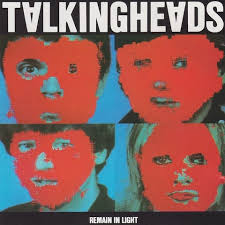


     It had been a new friend that I had met while in line to go to a U2 concert in 1981 (their second ever US tour, the October tour) who had really kick-started a major broadening of my musical horizons. Remain in Light was one of the first albums that he introduced me to as a whole new world that began and end with Brian Eno began to open up for me. I was introduced to Jon's two Fourth World collaborations with Brian Eno, Fourth World, Vol. 1: Possible Musics (1980) and Dream Theory in Malaya: Fourth World Volume Two (1981) as well as the Eno & David Byrne album My Life in the Bush of Ghosts

From there I was on my own. Since this was long before the Internet existed, my sole means to such discoveries were record stores, word of mouth, and articles in the music industry's trade magazines. Luckily, we were still in the era in which 13-inch vinyl albums with their large package forms were the dominant form available to music consumers. There, the back side of an album often listed all of the musicians helping out. Also, my new music mentor had introduced me to a record store in Ann Arbor that set a new bar for excellence in my life: Schoolkids Records. This was 1982. Coincidentally, my friend and I were also huge Genesis and Peter Gabriel fans. 1982 was the year of the first World of Music, Arts, and Dance (W.O.M.A.D or WOMAD) Festival. The resultant album that was released as an attempt to commemorate the first festival (at Shepton Mallet in the summer of that year) was a double album, which I picked up immediately upon discovery. It contained an Eno/Hassell song from the first Fourth World album, "Ba-Benzélé," as well as a great song by XTC ("It's Nearly Africa") which helped to finally convince me to start checking out their album production.

     Having been introduced to Eno's Ambient Music series and concepts (I had even set up my music listening area according to the specifics mapped out by Eno in the liner notes of his album Before and After Science), I was always looking for the latest Eno/Ambient album or anything that he had had a hand in creating, so it was a no brainer when Ambient 4: On Land came out; it was just a happy accident that he'd employed Jon Hassell on that one track--the track that sent me searching for everything and anything that Jon participated in.
     After leaving Michigan State University I was able to secure my first job in the teaching profession--in Rockville, Maryland. As I was kind of bored socially, I picked up a part-time job outside of school--at Waxie Maxie's in the Gaithersburg Mall. This was my first time working in a record store, 1983-4 (where I quickly came to realize that retail is not the world for me). There I had access to the inner sleeves and "liner notes" to all of the albums that we would play in the store--which was not inconsiderable. This was also the year that I purchased my first CD player, a Sony CDP200 (one of Sony's originals) and in which I began my upward climb into the world of "audiophile" listening and ownership (which leads to a whole different discussion topic). 
     I returned to Michigan at the end of 1984--having been wooed to accept a job at the private "academic-oriented" school that my music friend from MSU now worked. This period of my life found my musical interests broadening to embrace the 1980s techno Soul and R&B that was quite prevalent on Detroit, Flint, and Ann Arbor area radio stations at the time. At the same time, this did not prevent me from including frequent trips to Schoolkids Records where my UK, Jazz, and Classical music interests could also be fed.
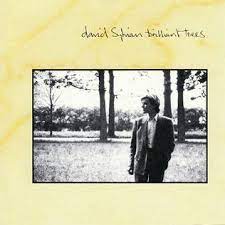

     In 1984 David Sylvian's Brilliant Trees appeared--which just happened to include an entire side of three songs that featured Jon Hassell as a key component of the musical fabric. In December of 1985 Jon's breathy trumpet appeared on David's cassette, Alchemy: An Index of Possibilities. The first Jon Hassell solo album that I could find, 1986's Power Spot, was a fair album. It was also the same year on which he appeared on Tears For Fears' masterpiece, The Seeds of Love. His presence is integral to the songs "Standing on the Corner in the Third World" and "Famous Last Words." 


Also one can find the presence of Jon's mystery horn on Peter Gabriel's two soundtrack albums, Birdy (1985) and 1986's soundtrack to the Martin Scorsese film, Last Temptation of Christ, which Peter called Passion. Much later I went back to listen to Jon's solo albums, including 1978's Vernal Equinox, 1983's Aka / Jabari / Java, and 1986's Power Spot. After that I found myself a bit on overload. (Jon's albums make great background music for daily chores and other activities). Of these early solo albums, I prefer Aka / Jabari / Java over the others but I think I prefer the use of his "ghost trumpet" in David Sylvian's work more than anything.

     June 26, 2021 is a day that came and went without my awareness of Jon's departure from the human vehicle he'd been using since 1937. He was 84 years old.

Thursday, February 1, 2024

In Praise of Unsung Genius: Elizabeth Fraser

My "Celebrating Some Unsung 'Masters'" series is intended to shine the spotlight on artists who, in my opinion, continue to be under appreciated. While not necessarily in any particular order, I feel compelled to write about the artists that I feel A) the most personally geeked about and B) are most deserving of the added attention and appreciation.


The best response I have as to why I've selected Elizabeth Fraser as one of those dozen or so Unsung Geniuses to post about can be summarized in one phrase that I read in one British reviewer's review in NME in 1986 regarding her work over a two year span of two LP records and three EPs: "Vocal acrobatics." No singer I have ever heard better represents that phrase than Elizabeth Fraser. She didn't use her voice to merely sing, to rain down on us mere mortals notes and melodies of sheer angelic proportion, but danced, jumped, lept, astonished, performed feats--tricks some would say--that no other human I'd ever heard perform--not even Nusrat Fateh Ali Khan or the finest Italian coloratura opera singer. No one. The story goes that Robin Guthrie would lay down his heavily-effected and treated guitar and drum machine tracks and then Elizabeth would come in and try to add her own input through her voice. What I would have done to have been a fly on the wall during those recording sessions. 

The problem became when it came time for the band to try to perform their songs live, on stage, in a concert setting: they had to use tapes of many of their songs' tracks and then Elizabeth had to choose which of her multiple tracks to try to replicate (an extraordinarily impossible feat to accomplish). Needless to say, it is in the extraordinary sound production of the band's studio albums that you really get to know and understand the exceptional and extraordinary talents of Miss Elizabeth Fraser. Plus, as my brother and sister-in-law can attest from their own attendance of a Cocteau Twins concert in Soho in 1987. Elizabeth does not have much of a stage presence: she is definitely a nervous shoegazer. (Plus, she had the sniffles. They actually hated the concert.)

My own personal discovery of the band Cocteau Twins goes back to a period of my life in 1984 in which I was collecting new music by going into Schoolkids Records (in Ann Arbor, Michigan) and thumbing through the album bins on an almost daily basis. My method of looking for albums at this time included the use three typical criterion for my piqued my curiosity: 1) album covers/art, 2) publishing labels, and, most importantly, 3) the names of the contributors to an album's production: musicians, guests, engineers, producers, and ancillary people the band might be thanking in their liner notes. For me, the attraction to Cocteau Twins' Treasure was immediate due to its amazing album cover: 

As a matter of fact, all of 4AD's album covers during this period were breathtakingly artful--which is why, over the next year, I found myself owner of albums by several other 4AD stable members, including This Mortal Coil, Clan of Xymox, Dif Juz, Colourbox, Cocteau Twins, and even The Pixies. I now look at this fact--that art played such a huge role in my selection of new music--as something quite ironic. The music industry in 1984 was going through a radical transition: the physical size and form of the consumer's music was moving away from the large, bulky and somewhat fragile 13-inch vinyl form that had dominated for the previous 30 years; it was being supplanted by that of the new medium of the compact disc™ or "CD" with its 5 1/2" by 5" jewel case--which is much less conducive to displaying art and information to the naked eye than the 13-inch and 12-inch forms. 
    Something else Treasure had that won me over into purchasing it, having never heard a note, was the titles in the tracklist. Later I read in an interview with Elizabeth that the song names came from street names the band had encountered while walking around the streets of Amsterdam. But look at these names:

Side One:
1. "Ivo"
2. "Lorelei"
3. "Beatrix"
4. "Persephone"
5. "Pandora"

Side Two:
1. "Amelia"
2. "Aloysius"
3. "Cicely"
4. "Otterley"
5. "Donimo"

I could not wait to get home to hear this tantalizing purchase. The potential energy sitting in that Schoolkids bag on the passenger seat next to me was almost palpable. Little did I suspect that the kinetic reality contained therein would far exceed any suspected potential. 
     I will never forget hearing the first song, "Amelia," for the first time: those heavily-treated 12-string and electric guitars, the heavily-treated drums, deep rolling bass, and then, as if someone had brought down from another world a duo of two women singing as if in opposition to one another: the first, an angelic almost operatic soprano singing in an undecipherable language that was foreign and totally inaccessible to me (which I only learned today was the lyric, "Who've been wounded, who should wound her, heart on a grasp" and things like "Heart, heart, heart, heart, ba da da da"), while the other sings in a low voice that displays all the affect of a cynical bitch whose lazy, almost disinterested "Ba da da da"'s turn into what sounds like "Somebody call. He never calls." I was stunned (which is the same reaction I got when I first played it for my equally adventurous--and equally-4AD-devoted--brother the first time)! The entire album played out as if I had been taken on a trip down the River Styx, into Hades' Underworld--or Plato's Cave. It was stark and despondent, alien and utterly foreign--this despite Elizabeth's obviously gorgeous singing, Robin Guthrie's lush soundscapes, newcomer Simon Raymonde's hypnotic bass lines, as well as Robin's generous use of major seventh chords (and variations thereof).
     For decades I fought against any possibility that there were actual lyrics to Elizabeth's singing. Yes, I could hear words--sometimes foreign or made-up or exaggerated words--but mostly I thought I was hearing the playful explorations of "possible" pronunciations of randomly selected--perhaps even extemporaneously selected--words, syllables, sounds, or phrases--sound combinations that provided particular interest to Elizabeth (and Elizabeth alone) according to some curious and highly-idiosyncratic "radar of personal-intrigue-bordering-on-obsession." (I flat out refuse to believe the generally-accepted lyrics for "Pandora" are as printed.) 
     I was immediately able to recognize the unique genius of this band's music--of this album--an album which has remained in the Top 10 of my list of All-Time Favorite Albums ever since. (Coincidentally, with this same purchase from which I also brought home another album that has remained in my list of Top 10 Albums of All-Time: David Sylvian's Brilliant Trees.) 


While the creative rollercoaster of the Cocteau Twins ran a course parallel to that of Robin and Elizabeth's relationship/marriage, I am of the opinion that Elizabeth vocal talents remained of a very hight quality even into the 21st Century; I am of the opinion, however, that her well of highly-unique and -creative arrangements peaked with Blue Bell Knoll and started to run dry thereafter: the vocals on Heaven and Las Vegas and Four-Calendar Café are gorgeous with wonderfully worming melodies, but the layered arrangements and more clear use of words and meaningful sentences, for me, represented a downturn in the band's uniquity. While there are some wonderful songs and performances on Four-Calendar Café, there is only one song that maintains some kind of foothold into the magical formula that came before, and that is "Know Who You Are at Every Age." But I do not wish to cast aspersions upon a creative output of an astonishingly high level that lasted from August 1984 through 1988, covering four full-length albums and four four-song EPs. Few artists have soared so high.

For a sampler of Elizabeth's extraordinary vocal acrobatics I welcome you to start and study the following songs: "Song of the Siren" from 1984's This Mortal Coil, "How to Bring a Blush to the Snow" from 1986's Victorialand, "Ivo" from 1984's Treasure, "Quisquose" from 1985's Aikea-Guinea, "Pink Orange Red" from 1985's Tiny Dynamine, "Cico Buff" from 1988's Blue Bell Knoll, and/or "Pur" from 1993's Four-Calendar Café.


Tuesday, January 30, 2024

Praise for Unsung Genius: Jeff Beck

My "Celebrating Some Unsung 'Masters'" series is intended to shine the spotlight on artists who, in my opinion, continue to be under appreciated. While not necessarily in any particular order, I feel compelled to write about the artists that I feel A) the most personally geeked about and B) are most deserving of the added attention and appreciation.


Jeff Beck was (he died a few months before I began writing this--though I had placed him on this list back in 2013) the most innovative, fluid, and gifted guitar genius I've ever heard. His play seemed to come from a universe different than anyone else; his solos tapping into forms and constructs that no one else on the planet has ever come close to, ever. He was to guitar play what Roger Federer was to tennis: simply the most gifted, beautiful, elegant player on the stage (and we're not talking about his look or attire)--and the stage, by the way, is where Jeff excelled, where his magic could really (maybe only) be seen and appreciated. Even back in the 1960s when he was playing with The Yardbirds, the stories of his creative prowess and imaginative skills are the stuff of legend. More than any other individual guitarist of the past 50 years, "Jeff Beck" has been the first and quickest response to the question, "Who is the greatest [or best] guitarist on the planet?" His skill and imaginative play are often cited as "totally unique" in the world of music. 

I will never forget my personal introduction to the music and guitar playing of Jeff Beck. In the Fall of 1973 my brother Brian went away to a boarding school for his freshman year of high school. My brother had always been a much more adventurous music listener and collector than I, his tastes much more rock-oriented than my own CKLW pop and Soul/R&B predilections, often introducing me to albums he'd purchased by the likes of artists like the Rolling Stones, Iron Butterfly, The Allman Brothers Band, and The Beatles, but when he came home for the Christmas holidays at the end of 1973, he was packed with milk crates of albums from a much more diverse bandwith of names than I'd ever heard of despite the fact that I had begun regularly spinning my radio dial among the FM stations now that WRIF had joined WABX as two album-oriented rock 'n' roll radio stations. Now present in Brian's collection were bands like Mountain, Alvin Lee, Humble Pie, Black Sabbath, Led Zeppelin, and Jeff Beck. Jeff Beck Truth, Jeff Beck Rough and Ready, Jeff Beck Group or "Orange" as all of his flock call it, and Beck, Bogart and Appice. Not much of a fan of heavy or raw, blues-rock rock 'n' roll, I was able to hear something special in Jeff's music--especially in his unique and unusual way of getting sound out of an electric guitar. To this day, the "Orange" album remains steadfast among my list of all-time favorite albums. 


    During a recent review of Jeff's career discography (including guest appearances on other people's studio albums and live on stage concerts) and interviews, it became obvious both A) how revered and respected he is--by everyone--as well as B) how passionate and respectful he was of music, music history, and musical talent. Also, it is amazing how genuine are his humility and self-deprecating humor at all times. 
    If you've been living under a rock and have never really heard or experienced any of Jeff's music or guitar play, I urge you to YouTube the songs "Going Down," "Freeway Jam," "Cause We've Ended As Lovers," "Nadia," or, better yet, just plug in the entire video recording of his 2007 performance, Live at Ronnie Scott's. I guarantee you won't regret it; you will be amazed and astonished--or watch any of the footage or commentary and interviews from the tributes and tribute concerts that have flooded the media since his passing. Of the Olympian Gods of guitar I'd call Jeff the equivalent of one of the Big Three: if not Zeus, a place that might be better suited to someone like Jimi Hendrix, then his brother, ruler of the water domains, Poseidon. (Interesting proposition to create a pantheon of 12 "gods of guitar" quicksilver-fast John McLaughlin as the messenger god, Hermes, Eddie Van Halen as the Vulcanic God of the Forge, Hephaestus, Pat Metheny as Apollo the Sun God, etc., etc.) Better yet, watch Rick Beatto's YouTube video that he made just before Jeff died, entitled "Why JEFF BECK is UNCOPYABLE".