1. "Salvation I: Overture (4:12) (8/10)
2. "Salvation II: Judgement Day (6:09) (8/10)
3. "Guardian Angel" (10:33) heavy IQ; I mean almost exactly! (18/20)
4. "Secret Kingdoms..." (5:32) (7.25/10)
5. "... And Secret Worlds" (7:27) classical piano opening would work better if it were not performed on an electric/computer piano program in lieu of a real grand piano. Nice guitar and vocal in the driven heavy second half. (12/15)
6. "All in the Name of Progress" (7:15) (11/15)
7. "Guardian Angel (reprise)" (6:09) piano and computer-keyboard choir set up this very IQ-sounding song. Nice build up with addition of choir and church organ. (9/10)
8. "Richelieu's Prayer 2012" (8:41) a modernization of an old song the band first released on their debut album in 1991,
. Not sure whether to count this one in the metric evaluations. (14/20)
I'd never heard any music from Galahad until this year. Though this album mostly reminds me of IQ's 2009 Frequency, though with a lot more metal-like guitar riffing. I have to admit that the music here surprised me quite a bit: especially the presence of modern dance/house music and other 'tricks' from the world of electronica (on the opener, "Salvation 1: Overture" [4:11] [8/10], the album's IQ-like 'epic,' "Guardian Angel" [10:31] [9/10], and "All in the Name of Progress" [7:14] [7/10]); I'm often feeling that I'm listening to a heavier version of the PET SHOP BOYS or THE THE. The chameleonic voice of singer Stuart Nicholson sounds so familiar. At times I'm reminded of the lead singer from IQ's 2009 Frequency, Peter Nicholls ("Salvation II: Judgment Day" and "Guardian Angel"), at other times I hear Guy Manning ("All in the Name of Progress"), and still others I hear FISH ("Richlieu's Prayer 2012"), and others like 80s rocker DAVID COVERDALE from WHITESNAKE (on the RUSH-meets-GARY NUMAN-like "Secret Kingdoms ..." [5:31] [7/10]), and even sometimes BLUE ÖYSTER CULT's Eric Bloom. The attempts to imbue the album with some feel of classical music is to my ears quite false and misleading as the piano pieces to which others must be referring are quite simple and straightforward--almost as if accompaniments to marches and other processional pieces; the intros on the last three songs aren't quite what I had in mind when I heard other reviewers mention the "classical influences" on this album. The time signatures here for the greater part also feel quite simple and straightforward. And the use of sounds and instruments from the realm of "heavy prog" sound quite straightforward as lifts from classic rock songs and stylings from the 1980s. I am impressed with the band's ability to gather, draw and synthesize sounds and elements from many diverse origins in rock/music history. However, I think that the smoothness with which they blend these styles and sounds can be improved upon.
81.39 on the Fishscales = B-/3.5 stars; rated up for its creative surprises. Nice work that most proggers will enjoy--especially if you've a predisposition to Neo-prog.
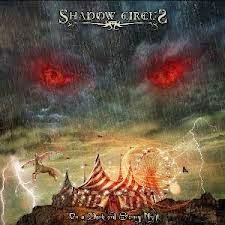
SHADOW CIRCUS On a Dark and Stormy Night
This is a theatric album of heavier rock that synthesizes and regurgitates some pretty obvious classic and prog rock sounds, stylings, and riffs. The result of this synthesis is often odd, surprising, and awkward. Sometimes it works. There is a lot of pleasant, if familiar, music to listen to here with one particular gem worth citing: the delicate and beautiful instrumental, "Ixchel."
1. The opening instrumental, "Overture" (5:57), has quite a RUSH feel to it--especially the final five minutes. I like the spacey first two-and-a-half minutes best. (7/10)
2. "Daddy's Gone" (5:57) A voice and singing style quite similar to that of NOEL McCALLA (of Mike Rutherford Smallcreep's Day fame) As a matter of fact, other than the guitar lead and the drum work, this song has quite a Smallcreep feel to it. Like the full use of the background synths on this. (8/10)
3. "Whosit, Whatsit, & Which" (6:34) has an awesome spacious, spacey first minute before a very standard bluesy 70s-ish guitar and Rhodes piano chord and A-B construct establish themselves. The singing this time sounds more like GUY MANNING with PINK FLOYD's famed Dark Side of the Moon background singers providing the support. I actually get bored with the way the keyboard and Peter Frampton-like electric guitar (by the way: I rather like P.F.'s guitar sound and styling) constantly mirror one another throughout instrumental cadences and interludes. (7/10)
4. "Make Way for the Big Show" (8:42) is the album's longest song. It begins with quite a nice piano intro in a pseudo classical Broadway musical-like style. At 1:37 the song shifts into rock mode with electric guitars and organ becoming part of the support. The rock portions of this album are beginning to sound so familiar. Halfway between ANDREW LLOYD-WEBBER's Phantom of the Opera and some of LOVERBOY's stuff from the late 70s. Or perhaps like today's hot new prog phenom, HAKEN. The piano and organ play, in particular, are particularly theatric/operatic.
5. "Tesseract" (5:20) is a CORVUS STONE-like instrumental that begins with quite an engaging, if familiar, pulse. The initial guitar soli/playing are also engaging, if very 70s-ish (Loverboy, Led Zeppelin). Little musical development is necessary in this one as it is really a vehicle for instruments to solo and show off their tight chops. A great recapturing of that 1970s metal sound and feel. (8/10)
6. "Uriel" (5:51) begins with piano, synths and cello weaving a loose, melodic tapestry which is then joined by the guitars and rhythm section at the end of the first minute to give us another kind of Smallcreep song. Pretty, syrupy, and pretentious. The singer is not quite up to the Noel McCalla skill level. The song shift at 2:50 is refreshing . . . until the singer/lyric and synth join in. Standard chord progressions and rock hooks throughout. (7/10)
The transition into song 7. "Camozotz" (6:23) is my favorite part of the album. But then, at the one minute point, a bouncy vaudevillian piano ruins it for me. The rhythm shift at 1:40 is equally awkward and mysterious. I actually enjoy the treated vocal--but don't really appreciate or understand the use of the Clare Torey/DSotMoon female background vocals. The 3:20 shift to ROGER WATERS-style music and vocal is again, nothing short of odd and awkward. Then at 4:10 a classic RUSH-like section ensues. Wild song! Wild ride! Quite a cut-and-paste imagination! The final minute, I have to admit, really works--screaming treated vocal with screaming background lead guitar over slow, hard-driving rhythm section. A classic Pink Floyd ending! (8/10)
8. "Ixchel" (4:40) changes things up a bit with a very beautiful STEVE HACKETT-like nylon-string guitar intro. At 1:25 synths and guitar enter in a slow volume and entry- and decay-controlled fashion. At 2:40 multi-layered voices (male and female) beautifully mirror the piano's right hand melody. Then 'strings' take a turn doing the same mirroring and support job, finishing, then, with the voices and piano. A gorgeous, delicate, mature song. (10/10)
9. The album's final song, "The Battle for Charles Wallace"(7:00) is another re-visitation to the realm of classic 1970s blues-rock as so well put together by another 2012 album, CORVUS STONE's eponymously titled debut album. After a nice three-minute intro, the song shifts into an almost straightforward "it must be love" rock song. At 3:45 a 25 second burst of whole-band syncopated heavy metal power chords takes us in another direction. But then at 4:10 we are treated to a section of multi-layer rondo- and MOON SAFARI-like vocals. At 5:50 we are treated to a cool upper register electric guitar arpeggio riff to shift us into the finale mode--ascending and descending electric guitar scales over thick, heavy Phantom of the Opera organ. (I wonder: Are the theatric, Phantom-like similarities and flourishes intentional or accidental?) Weird song that kind of works. (8/10)
Nicely crafted, well-produced recreation of 1970s heavy-yet syrupy theatric melodic rock in the STYX/LOVERBOY/HAKEN vein.
As my reviews of 2012 album acquisitions comes nearer to the end I have to say that the trend I am feeling from today's "prog rockers" is more of incorporation, assimilation, synthesis, replication, regurgitation with some re-interpretation of older prog and classic rock themes, sounds and styles. This is not necessarily a bad thing, but it does leave one with a bit of a let down because there is this constant feeling of "heard this before" or "this isn't anything really new." If this is what it takes for modern bands to grow and internalize the roots of progressive rock in order to, then, crysalize and morph into their own innovative, uniquely creative "progressors" of (rock) music, then so be it. I will gladly wait out this evolutionary period--I await the emergence of new, fully-formed and independent . . . butterflies.
3RDEGREE The Long Division
I have to admit that I was quite suspicious of a band's rating when its new album release starts climbing the charts due to the fact that no less than 9 out of the 13 entries in the "Latest members reviews" column are PA newbies who joined only to post a review of this one album (and two of the other four have rated less than ten albums and reviewed only one: this one and of the less than ten albums the list is suspiciously the same!) It's nice to have fans, nice to have a group helping to get your name and music out there. Whatever it takes, I guess. Time will obviously help this album settle into its true place among the releases of 2012.
Curious, I found their album on Bandcamp. And I've been listening.
1. "You're Fooling Yourselves" (6:51) sounds like a kind of DISCIPLINE-as-THE BEATLES classic rocker. There is a cute carnival-esque section beginning at the 2:56 mark followed by a SAGA-like semi-rap with vocal harmonies. Great section in the guitar solo beginning at the 4:40 mark. The vocalist does a pretty great job sounding like JOHN LENNON, revved-up PAUL McCARTNEY and early ROD STEWART. (8/10)
2. "Exit Strategy" (5:45) is a very perky, poppy STEELY DAN-meets-XTC to play THE TEA CLUB song. Truly some great multiple vocal arrangements here. Nice keyboard/mellotron and bass parts. A very catchy, cute song. (9/10)
3. "The Socio-Economic Petrie Dish" (6:52) is the weakest song on the album in its cheezy keyboards and poppy-pseudo-prog structure. Again I am reminded of STEELY DAN 1972- 75, pre-Aja. A very mediocre song'even with the melodramatic 'Occupy' crowd sample in the final minute. (5/10)
4. "Incoherent Ramblings" (7:44) begins with a vocal melody that fails to connect. Once the song establishes its support structure it doesn't get much better. It's almost like an average BEACH BOYS or a bad XTC song. (7/10)
5. "The Ones to Follow" (3:12) is a cute pop song in the vein of XTC and GEORGE HARRISON. (7/10)
6. "A Work of Art" (2:50) begins with some arpeggiated electric piano chords before weaving in some other subtle instruments, vocals, and eventually saxophone. The keyboard sound brings me back to some of RONNIE LAWS' proggier stuff in the late 70s (around the "Always There" and Flame period). (7/10)
7. "Televised" (6:52) with its old synth sounds harkens back to some late 70s classic rock songs. When the song kicks into high gear around the 1:50 mark it is definitely treading on MATTHEW PARMENTER/DISCIPLINE territory. Then a clavichord enters! Surprises abound in this one: falsetto vibratos, Motown-like female b vox. As the song progresses it morphs again into more XTC ground. An unusual but kind of intriguing mix. Perhaps the most original song on the album. (8/10)
8. "The Millions of Last Moments" (2:06) starts out very much like KANSAS' "Dust in the Wind" before a jazzy CHET ATKINS-like electric guitar joins in. A pretty instrumental guitar duet. (7/10)
9. "Memetic Pandemic" (7:29) begins with a bare piano, joined by a GEDDY LEE-like voice before morphing into a GENESIS/BIG BIG TRAIN/ECHOLYN-like song. Interesting ECHOLYN/ BEATLES-like vocal harmonies. Love the GENESIS picked electric guitar interlude at the 1:45 mark and the MIKE OLDFIELD-like fuzz guitar playing in tandem with the early-TONY BANKSian synthesizer that follows. Despite the "There Must be Some Misunderstanding" bass line and chord progression.in the next section, this song develops and catches one very much like a very good ECHOLYN song. The drumming on this one stands out for me: PHIL COLLINS-ish. The section that begins at 5:15 is great for its organ, b-vox, and GENESIS-era P GABRIEL vocal. The last minute and a half enters into more of a BEATLES feel. (9/10)
10. "A Nihilist's Love Song" (3:21) starts out with a lyric and melody that reminds me of a choral version of TODD RUNDGREN's "Just One Victory." As it goes on I am more reminded of JON BON JOVI. (8/10)
I am pleasantly surprised to find that this is, in fact, an interesting album--especially for its varied collection of sounds and influences. It is, however, a little more pop oriented than I expected. My favorite songs are definitely the perky "Exit Strategy" and the ECHOCLYN-like "Memetic Pandemic." As a matter of fact, if one were to try to extract the essence of this album, it would be the XTC, STEELY DAN, and ECHOLYN familiarities. I actually like this album better than the much-praised 2012 Echolyn release, Echolyn. (Ironic that the BRETT KULL-mixed "You're Fooling Yourself" is not even, IMO, the most ECHOLYN-sounding song on the album!)
78.0 on the Fish scales = 3.5 stars rated up for factors of intrigue and quirkiness.
Albums from 2012 that Are, IMHO, Over-rated

FREQUENCY DRIFT Laid to Rest
I am very happy for the success of Frequency Drift as I have loved following the recent arrival and evolution of the band, from cinematic/soundtrack music to 2011's masterpiece, Ghosts.... They are an immensely talented, wonderfully creative band. But, try as hard as I have, (I've owned Laid to Rest for several months now), this 2012 release does not please me, does not draw me in or amaze me half as well as Ghosts... did/does. A lot of the dynamic shifts have been watered down, the band seems to have moved more toward a softer, more drawn out, slow development approach to composition and performance. I find myself waiting for the peaks, waiting for the dramatic shifts, even waiting for the magical weaves of multiple instruments that I so loved on Ghosts.... But they are not there. Over and over, weeks apart I've returned to this album saying to myself that I must be missing something, that I must be in the wrong mood or that I'm just not giving it my fullest attention. The posting of this review is my admission that I am finished trying. Laid to Rest is being laid to rest. I'm so sorry.
3 stars.
DIAGONAL The Second Mechanism
The production is GREATLY improved, however, musically The Second Mechanism is quite disappointing since I LOVED their debut. This one is not so classic, not so raw, and it's more syrupy and slow--not bad, just never as great or fresh or driving as the first one. Also, I rather liked the "dirty" production of the first album, this one is so clean and pristine (which is nice, I must admit, for the spacious, softer [more KARDA ESTRA/CAMEL-like] parts).
Favorite songs: the ANEKDOTEN-like "These Yellow Sands" (7:59) (8/10), "Mitochondria" (9:41) (9/10), and "Hulks" (10:35) (8/10) (horns and fem b vox), and the eerily mood-capturing, CURE-ish "Capsizing" (9:10) (9/10).
An excellent prog album, just not up to the pace set forth by their first one. Still, recommended. (Just try to take it on its own terms--forget the dynamism of the first release.)
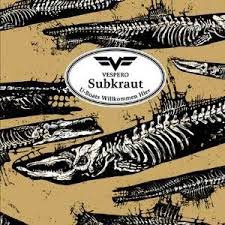
VESPERO Subkraut: U-Boats Welcome Here
Nowhere near the quality or emotional impact of their previous studio or live albums. The music here feels more rhythm
driven rather than rhythm explorative, or improvisational, as I felt on
By The Waters of Tomorrow and their live albums. I do not like the direction this band has chosen to go.
MAHOGANY FROG Senna
After several dedicated listens through this album over the past few months I am finally ready to post a review of this highly acclaimed album from 2012. An instrumental album in the vein of OZRIC TENTACLES, HYPNOS69 and QUANTUM FANTAY with a little more emphasis and volume given to the drums and computer-generated sounds and keyboards and a little less emphasis on predictable melody and structure. (This is no jam band!) While I have enjoyed my listens, and have been entertained and engrossed in their sound (especially the computer keyboard work), and I do appreciate the passion coming from the drummer, it is doubtful that I will find myself returning to this album very often.
1.
“Houndstooth, Part 1" (4:04) starts out sounding a bit like one of my favorite alubmartists, STEREOLAB’s
Dots and Loops before the organ is joined by some psychedelic fuzz guitar, computerized drum sounds and rhythms, and builds into what is obviously an instrumental. Kind of cool. (8/10)
2.
“Houndstooth, Part 2” (5:29) keeps the 60s fuzz/treated guitar and bass sounds with live acoustic drums and some KRAFTWERK/OMD-like keyboard sounds all packaged into a kind of 60s psych pop or 80s bubble gum TONY BASIL-like sound and feel. Happy and psychedelic even a little bluesy. (7/10)
3.
“Expo ‘67” (5:04) sounds like a new version of EDGAR WINTER’s “Frankenstein” to me. Same instruments, same riffs, same structure. (7/10)
4.
“Flossing with Buddha” (4:35) birds and church organ start out this one before it turns into a kind of Brit-pop song again straddling the late 60s and the bubble gum pop of the 80s. (Lulu, The Buckinghams, Adam Ant, Yaz, The The.) (7/10)
5.
“Message from Uncle Stan: Grey Shirt” (8:29) some of Mahogony Frog’s intros, like this one, remind me of fellow Canadians, GODSPEED YOU! BLACK EMPEROR. Lots of chaos and cacophony—like an orchestra tuning before a concert. Uncle Stan (in the Grey Shirt) must be totally wasted cuz this song is all about chaos and really having a slow and tough time (being able to) getting it together. Finally, a kind of "House of the Rising Sun" meets "Pomp and Circumstanc"e pulls itself up out of the dross and then morphs into a “This Is The Doors” cover band intro for the final two minutes. Interesting. And psychedelic. (7/10)
6.
“Messsage from Uncle Stan: Green House” (3:49) starts out with a rather striking JAGA JAZZIST sound to it. Indecipherable babel of voices accompanies the music for a little while until it all descends into a slowed down, heavily sound-effects-accompanied heroine trip. Ends on a structured note. (6/10)
7.
“Saffron Myst” (4:02) is a melodic, almost laid-back tune with synths/organ featured. Again, I am reminded of STEREOLAB and especially
Dots and Loops. (8/10)
8.
“Aqua Love Ice Cream Delivery Service” (7:46) carries over the synth trails from “Saffron Myst” while turning them into virulent crazy with a Todd Rundgren-like organ wash beneath to keep them all tied together. The guitar’s entry at 2:35 is wonderful and continues to build within the tornadic frenzy of the other crazed musicians. Again, I am reminded of some of TODD’s more adventurous experimentations with sound and noises in his early 1970s solo works. I even half expected it to end with the baton taps and Todd’s voice saying, “No! No! No! A little more humanity, please!” as he does at the end of “The Spark of Life.” But, no! The song quiets down, goes cyber-space crazy before a harpsichord enters to “restore” order—and fadeout the album! (8/10)
A highly creative album laced with psychedelia reminiscent of all of the past four decades’ technological and sound advances. This is not an album I will come back to as often as the above cited space/psychedelic artists because of a certain lack of, well, melody. But I will revisit it for the smiles and curiosities it generates.
3.5 stars rated up for creativity, uniquity and courage.
ECHOLYN Echolyn
This heavily praised album is, for me, missing the grit, life, and grist of other echolyn albums. It is a collection of homogenized skim milk. It is simple, thin, watered down prog, albeit pleasant but lacking substance, lacking warmth. It's like kissing your sister, like a fourth place finish at the Olympics, like the taste of artichoke without butter. The first song takes six and a half minutes to hook you in and then just teases you until the final two minutes (which are, I must admit, sublime). My favorite two songs, "Past Gravity" (7:10) (9/15) and "Speaking in Lampblack" (10:45) (8/20) are both pleasant, rather laid back, kind of STEELY DAN/BILLY JOEL-like mainstream-friendly compositions. The album's final two minutes of barbershop fun make me wonder if the band has any more left to give--kind of a feeling I get through this entire listening experience: life is hard, maybe it's time to die.
1. "Island" (16:38) (21/30)
2. Headright (3:00) (8/10)
3. Locust To Bethlehem (5:11) (8/10)
4. "Some Memorial" (11:54) (14/20)
5. Past Gravity (7:11) (13.5/15)
6. "When Sunday Spills (8:48) (16/20)
7. "Speaking In Lampblack" (10:45) (18/20)
8. The Cardinal And I (7:20) (12/15)
3 stars. At the most.
ØRESUND SPACE COLLECTIVE West, Space and Love
A benign flow of Indian-influenced Buddha-lounge-like space music with some nice grooves. Overall this album is dismissible in terms of prog contributions go.
THRESHOLD March of Progress
Well-performed heavy rock/lite metal which cries back to the classic rockers of the 70s and 80s like JOURNEY and OZZIE OSBORNE. Again I am plagued by my questioning of the placement of this rather straightforward music within the realm of "progressive" rock. The sounds are polished, the vocals strong and Ozzie-like, but these sounds and vocals fail to match up with the structural the band seems to be trying to work with. There are many decent songs on this album, including "Liberty Complacency Dependency" (7:48) (8/10) (politics!), "Colophon" (6:00) (9/10), "That's Why We Came" (5:40) (8/10), "Don't Look Down" (8:12) (8/10) (I don't like the chorus/harmonized vocals), and my favorite, "Coda" (5:23) (9/10), but then there are several that, to my ears, never rise above sounding like the average stuff from the the 80s, and "Divinity" (6:27) (7/10) seems a direct rip off from the work of MAYNARD JAMES KEENAN (especially PUCIFER). Still, nice work for the listeners of Octane radio.
I agree with other reviewers: nice use of keyboards.
3 stars.
Okay, here I go (again): Getting on my soapbox to incur the wrath and ire of fellow music lovers. sorry. I have honestly been listening to this music for over a month (though I must admit that I can only take a song or two at a time). Exactly how is this music good? Haven't you all read the books by Dr. Musaru Emoto and Alfred Tomatis and Joseph Campbell and Ram Dass: This kind of cacophony causes chaos and entropy, destruction and death! Even if I could find anything redeeming about this 'singing,' these 'vocals,' these lyrics, the music is so simplistic, so straightforward and so derivative of 70s rockers like BLUE OYSTER CULT and 90s innovator CYNIC that I don't get the grounds for all this praise! Even the Jem Godfrey/Frost* sounding "Storm of Memories" (8:57) (8/10) has a promising beginning with fewer doom/death growling (at least for the first three minutes). Unfortunately, it's all downhill from there. Machine gun drums and machine gun guitars. I just don't get it. Maybe as a caffeine or cocaine substitute this works for some people, but for what reason? Are we really that angst-ridden--that forlorn and lost--as a culture that this is the only outlet we can devise for our frustrations?
I am a believer that music is an expression of highest creativity, our highest art form with which to bridge material with spiritual. This kind of music is, to my mind, a slap in the face to all the great composers, artists and creators in human history. What a shame! What a waste of talent and potential (obviously, the players can play, their minds have creative capacity. I guess I should be looking at all this entropy and chaos as the Taoist balance to all the Light and Beauty, or as Karl Jung might: Out of shit the alchemist creates gold!)
Sorry, boys. I'll take Brahms' 3rd, Satie's "Gymnopedie," Renaissance's Novella, LeGrand's Pastorales de Noël, Bill Evans' Village Vangaurd recordings, Cocteau Twins' Tiny Dynamine, and any Baroque music over this, any day.