Waiting, hungry for musical changes that could match the social and political upheaval of the times, bands like THE NEW TROLLS and Antonio Bartoccetti's JACULA project had already been experimenting with infusions of classical instruments like chamber strings, church organ, and harpsichord and Baroque-like structures in a couple of albums in the late 1960s, while members of proto-progressive rock bands of what would become LE ORME, PREMIATA FORNERIA MARCONI (PFM) and BANCO DEL MUTUO SOCCORSO were quick to be taken with the new possibilities they were hearing from British bands.
Though 1970 saw the release of several landmark "first wave" albums from the likes of Venezia's Le ORME, Savona's THE TRIP, and Napoli's OSANNA, it was 1971 that was to became the true breakout year for Italian progressive rock albums. Between 1971 and 1974 a majority of Italian musical artists could be found experimenting with the new sounds, stylings, and formats being modeled by the "art rock" and "album rock" bands of the north. Many of these Italian bands merely dabbled in the medium by modifying their concert performances of old releases, while some went so far as issuing new single releases, or even albums using these new sounds, instruments, and "tools." As classical musical training was the most common background for Italians at the time, most of the early prog dilettantes had the advantage of excellent skills--which enabled them to jump into the prog formats with remarkable musicianship and compositional acumen. Though Beat music and blues-rock had both made their way into the fabric (and consciousness) of Italians, jazz and psychedelia were a bit new (and both exciting and intimidating), but the operatic, mythological, and theatric nature of Italian culture attracted many musicians to at least try out the new sounds and technologies now available to them.
The new phase of "rock progressivo Italiano" (RPI) was, however, fairly short-lived. Most Italian bands were very much done with their fantasy and sound explorations (many of which delivered very strong social-political messages) after one or two albums. Whereas the after-shocks of the progressive rock movement continued to reverberate across the globe for several years (delayed in further reaches of the planet), the Italian scene peaked in 1972 and 1973 and then declined rapidly. As a matter of fact, there can be found very few RPI album releases from the second half of the decade, most bands having already reverted to the more radio-friendly, shorter, poppier songwriting styles in order to have a better chance at making a living through their art. The last blast of classic era RPI came with the 1977 release of LOCANDA DELLA FATE's Forse le lucciole non si amano più--an album whose sound draws striking parallels to the GENESIS shift into more melody-oriented and radio-friendly sounds that they established on the English band's two 1976 releases, A Trick of the Tail and Wind and Wuthering (the sound styling that would go on to inspire and inform the movement of imitation later called "Neo Prog"). Only one band, PFM, really tried to make an extended commitment to the long-playing, album-oriented styles and formats--even going so far as to rework some of their earlier material with new, English vocals in an effort to try to reach the vast and large quantity sales potentials of the English, American, and Anglo-oriented audiences.
An Italian revival of progressive rock musical orientations began in the late 1990s with bands like NUOVA ERA, FINISTERRE, HÖSTSONATEN, MALIBRAN, IL CASTELLO DI ATLANTE, and GERMINALE producing multiple progressive rock albums--a movement that has only gathered momentum over the first two decades of the 21st Century. This new Italian Renaissance will have to remain the subject of another, more future, blog post.
Below I have ranked my personal favorite albums from the Golden Years of Rock Progressivo Italiano (1971-77) with their reviews. Enjoy!
An Italian revival of progressive rock musical orientations began in the late 1990s with bands like NUOVA ERA, FINISTERRE, HÖSTSONATEN, MALIBRAN, IL CASTELLO DI ATLANTE, and GERMINALE producing multiple progressive rock albums--a movement that has only gathered momentum over the first two decades of the 21st Century. This new Italian Renaissance will have to remain the subject of another, more future, blog post.
Below I have ranked my personal favorite albums from the Golden Years of Rock Progressivo Italiano (1971-77) with their reviews. Enjoy!

From a Genovesan trio comes a debut album that was really meant to be played straight through, like a rock opera (perhaps modeled after/inspired by Andrew Lloyd Weber's Jesus Christ Superstar--which first appeared on stage in London in October of 1971). Inspired by his participation in the recording sessions for I, Giganti's debut album, Terra in bocca, guitarist Giancarlo Marcello Della Casa urged his bandmates into the progressive rock fold. Some suspect that Alfio, Marcello, and Oliviero had already been working on the material, developing their music in stage performances--sometimes as a warmup band for Van Der Graaf Generator--that they had been inspired by the 1964 film of the same name that was made by Italian director Pierpaolo Pasolini.
Line-up / Musicians:
- Giancarlo Marcello Della Casa / acoustic, classical & electric guitars, violin, bass, lead vocals
- Oliviero Lacagnina / piano, Hammond organ, Mellotron, Crumar harpsichord, celesta, Moog, ARP Solina, vocals
- Alfio Vitanza / drums, bongos, congas, timpani, bells, whip, flute, vocals
1. "Introduzione" (2:19) cool choral singing that sounds like they're rejoicing--and who sound influenced by Russian/Eastern European diatonic singing--are soon joined by full rock "orchestra" to perform this rock opera-like opening. Awesome! What a great start! (5/5)
2. "Il Giorno Degli Azzimi" (1:57) nice theatric narrated music that sounds like an anachronistic Christmas sound palette. Such a great instrumental palette: classical guitar, harpsichord, Mellotron, celesta, full male & female choir (choir members from Milano's famed Teatro all Scala choir). The melody shifts a little while the narrator adds a few words before exploding into the next song. (4.875/5)
3. "Ultima Cena" (1:19) continuing with the same instrumental palette, the music shifts into a more jubilant and jovial Christmas style as the full choir joins in to shout their message in a female v. male antiphonal rondo. Great Hammond organ beneath that continues beyond the choir with piano, bass, drums, and searing electric guitar lead. (4.75/5)
4. "Getzemani" (4:15) opening with a saccharine, almost pastoral melody from the celesta, piano, classical guitar, Shaft-like ride-cymbal play, and Mellotron before a little line from the narrator and then a boisterous line from a proud tenor, the music then shifts into a strings and harpsichord-dominated palette that feels more Burt Bacharach-like. Vocalist Marcello Giancarlo Dellacasa enters with a "distant" effect muffling his voice slightly. A very cool rhythm pattern begins to move around as the excellent drummer, Alfio Vitanza, confidently leads the way--really moving and morphing his powerful, flanged drums from 2:36 on. Oliviero Lacagnina's anachronistic keyboards hold steady beneath, calmly anchoring the beautiful music, until electric guitars and Moog hits lead emphatic chord hits to signal a shift into full drive. The song ends so suddenly--as if cut off--and it's this way in every version I've heard from the 1972 album--even in the 2021 remaster. (9.875/10)
5. "Il Processo" (1:30) a spoken phrase opens this before the full Christian rock band bursts forth with full choir singing at the top of their lungs in lower registers, excellently arranged, for 30-seconds before retiring to let the drums, acoustic guitar strumming (12-string?), and multiple keyboards play out in gorgeous prog heavenliness: Moog soloing above piano and other layers. (Oliviero is operating, obviously, through several tracks.) (4.875/5)
6. "I Testimoni (parte I)" (6:03) classical guitar and lush Mellotron strings accompany the narrator's input for the first 17 seconds before a multi-voice harmonic weave is enacted by Alfio, Oliviera, and Marcello. The guitar and 'Tron parts quiet down a bit while Oliviera gets his piano ready to enter and play a wonderful jazzy solo over Alfio's wonderfully-reactive drum play: these guys are really synched in so well! Marcello's distorted electric guitar can be heard strumming as the volume gets turned up so that he can step in for a pretty awesome solo of his own--one that is somewhat jazzy, as well--more like something from Carlos Santana or Larry Coryell's guitars. The song finishes with some solo conga playing out as the guitar and drums fade beneath--but, no! The drums are still there! And the piano is faded back in for the sixth minute--and the guitar a bit later! How cool! How creative! Will these guys ever stop blowing me away? (9.75/10)
7. "I Testimoni (parte II)" (2:18) congas and distorted electric guitar wailing away as Alfio's drums and Oliviero's piano are faded back in (again). The song plays out, this time, with Alfio's two tracks maintaining while the others are faded out. Nice! (4.625/5)
8. "Il Pianto" (1:49) one of the boys is performing at a range that is more befitting to a castrati while the piano, 'Tron strings, and picked acoustic guitar blues out beneath over a fairly familiar/standard Christian musical chord progression (that of Pachelbel's Canon?) Impressive! (4.75/5)
9. "Giuda" (0:44) Whoa! I was not expecting this! Machine gun-like drum-and-guitar-strumming alternated with Beatles' "When I'm 64"-like cabaret piano music, the latter of which Marcello sings, also in a kind of flippant vocal like Paul McCartney used in his afore-mentioned song. The sound and mix of this song lead me to believe that the band had, in fact, heard Andrew Lloyd Weber's rock opera/musical version of the Christ story. Those frenetic guitar and drum parts are amazing! Like the best any hard rock band could offer! (5/5)
10. "Il Re dei Giudei" (1:40) now we're in the full sonic glory of Rock Progressive Italiano--a palette and song that could be dropped into so many of the "classic" RPI masterpieces and one would never give it a second look. Nice guitar play from Marcello. (4.75/5)
11. "Il Calvario" (7:05) heavy music with the bass-end of the male choir announcing the scene. This is then left off in lieu of a very dramatic, heavy church pipe organ piece from 0:37 to 3:05. From here on out host of angels on high, courtesy of the Teatro all Scala choir from Milan, sing over Alfio's plodding drum processional. Marcello's lead guitar enters at 4:04, supplanting the choir with his slow, drum-mirroring rhythmic melody play (also reminding me of the guitar solo during the crucifixion scene in Jesus Christ Superstar). The choir returns to the mix at 5:10 as Marcello begins to go off the rails: really putting his heart and soul into his emotional guitar solo. Cymbal crash at 6:05 ends both the choir's dirge and Alfio's martial drum processional, making way for classical guitar and the intimate voice of the narrator. (14.75/15)
12. "Il Dono della Vita" (3:43) harpsichord, celesta, (ARP Strings?), and flanged electric guitar pickings, reverbed vocal, and flute all contribute to this rather sad song. But then, at 2:20, the organ and choir take over and seem to be rising--in both intensity/volume and spirits. Is He back? Is that really Him? (9.125/10)
Total Time 34:42
Total Time 34:42
It is not because I was raised in the Catholic church or because I am from a Christian background that I love this album so much; it is the extraordinarily well-crafted music--the way these three guys have envisioned and pulled off a perfect blend of anachronistic "mediæval" liturgical music with rock instrumentation and power and the full integration and optimal use of a professional choir--into such a seemlessly flowing and surprisingly-diverse musical tapestry. It's amazing! Definitely, in my humble opinion, the apex/pinnacle of achievement in Rock Progressivo Italiano!
96.62 on the Fishscales = A/five stars; a full-blown masterpiece of full-blown progressive rock music. One of the crowning achievements of "Classic Era" progressive rock music (not just RPI). ESSENTIAL!
96.62 on the Fishscales = A/five stars; a full-blown masterpiece of full-blown progressive rock music. One of the crowning achievements of "Classic Era" progressive rock music (not just RPI). ESSENTIAL!

2. IL BALLETTO DI BRONZO Ys (1972)
Powerful, in-your-face, confrontational, emotional, and compelling music from these Napoletanos--a very far place from the music of their debut album two years earlier (Sirio 2222). Very thoughtful, intentional song construction and performances telling the story of an individual's encounters with darkness and Death. Rarely is music so well fit to the theme of its story content as it has been rendered here.
Though many give credit to singer-keyboard whiz (and former Città Frontale member) Gianni Leone for this project, I must here give proper recognition and adulation to the other three band members as well as the female choir: all are integral--even essential--to the overall effect of this music! I cannot begin to imagine the chilling effect of desperation and fear to be so well rendered without the wild, powerful and often jarring contributions of lead guitarist Lino Ajello, without the eery and unsettling gifts of the background "angel" vocalists, and certainly not without the incredibly tight, subtly virtuosic, and unfailingly steady groundwork supplied by bass player Vito Manzari and drummer Giancarlo Stringa. Gianni may have been in the driver seat but his vision would never be so successfully realized were it not for his highly skilled crew members (who must have fed off of Gianni's vision in order to have performed at such a laser-focused level).
Though many give credit to singer-keyboard whiz (and former Città Frontale member) Gianni Leone for this project, I must here give proper recognition and adulation to the other three band members as well as the female choir: all are integral--even essential--to the overall effect of this music! I cannot begin to imagine the chilling effect of desperation and fear to be so well rendered without the wild, powerful and often jarring contributions of lead guitarist Lino Ajello, without the eery and unsettling gifts of the background "angel" vocalists, and certainly not without the incredibly tight, subtly virtuosic, and unfailingly steady groundwork supplied by bass player Vito Manzari and drummer Giancarlo Stringa. Gianni may have been in the driver seat but his vision would never be so successfully realized were it not for his highly skilled crew members (who must have fed off of Gianni's vision in order to have performed at such a laser-focused level).
Sadly, Ys was the band's last album, coming only a year after 1971's rather lame, Sirio 2222, (on which Gianni Leone was a late-comer). The band disbanded in 1973.
Line-up / Musicians:
- Lino Ajello / guitar
- Gianni Leone / vocals, piano, Hammond organ, Moog, Mellotron, spinet, celesta
- Vito Manzari / bass
- Giancarlo Stringa / drums
With:
- Giusy Romeo / backing vocals (1)
- Rosanna Baldassari / backing vocals (1)
- Flavia Baldassari / backing vocals (1)
1. "Introduzione" (15:11) opens with female voices followed by long, sustained organ chords before singer Gianni Leone begins to tell the story. At the three minute mark the music shifts into fourth gear. Four almost tow minutes, while Gianni sings, the band cruises along very tightly. Then everything shifts to a kind of long bridge of stops and stars, female choir singing "da-da-da-das" before the band breaks into a new NEKTAR-like groove with keyboards and then guitars taking the foreground for soloing. This goes on for over minutes with some searing organ and guitar work over the rock-solid bass and drum foundation. Then, at 9:38, everything shifts to a new spacey, almost Kosmisches section with dreamy, floating drums and bass through which Mellotron and Gianni's voice Then at 11:35 things shift back into the fourth gear for a bit before settling into a new middle-paced but menacing groove over which Gianni sings. The non-singing sections ramp up into a harpsichord-propelled higher gear, alternating over the final four minutes with the mid-paced vocal sections. This back-and-forth style is carried forward into the next "song." (I can see that the album is really intended to be one "song" as the songs all flow one into the other without breaks or gaps.)- Gianni Leone / vocals, piano, Hammond organ, Moog, Mellotron, spinet, celesta
- Vito Manzari / bass
- Giancarlo Stringa / drums
With:
- Giusy Romeo / backing vocals (1)
- Rosanna Baldassari / backing vocals (1)
- Flavia Baldassari / backing vocals (1)
One distinctly gripping aspect of Side One of this album is the vocal pitch and style chosen by Gianni in his delivery of these lyrics about this individual "Voice" and his descent and travels into the depths of internal and/or spiritual darkness. Brilliant! And showing such fortitude and commitment. (28.5/30)
2. "Primo Incontro" (3:27) is a continuation of the last section of the "Introduzione" with new inputs from the lead guitar (power strums, fuzz, piercingly clear) and different variations and contributions from the chorus voices. Gianni's lead vocal melody and styling remains rock steady, consistent. (9.5/10)
3. "Secondo Incontro" (3:06) opens side two with a single full band hit which is then followed by a section of heavily echoed a cappella vocal "cries" which transitions into a kind of power bridge before Gianni sings in a more fatigued, plaintive voice styling over Mellotron. The alternating powerful instrumental sections with these sparsely backed vocal sections continues over the course of the song. (9.5/10)
4. "Terzo Incontro" (4:33) shows an immediate shift into more uptempo jazz lines--especially from bass and drums. The electric guitar is in continuous solo mode though all of its notes are being trapped in a heavily-oscillating squealing electronic effect while piano and organs and "boom-boom" vocals coming from the angel choir. It's not until 90 seconds into the song that things thin out and Gianni begins to sing. The walking bass and jazzy drum lines remain constant and fixed throughout the first three minutes but then there is a sudden drop off and a squirrelly synth-backed vocal bridge occurs which is then alternated with a couple of full-on ELP-like bursts to the song's end. (9.5/10)
5. "Epilogo" (11:30) opens at breakneck pace with bass and drums admirably keeping up every step of the way with Gianni's classically-trained piano and organ play. electric guitar and other electric keyboard and organ sounds are introduced with a new funked up, almost military-style rhythm foundation. Very cool! Then, at 2:35, everything quiets down for some Mellotron, creepy intermittent bass and piano riffs with Daevid -like glissando guitar floating around. The intermittent and syncopated instrumental interjections continue as the vocalist seems to be acting stressed. When he does finally start singing, he sounds so tired, perhaps defeated--while the music sounds perhaps its bleakest, most horrific yet. Is this insanity? Or the state of mind just before one gives up? Panned, flanged drums! cool effect. Heavily flanged bass, screeching guitars sounding like screaming banshees and distonal female voices singing so creepily over the insane piano playing. This continues for about five minutes before things finally . . . die(!?) A Bar-do-like stillness with occasional ripples of activity settles in for a few seconds before an energized "resurrection" ensues at the 9:40 mark. Piano and drums arpeggiating madly, angelic voices singing in unison bursts of encouragement and . . . life? And then an end of floating, heavily treated female voices giving the feeling of noncommitment, nonresolution, mysterious as if the resolution is thrown back at you, the individual, the Voice--as if we are being told that it's all up to you, it all results are fully dependent on personal choice--on self-reliance, self-sufficiency, self-empowerment. (20/20)
What a shocking, surprising end! Was he saved or entering Purgatory/the Afterlife? I guess only Gianni Leone and Il Balletto di Bronzo know.
Total Time: 37:47
While I consider this a masterpiece of both rendering and performance, as well as of conception, start to finish, the style of music and dated period-entrapped sound are not (nor have they ever been) my favorites. Still, the creative delivery of this material using all kinds of incredibly inventive effects and techniques is worthy of high, high praise, for Gianni Leone and Il Balletto di Bronzo have left behind this, a stellar masterpiece fully displaying the true and ultimate potential of music, progressive or otherwise.
96.25 on the Fishscales = A/five stars; a true masterpiece of human musical expression.

3. PICCHIO DAL POZZO Picchio dal pozzo (1976) (Canterbury Style)
A kind of core group, based in Genova, that welcomed a stream of contributing artists and sessions men (reminding me of the band concept of Steely Dan's Donald Fagan and Walter Becker), all started by and supported by Aldo De Scalzi (younger brother to NEW TROLLS's Vittorio De Scalzi) and his own small record label, Grog. Guitarist/milti-instrumentalist Paolo Griguolo and multi-instrumentalist Andrea Beccari were also involved in the initial project.
Line-up / Musicians:
- Paolo Griguolo / guitar, percussion, recorder (9), vocals
- Aldo De Scalzi / keyboards, percussion, alto sax & guitar (9), vocals
- Giorgio Karaghiosoff / woodwinds, flute (5), percussion, vocals
- Andrea Beccari / bass, horn, percussion, vocals
With:
- Cristina Pomarici / vocals (3c)
- Gerry Manarolo / guitar (7)
- Vittorio De Scalzi / flute (3b,5,8)
- Leonardo Lagorio (CELESTE) / contralto sax (5,7), flute (5)
- Fabio Canini / drums (5,6), percussion (3a,5,7)
- Carlo Pascucci / drums (5,7)
- Ciro Perrino (CELESTE) / xylophone (3), flute (5)
- Renzo "Pucci" Cochis / cymbal (6)
- Roberto Romani / tenor sax & flute (9)
- Aldo Di Marco / drums, percussion & vibes (9)
1. "Merta" (3:18) Whenever this song comes on my iPod playlist (which is quite often) I find myself thinking that this is a Robert WYATT song! The vocals, unusual weave of instruments, lack of drums, and Andrea BECCARI's odd horns sound just like something RW would have done in his SOFT MACHINE/MATCHING MOLE days. (10/10)- Aldo De Scalzi / keyboards, percussion, alto sax & guitar (9), vocals
- Giorgio Karaghiosoff / woodwinds, flute (5), percussion, vocals
- Andrea Beccari / bass, horn, percussion, vocals
With:
- Cristina Pomarici / vocals (3c)
- Gerry Manarolo / guitar (7)
- Vittorio De Scalzi / flute (3b,5,8)
- Leonardo Lagorio (CELESTE) / contralto sax (5,7), flute (5)
- Fabio Canini / drums (5,6), percussion (3a,5,7)
- Carlo Pascucci / drums (5,7)
- Ciro Perrino (CELESTE) / xylophone (3), flute (5)
- Renzo "Pucci" Cochis / cymbal (6)
- Roberto Romani / tenor sax & flute (9)
- Aldo Di Marco / drums, percussion & vibes (9)
2. "Cocomelastico" (4:25) is another song that always tricks me into thinking I'm listening to SOFT MACHINE. I love the way the horns play off of each other, and I love the odd synth playing far in the background throughout. Even the odd vocal is not unlike some of the Spanish stuff Robert Wyatt has done. The laid back, jazzy feel placed within the bar/cantina setting is brilliant. Just like the Softs or Caravan! Awesome song that I could listen to forever! (10/10)
3. "Seppia" (10:17) opens with some TANGERINE DREAM-like repeating synthesizer arpeggio which is soon joined by some oddly treated tuned percussion. When the vuvuzela-sounding horns enter with the big bass notes and, eventually, a kind of hypnotic driving rhythm, it's as if the band is trying to either drive the listener crazy or display what a drug trip or psychotic breakdown might feel like! It's actually quite fun--and very much like the feel and effect of a GONG or even Robert WYATT song. The band must have had a lot of fun doing this one. Wild, cacophonous, and random. Then there is a flute-filled break in the music, with a visit to a barnyard, followed by a pretty foundational weave of arpeggios from two electric guitars while a woman recites something dramatic over the top. Horns and then electric piano and tuned percussion then join in before some "Wah-wah" vocals enter the weave with several woodwinds. Gorgeous! This song unfolds similar to, though the opposite of countrymates YUGEN. (18/20)
4. "Napier" (7:28) opens with multiple woodwinds creating sustained cords before relinquishing the reins to a circus band. The use of dissonance here is wonderful--very Robert FRIPP/KING CRIMSON-esque. Soon the circus band moves more toward a MIKE OLDFIELD medieval troubadour sound before everything drops out at the 3:00 mark for a little odd piano play. Organ-backed male vocal singing in Italian moves us into a new section--one that is much more Canterbury jazz with the awesome multiple horns all soloing and weaving with voices, cymbals, octave climbing bass notes and piano. Horns, cymbals and electric Rhodes piano take us through a full minute before the jazzy quintet plays out the final half minute (which is faded out rather suddenly--poor engineering). (13.5/15)
5. "La floriculture di Tschincinnata" (4:24) is a rapidly changing and diverse song that would be very fitting among the CARAVAN or SOFT MACHINE repertoire. Several really awesome melodies and chord progressions are explored here as well as some really fun crazed soloing--all at the same time--from the horn, Casio-sounding synthesizer, electric guitar, and drums--all while the bass keeps the steady time that provides the foundation for the song to rest upon. This is where the 21st Century's Italian Canterbury style torch bearers, HOMUNCULUS RES, get their inspiration for silliness and tight group play! (9/10)
6. "La bolla" (4:31) repeats the Robert WYATT wordless vocal style that I heard in the album's opening song, "Merta"?creating over a melody line that is played over a repetitive JOHN COLTRANE-like piano chord progression--a melody line that will eventually become picked up by the horn and acoustic guitar before being woven in with the voice. (10/10)
7. "Off" (4:48) opens like another JOHN COLTRANE tune with harp-like arpeggiated piano play covered by mellifluous flute play. Absolutely gorgeous! At 1:56 a male voice enters up front and center singing more wordless "wah-wah"s into the tapestry. Gentle, beautiful, pastoral song that would be fitting if performed out-of-doors. Definitely one of my favorite Canterbury songs. (10/10)
Total time: 39:11
My favorite Canterbury Style album ever made in the "Classic" era. In 1976, this debut album caught everyone by surprise for its unmistakable Canterbury feel and familiarity--and this from a group of Italians! I mean, Dutch, French, and even Belgian and German 'members' of the Canterbury Scene might be understandable. They are, after all, just across La Manche from County Kent and the great cathedral town of Canterbury. But Italy?!! And an amazingly excellent album did Picchio dal Pozzo come up with!
Over all this is an album of playful, fun, gorgeous melodies, and wild and at times complicated jazzy instrumental weaves very much in the Canterbury vein of musical approach. Due to the joyful emotional reaction I get when each and every song comes into my ear, Picchio dal Pozzo has supplanted KHAN's Space Shanty as my favorite Canterbury Scene album.
94.70 on the Fish scales = A/5 stars; a true masterpiece of progressive rock music!

4. PREMIATA FORNERIA MARCONI Per un amico (1972)
(PA review from 2/28/2009:) My renaissance into the world of progressive rock began one year ago with the discovery of Prog Archives. (Thank you all!) With it I at first concentrated on refamiliarizing myself with all of the music I purchased and loved in the 1970s, I am now beginning an adventure into all of the music I missed which Progarchives.com reviewers have praised. I am now the VERY HAPPY owner of my first PFM disc, Per un amico. Just as all the reviewers have raved, it is clearly a classic, with excellent songwriting, instrumentation, musicianship, vocals, pace, melody, and very few flaws or 'misses.'
Milan-based "La Premiata" (and, later, "PFM") released their debut in early 1972 and, later in the same year, this, their second album. Many consider Per un amico one of the peak achievements of RPI.
Line-up / Musicians:
2. "Generale" (4:18) is a romp through the sheer fun of Django-land. The fuzz guitar is a bit dated, but the high standard of musicianship throughout is enough to garner respect. (In the second section of this song, is this possibly the first "orchestra hit" as made famous years later by Trevor Horn with his Fairlight CMI?) [8.5/10]
3. "Per Un Amico" (5:23) shows off a gentler, subtler side with more constant mood and tempo streams, and with such wonderful clarity in the sound mixing, and, of course, the wonderful presence of violin and mandoloncello. This song is especially representative of the way PFM masterfully incorporates the electronics among the wonderful acoustic. [10/10]
4. "Il Banchetto" (8:39) opens with the wonderfully clear guitars, followed by the beautiful CS&N-like vocals and bass, before setting up the haunting moog solos, harp arpeggios, and background mellotron, before a Keith Emerson-like keyboard interlude. With the return of drums, Nash bass and vocal harmonies the group brings the song to a satisfying if sadly premature, end. [15/15]
5. "Geranio" (8:03) again opens with a quieter, almost medieval-then-Debussy/jazz section alternating with a Beach Boys "Pet Stories" theme, before taking us back to the twists and turns of una carnivale for a while. While the fuzzed-up bass and accompanying synth of the outgoing section get a bit annoying after the eight or twelfth measure, the album ends in a way that leaves the listener wanting so much more. [13.5/15]
Line-up / Musicians:
- Franco Mussida / lead vocals, electric & acoustic guitars, 12-string guitar, mandocello, theorbo (?)
- Flavio Premoli / lead vocals, Hammond & Pari organs, MiniMoog, Mellotron, harpsichord, piano, spinet, tubular bells
- Mauro Pagani / flutes (contralto,piccolo), violin, backing vocals
- Giorgio Piazza / bass, backing vocals
- Franz Di Cioccio / drums, percussion, backing vocals
The opener, 1. "Appena Un Po'" (7:43) is so tight and full of surprises and twists with such wonderful balance of melody and superior musicianship, both acoustic/classical and electronic rock instrumentations, that it cannot fail to win over the new listener immediately(--as it did me). Classical guitar, flute, and harpsichord help get us started before the rock band joins in. The song structure remains complex in a kind of classical style even as the song moves into the rock domain. The vocals are delicate, soft, and beautifully arranged--are perhaps my favorite part of this song. A ROBERT FRIPP-like guitar play with mellotron, chunky bass, Michael Giles-like drumming, and haunting Arp synth solo occupy the mid-section after the first vocal presentation. A second instrumental section using a kind of carnival sound and feel then follows. By the end of the sixth minute, the vocals return and take us into a final Mellotron, organ, and synth-drenched KING CRIMSON "Court of the Crimson King" section to the end. [14.5/15]- Flavio Premoli / lead vocals, Hammond & Pari organs, MiniMoog, Mellotron, harpsichord, piano, spinet, tubular bells
- Mauro Pagani / flutes (contralto,piccolo), violin, backing vocals
- Giorgio Piazza / bass, backing vocals
- Franz Di Cioccio / drums, percussion, backing vocals
2. "Generale" (4:18) is a romp through the sheer fun of Django-land. The fuzz guitar is a bit dated, but the high standard of musicianship throughout is enough to garner respect. (In the second section of this song, is this possibly the first "orchestra hit" as made famous years later by Trevor Horn with his Fairlight CMI?) [8.5/10]
3. "Per Un Amico" (5:23) shows off a gentler, subtler side with more constant mood and tempo streams, and with such wonderful clarity in the sound mixing, and, of course, the wonderful presence of violin and mandoloncello. This song is especially representative of the way PFM masterfully incorporates the electronics among the wonderful acoustic. [10/10]
4. "Il Banchetto" (8:39) opens with the wonderfully clear guitars, followed by the beautiful CS&N-like vocals and bass, before setting up the haunting moog solos, harp arpeggios, and background mellotron, before a Keith Emerson-like keyboard interlude. With the return of drums, Nash bass and vocal harmonies the group brings the song to a satisfying if sadly premature, end. [15/15]
5. "Geranio" (8:03) again opens with a quieter, almost medieval-then-Debussy/jazz section alternating with a Beach Boys "Pet Stories" theme, before taking us back to the twists and turns of una carnivale for a while. While the fuzzed-up bass and accompanying synth of the outgoing section get a bit annoying after the eight or twelfth measure, the album ends in a way that leaves the listener wanting so much more. [13.5/15]
Total time: 34:06
The perfect blend of complex experimental virtuosity and haunting melodic memorabilia. My only complaint is in the very low sound levels for the soft, delicate parts contrasted with the loud levels of the dynamic parts.
The perfect blend of complex experimental virtuosity and haunting melodic memorabilia. My only complaint is in the very low sound levels for the soft, delicate parts contrasted with the loud levels of the dynamic parts.
A very enjoyable and addictive listen even 37 years after its recording/release. So, I start it over again--until I can start adding the rest of PFM's classics (and maybe more) to my collection. My revised song-by-song rating system ("the Fish scales") yields a 9.4 out of ten average (94.62 on the Fishscales); making it a 5 star album on the Progarchives scale. I think this album is an essential asset to anyone's Prog collection.

Had I never heard of PFM and happened to stumble upon this album first, I would have thought, "Oh! Here's a very good Genesis imitator!" The employment of Bernardo Lanzetti for the English lead vocals duties was pretty ingenious considering his amazing Trespass-era Peter Gabriel voice similarities. I understand (and forgive) the band for abandoning their native tongue as its use had, perhaps, supplied an impediment to their non-Italian album sales.
1. "From Under" (7:31) Hearing this for the first time--without knowing who or what I was listening to--I'd be thinking, "When did Peter Gabriel get together with Keith Emerson, Steve Howe, Lenny White, Jerry Goodman, and John Entwistle?" (14/15)
2. "Harlequin" (7:50) is all Genesis, with some "Knife"-like sounds and motifs--especially in the heavily-effected vocals of Bernardo Lanzetti. There's even a little JTULL-ishness in the final couple minutes. (15/15)
3. The high-powered "Chocolate Kings" (4:41) feels like a cross between a GENTLE GIANT and STRAWBS or even THIN LIZZY song (despite the use of violin and other more folk-oriented instruments). Not my favorite. (8.5/10)
4. "On the Roundabout" (7:56) a delicate opening allows the listener to really get a taste for the GENTLE GIANT-like instrumental prowess of the band members. The equally delicate vocals run between The Strawbs' DAVE COUSINS And Nursery Cryme-era Peter Gabriel. The instrumental passages definitely breathe more Gentle Giant (or Spirogyra/Dixie Dregs) than with the second half of the fifth minute being particularly spectacular for the instrumental displays. These guys could certainly go toe-to-toe with countrymates CERVELLO or AREA as well as the Mahavishnu Orchestra. (14.5/15)
5. "Paper Charms" (8:34) though a little less cohesive of a song than some of the previous masterpieces, this is a mulit-faceted song that definitely continues to put on display the virtuosity of these musicians. Wow! (18.75/20)
Total time: 35:32
Though I'd never heard of PFM before I joined ProgArchives in 2008, I quickly fell in love with Per un amico and L'Isola di niente but resisted trying this album out (despite its high ratings) because I had read from several reviewers that this album was nothing more than the Anglicized version of Per un amico. Now I know that THIS IS NOT TRUE. This music and album are unique phenomena in their own right.
94.333 on the Fishscales = A/five stars; a certifiable masterpiece of progressive rock music with musicianship and composition of the highest possible quality. Definitely an essential addition to any self-professed "prog lover"s music collection.
Though I'd never heard of PFM before I joined ProgArchives in 2008, I quickly fell in love with Per un amico and L'Isola di niente but resisted trying this album out (despite its high ratings) because I had read from several reviewers that this album was nothing more than the Anglicized version of Per un amico. Now I know that THIS IS NOT TRUE. This music and album are unique phenomena in their own right.
94.333 on the Fishscales = A/five stars; a certifiable masterpiece of progressive rock music with musicianship and composition of the highest possible quality. Definitely an essential addition to any self-professed "prog lover"s music collection.

6. AREA Crac! (1975) (Jazz-Rock Fusion)
The second AREA album I'd ever heard (after Arbeit Macht Frei), there was so powerful of an impression made on me by this latter album that I failed to follow up by exploring other AREA albums for years. Luckily, I got unstuck and moved outward, into the band's other discography.
Coming two years and one album after Arbeit (with Caution Radiation Area having been released in 1974), the growth in musicianship, studio mastery, and tightened song-writing skills is quite noticeable here. While Arbeit shocked with musical and lyrical force and brashness (it was the band's debut release), Crac! supplies proof that this band is not just a political force but that it must be looked at and respected from a musicianship perspective as well. It is an album of astounding musicianship--virtuoso performances that rival anything else the jazz or jazz fusion worlds has ever created. The amazing thing is that this album stands up perfectly even today--it sounds as if it could have been made today. I will go even farther as to say that this album exceeds my heretofore respect and reverence for all-things Mahavishnu as I think the sound engineering and overall production far surpass those of any of the Mahavishnu Orchestra albums. And the musicians and compositions are so tight! Thus, I find myself wanting to proclaim Crac! as perhaps the best jazz-rock fusion album of all-time! And drummer Giulio Capiozzo may be the best jazz-rock fusion drummer I've ever heard!
Lineup / Musicians:
2. "La Mela Di Odessa" (6:27) opens with a kind of SUN RA-spacey-free-form-jazz sound and style, that moves quickly into a drum and percussion display before harpsichord, Arp synth and electric bass join in and move the song into structure and drive. Nice TONY WILLIAMS/MAHAVISHNU feel to this one until, after 3:10, things shift to funk land. The clavinet, synths and horns are prominent along with Demetrio's commanding vocal performance--all in spoken form. So tight! Drummer Giulio Capiozzo is extraordinary (as is Demetrio). (13.5/15)
3. "Megalopoli" (7:53) opens with some play on the Arp synthesizer before Demetrio joins in with multiple tracks of his voice free-styling. Electric piano and bass clarinet join in the atmospheric play before a drum roll takes us out and into a new funky jazz excursion with a great melodic base. Demetrio's wordless vocal scatting over the top is, at first, like a substitute for a lead guitar or sax, but then gives way to an extraordinary jam between drums, bass, electric piano, organ, and synth. The Mahavishnu Orchestra was never this tight or well recorded! Incredible drumming! Why is this guy never included in the talk of the greatest of the greats? (15/15)
4. "Nervi Scoperti (6:35) Every time I hear this song I think I am listening to one of the all-time greatest prog fusion songs ever created and that, thus, it has to be a product of Corea/RTF, Miles, Mahavishnu, Cobham, Williams, or even a straight jazz genius. But it's not. It's AREA! Astounding, stupendous, incredible, jaw-dropping performances from everybody in the band. What a band! This one deserves extra-credit for being exactly what I said: one of the very best jazz fusion songs of all-time. (11/10)
5. "Gioia E Rivoluzione (4:40) opens like a JOHN COLTRANE, TEMPTATIONS or MAGMA song before switching radically to an acoustic guitar-based, countrified jam. The lyric of Demetrio's vocal throughout is obviously meant to be the center of attention. Otherwise, it is no more than an okay pop song for delivery to the common folk. (8/10)
6. "Implosion (5:00) a little more Zawinal/Weather Report-ish than the previous jazz fusion masterpiece. More melodic and showcasing of individuals (especially the extraordinary bass player, Ares Tavolazzi). (10/10)
7. "Area 5 (2:09) an ejaculatory expression of free-form improvisational jazz. (4/5)
Coming two years and one album after Arbeit (with Caution Radiation Area having been released in 1974), the growth in musicianship, studio mastery, and tightened song-writing skills is quite noticeable here. While Arbeit shocked with musical and lyrical force and brashness (it was the band's debut release), Crac! supplies proof that this band is not just a political force but that it must be looked at and respected from a musicianship perspective as well. It is an album of astounding musicianship--virtuoso performances that rival anything else the jazz or jazz fusion worlds has ever created. The amazing thing is that this album stands up perfectly even today--it sounds as if it could have been made today. I will go even farther as to say that this album exceeds my heretofore respect and reverence for all-things Mahavishnu as I think the sound engineering and overall production far surpass those of any of the Mahavishnu Orchestra albums. And the musicians and compositions are so tight! Thus, I find myself wanting to proclaim Crac! as perhaps the best jazz-rock fusion album of all-time! And drummer Giulio Capiozzo may be the best jazz-rock fusion drummer I've ever heard!
Lineup / Musicians:
- Demetrio Stratos / vocals, organ, harpsichord, percussion, steel drums
- Giampaolo Tofani / electric guitar, EMS synth, flute
- Patrizio Fariselli / electric & acoustic pianos, ARP synth, bass clarinet, percussion
- Ares Tavolazzi / electric & acoustic basses, trombone
- Giulio Capiozzo / drums, percussion
1. "L'elefante Bianco" (4:33) Demetrio's powerful voice opens the album right in your face as he and piano declare their intentions. By the end of the first minute we've apparently heard enough from Demetrio for the song catapults into a kind of jazzy version of fast-paced folk theme. At 2:30 we return to piano and voice, but this time the band gradually joins in and builds up into a modern rock variation of that amphetamine-laced folk (or is it classical?) theme. Excellent musicianship and a great opener. (9/10)- Giampaolo Tofani / electric guitar, EMS synth, flute
- Patrizio Fariselli / electric & acoustic pianos, ARP synth, bass clarinet, percussion
- Ares Tavolazzi / electric & acoustic basses, trombone
- Giulio Capiozzo / drums, percussion
2. "La Mela Di Odessa" (6:27) opens with a kind of SUN RA-spacey-free-form-jazz sound and style, that moves quickly into a drum and percussion display before harpsichord, Arp synth and electric bass join in and move the song into structure and drive. Nice TONY WILLIAMS/MAHAVISHNU feel to this one until, after 3:10, things shift to funk land. The clavinet, synths and horns are prominent along with Demetrio's commanding vocal performance--all in spoken form. So tight! Drummer Giulio Capiozzo is extraordinary (as is Demetrio). (13.5/15)
3. "Megalopoli" (7:53) opens with some play on the Arp synthesizer before Demetrio joins in with multiple tracks of his voice free-styling. Electric piano and bass clarinet join in the atmospheric play before a drum roll takes us out and into a new funky jazz excursion with a great melodic base. Demetrio's wordless vocal scatting over the top is, at first, like a substitute for a lead guitar or sax, but then gives way to an extraordinary jam between drums, bass, electric piano, organ, and synth. The Mahavishnu Orchestra was never this tight or well recorded! Incredible drumming! Why is this guy never included in the talk of the greatest of the greats? (15/15)
4. "Nervi Scoperti (6:35) Every time I hear this song I think I am listening to one of the all-time greatest prog fusion songs ever created and that, thus, it has to be a product of Corea/RTF, Miles, Mahavishnu, Cobham, Williams, or even a straight jazz genius. But it's not. It's AREA! Astounding, stupendous, incredible, jaw-dropping performances from everybody in the band. What a band! This one deserves extra-credit for being exactly what I said: one of the very best jazz fusion songs of all-time. (11/10)
5. "Gioia E Rivoluzione (4:40) opens like a JOHN COLTRANE, TEMPTATIONS or MAGMA song before switching radically to an acoustic guitar-based, countrified jam. The lyric of Demetrio's vocal throughout is obviously meant to be the center of attention. Otherwise, it is no more than an okay pop song for delivery to the common folk. (8/10)
6. "Implosion (5:00) a little more Zawinal/Weather Report-ish than the previous jazz fusion masterpiece. More melodic and showcasing of individuals (especially the extraordinary bass player, Ares Tavolazzi). (10/10)
7. "Area 5 (2:09) an ejaculatory expression of free-form improvisational jazz. (4/5)
Total time: 37:17
94.0 on the Fishscales = five stars; A-; a masterpiece of progressive rock music--mostly cutting edge jazz fusion. The amazing thing is that this album stands up perfectly even today. Amazing!
94.0 on the Fishscales = five stars; A-; a masterpiece of progressive rock music--mostly cutting edge jazz fusion. The amazing thing is that this album stands up perfectly even today. Amazing!

7. ROCKY's FILJ Storie di uomini e non (1973) (Jazz-Rock Fusion)
With three of the band members originally coming from Parma, and lead singer Rocky Rossi from Vicenza, the band gained a recording contract from the prestigious label Dischi Ricordi after a successful tour as the opening act for Banco Della Mutuo Soccorso. This, their one and only album, was successful but the band ran into hard times, lost momentum and broke up when one of its members was jailed soon after the album was released.
Line-up / Musicians:
Line-up / Musicians:
- Rocky Rossi / vocals, alto & baritone saxes, clarinet
- Roby Grablovitz / electric guitar, flute
- Luigi Ventura / bass, trombone
- Rubino Colasante / drums, double-bass
- Roby Grablovitz / electric guitar, flute
- Luigi Ventura / bass, trombone
- Rubino Colasante / drums, double-bass
1. "L'Ultima Spiaggia" (13:15) jumps out to a fast, though stop-and-go, start with electric guitar and saxophone playing lead over the very busy, driving rhythm section. At 1:15 things slow down--check that, the bottom drops out--and we're left with a very spacious section of several individual inputs: mainly clarinet, double bass, flute, and trombone. Very cool; very classical sounding. The music then transitions into a nice, slow section of beautifully picked electric guitar and busy electric bass over which vocalist Rocky Rossi unleashes some very dynamic singing. At 4:40 we shift back into the more classical-yet-this time jazzier section, keeping the electric guitar and electric bass. Eventually the drums and sax and electric guitar join the bass in not one but two little sections of interesting Crimsonian RPI. The sax play in the second half of the seventh minute is almost that of a rhaita (Morrocan oboe). At 7:15 there is yet another shift, this time into a groovy jazz section in which bass and electric guitar get busy running all over their respective fretboards while drummer Rubino Colasante keeps a solid time. At 8:38 another shift into a rapid speed CHICAGO-like section with saxes and guitars trading aggressive ejaculations with singer Rossi. Long sax solo is finally coerced into a slowdown section with bass keeping the song going as Rocky sings his heart out over the top. Very theatric vocal performance--here with an aggressive whisper voice doubling him up. Sax joins in until 11:30 when distorted rhythm guitar strums bridge into a kind of circus tent of disorganized sound before a chord hit allows a brief drum solo which the whole band then joins for the rock ending. Pretty amazing and complex composition! (28/30)
2. "Il Soldato" (6:17) Starts out quite slow with gently picked and strummed electric guitar over which Rocky's distorted voice sings plaintively. Bowed double bass joins in making it a trio before the end of the first verse and is then joined by trombone in the second. Instrumental passage following the second verse features a complex, polyrhythmic weave of all three of these instruments with Rocky's alto sax. Quite lovely! The bowed bass and sax really have the lead as trombone fades out. Then we are left with only the double bass and beautifully picked electric guitar: Roby Grablovitz truly excels at this unusual skill! Rocky's treated voice returns with the guitar, bowed bass and trombone for another verse and then finally a chorus to end the song. Beautiful! And so unique and distinctive! (10/10)
3. "E" (3:57) opens with full band in full swing with electric guitar and sax presenting the rather complicated and fast-moving melody line over bass and drums. Sax gets a little more space and freedom to go off on his own over the first half of the song but then the guitar drops an octave and gets dirtier, louder, before switching to an awesome rhythm section in support of a sax solo. The rhythm section is so tight and the sax really good but this guitarist is mesmerizing! Great jazz-rock song with really tight band cohesion yet not as melodic as I'd like. (9/10)
4. "Io Robot" (7:41) clarinet and bowed double bass open this one and are rapidly joined by delicately picked and strummed jazz guitar and electric bass before singer Rocky Rossi enters with a powerful singing performance. Late in the second minute Rocky finishes and the band shifts into third gear with some really nice chord and melodic play before shifting again into a quick-time bass-led backed-off drums section in which sax solos wildly, testing the effects that can be made with breath. Roby drops his nicely strummed rhythm guitar in order to step in with some quite dynamic flute play before the band shifts into a bridge of crazed sound-making signalling a shift back to the quick-time bass and backed-off drum motif. This doesn't last long as electric guitar picking and cymbal play make room for Rocky to play some sax with a series of long held notes. Quite beautiful! Drums pick it up a bit as Rocky continues this remarkable display of breath capacity ... to the song's end. (14/15)
5. "Martino" (5:41) another song in which the band jumps in whole-hog into a fast-paced jazz-rock instrumental. A minute into the song everybody slows down into a kind of New Orleans funeral march--but this doesn't last long as the band recoups and burst down a side street so that Rocky can let loose with his powerful singing.
What I find interesting is that by this point in the album I find myself getting a little bored or inured of the sound made by this band. There is a lot of repetition of form and sound and a lot of short shifts with sudden turns and not quite enough interesting melody for my tastes. Very skilled musicians with some nice creative ideas (that they can pull off!) but not always the most "pleasing" music to listen to.
The chord and melodic structures of the second half of the song are more accessible and engaging than the first, which is nice. (9.25/10)
Total Time: 36:51
Great sound, remarkable sound engineering (for the time), and wonderful whole band musicianship--even on multiple instruments--by each individual band member! A real surprise and gem of a find!
93.66 on the Fishscales = A/five stars; a masterpiece of dynamic and highly skilled jazz-rock fusion.
2. "Il Soldato" (6:17) Starts out quite slow with gently picked and strummed electric guitar over which Rocky's distorted voice sings plaintively. Bowed double bass joins in making it a trio before the end of the first verse and is then joined by trombone in the second. Instrumental passage following the second verse features a complex, polyrhythmic weave of all three of these instruments with Rocky's alto sax. Quite lovely! The bowed bass and sax really have the lead as trombone fades out. Then we are left with only the double bass and beautifully picked electric guitar: Roby Grablovitz truly excels at this unusual skill! Rocky's treated voice returns with the guitar, bowed bass and trombone for another verse and then finally a chorus to end the song. Beautiful! And so unique and distinctive! (10/10)
3. "E" (3:57) opens with full band in full swing with electric guitar and sax presenting the rather complicated and fast-moving melody line over bass and drums. Sax gets a little more space and freedom to go off on his own over the first half of the song but then the guitar drops an octave and gets dirtier, louder, before switching to an awesome rhythm section in support of a sax solo. The rhythm section is so tight and the sax really good but this guitarist is mesmerizing! Great jazz-rock song with really tight band cohesion yet not as melodic as I'd like. (9/10)
4. "Io Robot" (7:41) clarinet and bowed double bass open this one and are rapidly joined by delicately picked and strummed jazz guitar and electric bass before singer Rocky Rossi enters with a powerful singing performance. Late in the second minute Rocky finishes and the band shifts into third gear with some really nice chord and melodic play before shifting again into a quick-time bass-led backed-off drums section in which sax solos wildly, testing the effects that can be made with breath. Roby drops his nicely strummed rhythm guitar in order to step in with some quite dynamic flute play before the band shifts into a bridge of crazed sound-making signalling a shift back to the quick-time bass and backed-off drum motif. This doesn't last long as electric guitar picking and cymbal play make room for Rocky to play some sax with a series of long held notes. Quite beautiful! Drums pick it up a bit as Rocky continues this remarkable display of breath capacity ... to the song's end. (14/15)
5. "Martino" (5:41) another song in which the band jumps in whole-hog into a fast-paced jazz-rock instrumental. A minute into the song everybody slows down into a kind of New Orleans funeral march--but this doesn't last long as the band recoups and burst down a side street so that Rocky can let loose with his powerful singing.
What I find interesting is that by this point in the album I find myself getting a little bored or inured of the sound made by this band. There is a lot of repetition of form and sound and a lot of short shifts with sudden turns and not quite enough interesting melody for my tastes. Very skilled musicians with some nice creative ideas (that they can pull off!) but not always the most "pleasing" music to listen to.
The chord and melodic structures of the second half of the song are more accessible and engaging than the first, which is nice. (9.25/10)
Total Time: 36:51
Great sound, remarkable sound engineering (for the time), and wonderful whole band musicianship--even on multiple instruments--by each individual band member! A real surprise and gem of a find!
93.66 on the Fishscales = A/five stars; a masterpiece of dynamic and highly skilled jazz-rock fusion.

8. CERVELLO Melos (1973) (Jazz-Rock Fusion)
Introducing to the world 17-year old guitar phenom, Corrado Rustici, younger brother to Osanna guitar leader, Daniele. Corrado, and the Napoli-based band in general, were obviously quite inspired by the Mahavishnu Orchestra with Corrado's guitar playing style mimicking, matching, and, at times, surpassing the speed and fire that Mahavishnu leader John McLaughlin put on display.
Line-up / Musicians:
Line-up / Musicians:
- Antonio Spagnolo / 6 & 12 string acoustic guitar, bass, pedal, recorder, vocals
- Giulio D'Ambrosio / electric sax (contralto & tenor), flute, vocals
- Corrado Rustici / guitar, recorder, flute, vibraphone, vocals
- Gianluigi Di Franco / lead vocals, flute, small percussion
- Remigio Esposito / drums, vibraphone
- Giulio D'Ambrosio / electric sax (contralto & tenor), flute, vocals
- Corrado Rustici / guitar, recorder, flute, vibraphone, vocals
- Gianluigi Di Franco / lead vocals, flute, small percussion
- Remigio Esposito / drums, vibraphone
1. "Canto del Capro" (6:29) opens with three minutes of weird, creepy psychedelia before establishing a fairly fast-paced psych rock song. The musicians are performing very tightly, at a very high level of competency. The dissonant flutes, guitar plucks, and reverse electric guitar over long, steady Mellotron chord progression are so fresh and creative. An odd but brilliantly inventive song. Brave youths! (9.5/10)
2. "Trittico" (7:19) opens with strong vocal sung over electric guitar arpeggi, trading the lead with flutes and vibes. Again, such an unusual and inventive foundational sound and construct! Guitar harmonics takes the lead in the third minute before vocal effects project the singers' voices to be in several places in the sound. Then, suddenly, at 3:06 the band kicks into high gear with rapid fire lead guitar licks, drum flourishes, sax, bass, and vocal stepping into the oddly-timed pace. Everything drops back into pastoral pace at 4:20--though lead guitar is playing his arpeggi at a much faster (William Tell Overture) speed. These guitarists are so talented--moving in and out of time signatures, in and out of acoustic and electric sections, in and out of strumming and picking. The song has a very odd fade-in and fade out closing of "la-la-la" drunk men's vocal chorus. Amazing song! (14/15)
3. "Euterpe" (4:32) opens with acoustic guitars and recorders before vocalist. I love the vocals of Gianluigi di Franco because they feel so common and relaxed, not forced or operatic or melodramatic. This song is John McLaughlin-inspired Corrado Rustici's breakout song--the one that lets us know just how fiery his lead style is. And yet, the fact that he has held back (or been held back) over the first 14-minutes of this very adventurous, very experimental album, just let's me know how band-oriented and non-ego driven this young man was. (9.5/10)
4. "Scinsione (T.R.M.)" (5:43) Probably the weakest song on the album, but still exploratory and innovative, not straightforward at all, it just doesn't have the beauty, surprise- or wow-factors of the previous songs. The sustained, almost-droning synth occupying the background throughout (and then climbing to the fore in the final minute) is absolutely brilliant--as is the multi-tracks of Corrado dueling with himself at the end. (9/10)
5. "Melos" (4:58) Vibes, slow acoustic guitar picking, gentle voice is soon joined by Pete Giles-like drumming, flutes to make for a gorgeous if slightly King Crimson-like song. The interplay of multiple vocalists in the second minute is cool. The two-guitar interplay that follows with singing over the top is a little awkward, but the cacophonous buildup that follows with Corrado's blistering, bluesy guitar soloing over thick mix of saxes and Mellotrons is awesome. (9.5/10)
6. "Galassia" (5:48) opens with cymbal play soon joined by distant flutes, guitar picking and voices. By the time the one minute mark arrives the soundscape had moved more forward--except for the vocals that soon ensue--which remain in the far background. Drums, guitars, flutes, even Mellotron are all forward of the voice. Vibes and electric guitar take turns soloing over the acoustic guitar pretty picking--until voice and Mellotron jump in to declare their messages. At 3:25 everything drops out for a brief vocal section before a heavy, frenetically paced instrumental section comes crashing in. This insistent, crazed weave seems to creep steadily forward even till the end. (9/10)
7. "Affresco (1:11) is an adventure into space and effects with vocal, flutes, and picked guitars weaving together over the top--the most forward presentation of sound on the album! Surprise and flawless. (4.5/5)
Total time: 36:00
Eclectic, exotic, unusual, and interesting. This album is one of the best recorded and mixed albums from this classical Rock Progressivo Italiano scene--especially in the drums department. Also, all chord presentations coming from the guitars are so harmonically unusual when thrown into the rest of the melodic key structure. Truly an innovative and experimental adventure in music making.
93.57 on the Fishscales = five stars; A; a true masterpiece of progressive rock music and one of my favorite albums from the classic period of RPI.
93.57 on the Fishscales = five stars; A; a true masterpiece of progressive rock music and one of my favorite albums from the classic period of RPI.

9. MURPLE Ion Sono Murple (1974)
A one-off from a prog-inspired quartet of young musicians from Rome, they took their band name (and theme of the story of their first album) from an invisible penguin that an American friend of theirs claimed to talk to. The album suffered from lack of promotion (and delayed release) from their German record label.
Line-up / Musicians:
- Giuseppe "Pino" Santamaria / lead & backing vocals, electric, acoustic & 12-string guitars
- Pier Carlo Zanco / lead & backing vocals, organ, piano, Eminent, synthesizer, bowed contrabass
- Mario Garbarino / bass, bongos, triangle
- Pier Carlo Zanco / lead & backing vocals, organ, piano, Eminent, synthesizer, bowed contrabass
- Mario Garbarino / bass, bongos, triangle
- Duilio Sorrenti / drums, congas, timbales, gong
1. "Antartide / Metamorfosi / Pathos / Senza Un Perché / Nessuna Scelta / Murple Rock" (17:37) The opening seven minutes are segregated for a long, rather slowly-building "sunrise"-like instrumental introducion--one that introduces several themes, percussion-based, organ- and piano-based, and electric fuzz guitar led. The melodies used often remind one of familiar melodies from classical, folk, and blues-rock traditions (as well as CAMEL). The next section includes full LE ORME-like styles and palettes as well as liturgical and classical/ELP and processional musics. The weaves of multiple keyboards (organ, piano, synths) and electric guitars with the solid bass and drum lines make for pure prog whereas the occasional interludes draw from classical or liturgical styles and palettes (several times choral chants). (32.75/35)
2. "Preludio E Scherzo / Tra I Fili / Variazioni In 6/8 / Fratello / Un Mondo Così / Antarplastic" (16:37) Side Two opens with a two-and-a-half minute solo piano piece that sounds like a cross between Eric Carmen's cooption of the Second Movement of Rachmaninoff's Piano Concerto No. 2 and something George Winston would dream up in later in the decade. After that, during "Tra i fili," there is a major switch to rock format and structure, with Pino singing his Aldo Tagliopietra melodies with a plaintive voice while his own electric guitar wails away, equally plaintively, beneath and between (usually supported by bass, drums, and piano in the in-between parts). The next movement, "Variazioni In 6/8," sounds like an early video game soundtrack: with quick movements and sudden shifts and changes both collectively and individually. With "Fratello" we return to the style and form of "Tra i fili" with some PROCOL HARUM and CAMEL feel to it beneath Pino's singing. The music next takes on a Keith Emerson and Rick Wakeman "lite" feel as Pier Carlo takes the lead back with his organ. Bass and acoustic guitar ground and accent and Pino occasionally inserts some lyrics as the music shifts and changes like a symphonic construct. The shifts and changes are quite tight, quite sophisticated, with each resultant motif standing quite impressively on its own. The final movement "Antarplastic" takes things to a high-speed level for the race to the finish line but then allows the aftermath of the "race" to decay slowly, almost organically. (Great title with 50-year prescience.) (28/30)
2. "Preludio E Scherzo / Tra I Fili / Variazioni In 6/8 / Fratello / Un Mondo Così / Antarplastic" (16:37) Side Two opens with a two-and-a-half minute solo piano piece that sounds like a cross between Eric Carmen's cooption of the Second Movement of Rachmaninoff's Piano Concerto No. 2 and something George Winston would dream up in later in the decade. After that, during "Tra i fili," there is a major switch to rock format and structure, with Pino singing his Aldo Tagliopietra melodies with a plaintive voice while his own electric guitar wails away, equally plaintively, beneath and between (usually supported by bass, drums, and piano in the in-between parts). The next movement, "Variazioni In 6/8," sounds like an early video game soundtrack: with quick movements and sudden shifts and changes both collectively and individually. With "Fratello" we return to the style and form of "Tra i fili" with some PROCOL HARUM and CAMEL feel to it beneath Pino's singing. The music next takes on a Keith Emerson and Rick Wakeman "lite" feel as Pier Carlo takes the lead back with his organ. Bass and acoustic guitar ground and accent and Pino occasionally inserts some lyrics as the music shifts and changes like a symphonic construct. The shifts and changes are quite tight, quite sophisticated, with each resultant motif standing quite impressively on its own. The final movement "Antarplastic" takes things to a high-speed level for the race to the finish line but then allows the aftermath of the "race" to decay slowly, almost organically. (Great title with 50-year prescience.) (28/30)
Total time 34:14
Side Two is a much more-classically-guided suite construct than Side One but (with equally- and like-influenced thematic motifs), at the same time, feeling a little more like a patchwork montage while Side One is much more gradual and subtly built and demarcated--much more flowing.
93.46 on the Fishscales = A/five stars; a certifiable masterpiece of full-on progressive rock--two side-long suites of it. While not quite as sophisticated as the work of British bands Yes or Emerson, Lake and Palmer, the music is well-composed, well-developed, and very well performed (and not badly produced!).

10. AREA Arbeit Macht Frei (Jazz-Rock Fusion)
The world-shocking debut from this outspoken and politically-motivated band from Milano, it's as if Gil Scott-Heron and crew were amped up and amphetamines, channeling The Who's energy, yet expressing a musical dexterity and collective virtuosity to rival the Mahavishnu Orchestra! (Is that even possible?)
Line-up / Musicians:
- Demetrio Stratos / lead vocals, organ, steel drums
- Gianpaolo Tofani / lead guitar, VCS-3 synth
- Patrizio Fariselli / piano, electric piano
- Victor Edouard ('Eddie') Busnello / sax, bass clarinet, flute
- Patrick Djivas / bass, double bass
- Giulio Capiozzo / drums, percussion
- Demetrio Stratos / lead vocals, organ, steel drums
- Gianpaolo Tofani / lead guitar, VCS-3 synth
- Patrizio Fariselli / piano, electric piano
- Victor Edouard ('Eddie') Busnello / sax, bass clarinet, flute
- Patrick Djivas / bass, double bass
- Giulio Capiozzo / drums, percussion
1. "Luglio, Agosto, Settembre (Nero)" (4:27)
2. "Arbeit Macht Frei" (7:56)
3. "Consapevolezza" (6:06)
4. "Le Labbra Del Tempo" (6:00)
5. "240 Chilometri Da Smirne" (5:10)
6. "L'Abbattimento Dello Zeppelin" (6:45)
Total Time: 36:24
(from my 6/12/11 review on ProgArchives:) A bona fide, certifiable masterpiece! From Italia! And not RPI in the way that RPI will come to be remembered, valued, and replicated. This is a far more abrasive, aggressive, Rock-In-Opposition kind of Jazz-Rock Fusion!
The mixing and recording of this album are amazingly clear and balanced for a 70s record. Though the album opens with an obviously ethnic folk-based tune, 1. "Luglio, agosto, settembre (nero)" (8/10), and the last song, 6. "L'abbattimento dello Zeppelin" (6:45) (9/10), leans heavily toward the avante garde, the center four songs, 2. "Arbeit Macht Frei" (7:56) (13.5/15), 3. "Consapevolezza " (6:06) (10/10), 4. "Le Labbra del tempo" (6:00) (9.5/10), and the ever-so smooth, 5. "240 chilometri da Smirne" (5:10) (10/10), deposit, IMHO, some of the tightest, most enjoyable jazz/ jazz-rock grooves of the 60s or 70s. All performers test the creative boundaries of their respective means of expressivity--the LEON THOMAS-like voice experimentations of Demetrio Stratos, the guitar play of Gianpaolo Tofani, woodwinds, keys, the jaw-dropping bass play of Patrick Djivas, and, especially, drumming of Giulio Capiozzo, are all "out there." The grooves laid down in "Consapevolezza" at the 1:25 and 2:15 marks are among the prettiest I've ever heard.
Having loved the vocal talents and stylings of Leon Thomas for many years, I was immediately into Demetrio Stratus's singing. Such emotion and passion! As if his soul is on fire! Without question a masterpiece of progressive music if ever there was one! The only direction of improvement needed is in the area of sound recording and reproduction (and that will come).
93.08 on the Fishscales.

11. ARTI E MESTIERI Tilt - Immagini per un orecchio (1974) (Jazz-Rock Fusion)

11. ARTI E MESTIERI Tilt - Immagini per un orecchio (1974) (Jazz-Rock Fusion)
Formed in Turino in 1974 (with ex-The Trip drummer Furio Chirico on board), the band often appeared with the Milanese band Area, having shared interests in expressing themselves through complex jazz-rock fusion. After the release of this, their debut album, the band had the privilege of touring with the likes of PFM and Gentle Giant.
Line-up / Musicians:
Line-up / Musicians:
- Luigi "Gigi" Venegoni / electric & acoustic guitars, ARP2600 synthesizer (8), co-producer
- Beppe Crovella / acoustic & electric pianos, ARP2600 & Eminent synths, Mellotron, Hammond organ
- Giovanni Vigliar / violin, vocals, percussion
- Arturo Vitale / soprano & baritone saxes, clarinet & bass clarinet, vibraphone
- Marco Gallesi / bass
- Beppe Crovella / acoustic & electric pianos, ARP2600 & Eminent synths, Mellotron, Hammond organ
- Giovanni Vigliar / violin, vocals, percussion
- Arturo Vitale / soprano & baritone saxes, clarinet & bass clarinet, vibraphone
- Marco Gallesi / bass
- Furio Chirico / drums, percussion
1. "Gravità 9,81" (4:05) opens the album with an energetic burst before backing off to allow for an almost chamber strings intro. At the one minute mark everybody in the band jumps into a fully formed JEAN-LUC PONTY-sounding song of high speed, tight sequencing of high complexity, and very catchy melodic presentation with violin in the lead. At the two minute mark things break and shift to a slightly slower tempo a different structure as the bass and saxophone become more prominent. Amazing drumming throughout and nice presence of Mellotron in the background. At 3:40 we return to the violin theme of the second minute for the finale. Tight song of melodic and instrumental perfection. (9.5/10)
2. Strips (4:39) drum kit and piano and synth bass line open this before the 'tron and violin enter and the drums kick into full gear. Saxes enter later with a second melody introduced into the weave. After 90 seconds things stop and restart with vocals! Multi-voiced, gentle, even sappy--as acoustic guitars, xylophone, and Mellotron accompany in a gentler fashion than the previous section. At the three minute mark the vocals end and piano, violin, xylophone and acoustic guitar take turns with the melody in between singing sections while drums and bass support in a kind of staccato way for the final two minutes of the song. Unexpected and nice! (9/10)
3. Corrosione (1:37) opens with Mellotron strings before bass, keys, and cymbals crash in with two-stroke pattern over which roto-toms and sax. It turns out that this song is merely a bridge between "Strips" and "Positivo / Negativo" as both songs bleed into each other. A kind of three-chord experiment over which drummer gets to play and sax and keys hold down the melody and chordal structure before going into: (4.5/5)
4. "Positivo / Negativo" (3:29) opens with slow, forceful single-stroke strums of a 12-string guitar accompanied by congas. Violin, synths, cymbal play and vibraphone join in. The tempo shifts a couple of times as vibraphone takes a brief turn at lead until at 1:40 things stop, new keyboard instrument takes over the "strum" of the guitar as rest of band jumps it at breakneck speed to allow shapeshifting extravaganza of solo-turn-taking--saxes, violin, electric guitar, vibes, and then all in unison!--and this while the bass and drums are terrorizing the rhythm tracks beneath. Wow! Impressive! (9.5/10)
5. "In Cammino" (5:36) opens with some beautiful slow sax and, later, vocalise melody-making with piano and brushes providing some support. At 1:45 there is a stop as piano and electric piano provide a pretty bridge into a new section in which full band supports violin and sax dual lead melody establishment. Frequent stops, breaks, tempo and stylistic shifts follow though the busy bass, drums, and keys remain at the foundation of it all throughout. Nice electric piano and electric guitar soloing in the fifth minute. Man, this band is tight! J-RF doesn't get much better than this! (9.5/10)
6. "Farenheit" (1:15) opens as if a little piano interlude ditty, but after the first run through the piece, seconded by sax, and then full rhythm section for the third, and sax and violin for the fourth and fifth. (4.25/5)
7. "Articolazioni (13:24) opens a bit like something from PFM's Per un amico, slow and exploratory, not ready to commit to full song but willing to play around with a theme. At the one minute mark there is a pause before the band kicks into a mid-tempo, full band jazz-rock exposition with violin, sax and electric guitar providing the melody in triplicate. Music shifts behind speeded up, frenetic drums yet slowed down bass and keys while violin, sax, and guitar take turns teaming up or independently carrying the melody forward. At 2:46 there is another break before soprano saxophone restores the melody while drums and bass provide a slow, sparse, stoccato accompaniment. At 3:17 a cool drum roll across the toms signals a new full-on dynamic commitment, but this is short-lived as a lot of shifts and transition/transformations occur before a slightly more straightforward (Brian Auger-like) singing section begins by the end of the fourth minute. Cool tension in the transition at the 5:00 mark and thereafter--a kind of preview of BRUFORD/UK-ishness. Speaking of which, man is this drummer amazing! soft and loud, subtle and intricate, fills and cymbal work that have blinding speed, and always in command as the staunch time-keeper. Very cool instrumental sections broken up by brief vocal sections play out with lots of vibes, 'tron, violin and sax in the lead. One neat thing about this band seems to be that the lead instrument is always propelling the songs' melodies with very detailed, intricate, and often-doubled up melody lines and that the actual "solos" are actually very few and brief. At 10:30 there is a big downshift in both tempo, delicacy, and mood with vibes and violin establishing the melody while drums do all kinds of wildly impressive subtleties before sensitive singing enters. At l1:45 band amps up for the full exposition of the current melody before 'tron and flanged strummed electric guitar guide us into a kind of GENESIS "As Sure as Eggs Is Eggs" finale. Great song with dazzling but never over-the-top or overwhelming complexity, constant beauty in the melodies. (24/25)
8. "Tilt" (2:29) an exercise/étude in synthesizer weirdness--including special effects being applied to saxophones and violin. Not exactly melodic or very memorable, it is a fitting representative of the infatuations that new technologies must have been causing adventurous musicians in the early 1970s. (4/5)
Total Time 36:34
2. Strips (4:39) drum kit and piano and synth bass line open this before the 'tron and violin enter and the drums kick into full gear. Saxes enter later with a second melody introduced into the weave. After 90 seconds things stop and restart with vocals! Multi-voiced, gentle, even sappy--as acoustic guitars, xylophone, and Mellotron accompany in a gentler fashion than the previous section. At the three minute mark the vocals end and piano, violin, xylophone and acoustic guitar take turns with the melody in between singing sections while drums and bass support in a kind of staccato way for the final two minutes of the song. Unexpected and nice! (9/10)
3. Corrosione (1:37) opens with Mellotron strings before bass, keys, and cymbals crash in with two-stroke pattern over which roto-toms and sax. It turns out that this song is merely a bridge between "Strips" and "Positivo / Negativo" as both songs bleed into each other. A kind of three-chord experiment over which drummer gets to play and sax and keys hold down the melody and chordal structure before going into: (4.5/5)
4. "Positivo / Negativo" (3:29) opens with slow, forceful single-stroke strums of a 12-string guitar accompanied by congas. Violin, synths, cymbal play and vibraphone join in. The tempo shifts a couple of times as vibraphone takes a brief turn at lead until at 1:40 things stop, new keyboard instrument takes over the "strum" of the guitar as rest of band jumps it at breakneck speed to allow shapeshifting extravaganza of solo-turn-taking--saxes, violin, electric guitar, vibes, and then all in unison!--and this while the bass and drums are terrorizing the rhythm tracks beneath. Wow! Impressive! (9.5/10)
5. "In Cammino" (5:36) opens with some beautiful slow sax and, later, vocalise melody-making with piano and brushes providing some support. At 1:45 there is a stop as piano and electric piano provide a pretty bridge into a new section in which full band supports violin and sax dual lead melody establishment. Frequent stops, breaks, tempo and stylistic shifts follow though the busy bass, drums, and keys remain at the foundation of it all throughout. Nice electric piano and electric guitar soloing in the fifth minute. Man, this band is tight! J-RF doesn't get much better than this! (9.5/10)
6. "Farenheit" (1:15) opens as if a little piano interlude ditty, but after the first run through the piece, seconded by sax, and then full rhythm section for the third, and sax and violin for the fourth and fifth. (4.25/5)
7. "Articolazioni (13:24) opens a bit like something from PFM's Per un amico, slow and exploratory, not ready to commit to full song but willing to play around with a theme. At the one minute mark there is a pause before the band kicks into a mid-tempo, full band jazz-rock exposition with violin, sax and electric guitar providing the melody in triplicate. Music shifts behind speeded up, frenetic drums yet slowed down bass and keys while violin, sax, and guitar take turns teaming up or independently carrying the melody forward. At 2:46 there is another break before soprano saxophone restores the melody while drums and bass provide a slow, sparse, stoccato accompaniment. At 3:17 a cool drum roll across the toms signals a new full-on dynamic commitment, but this is short-lived as a lot of shifts and transition/transformations occur before a slightly more straightforward (Brian Auger-like) singing section begins by the end of the fourth minute. Cool tension in the transition at the 5:00 mark and thereafter--a kind of preview of BRUFORD/UK-ishness. Speaking of which, man is this drummer amazing! soft and loud, subtle and intricate, fills and cymbal work that have blinding speed, and always in command as the staunch time-keeper. Very cool instrumental sections broken up by brief vocal sections play out with lots of vibes, 'tron, violin and sax in the lead. One neat thing about this band seems to be that the lead instrument is always propelling the songs' melodies with very detailed, intricate, and often-doubled up melody lines and that the actual "solos" are actually very few and brief. At 10:30 there is a big downshift in both tempo, delicacy, and mood with vibes and violin establishing the melody while drums do all kinds of wildly impressive subtleties before sensitive singing enters. At l1:45 band amps up for the full exposition of the current melody before 'tron and flanged strummed electric guitar guide us into a kind of GENESIS "As Sure as Eggs Is Eggs" finale. Great song with dazzling but never over-the-top or overwhelming complexity, constant beauty in the melodies. (24/25)
8. "Tilt" (2:29) an exercise/étude in synthesizer weirdness--including special effects being applied to saxophones and violin. Not exactly melodic or very memorable, it is a fitting representative of the infatuations that new technologies must have been causing adventurous musicians in the early 1970s. (4/5)
Total Time 36:34
How is this album, this band not as famous and talked about as other Italian prog from the mid-70s? The instrumental prowess, mature songwriting, broad dynamics, and great production here is to my mind on par with PFM, Banco, and Cervello and even AREA! Prog of ANY era does not get better than this--especially in the fact that acoustic and folk elements are worked in and there were no computers! Where are people finding the deficiencies or inadequacies! Not in melody. Not in sophistication. Not in sound quality. Is it in the seeming lack of originality? (I read all the comparisons to Mahvishnu and Jean-Luc Ponty.) Break out albums happen. The fact that they emulated--that they inspire other musicians to create in a similar style--should be rewarded not penalized! To strive to be the best--to go through doors that other geniuses have opened--should be lauded and encouraged, not denigrated and discouraged! They may even end up refining something to make it even better! But it could never happen if they are discouraged from trying. I have no hesitation calling this album a masterpiece of progressive rock music--composition and performances of the absolute highest caliber---and, best of all, very accessible/engaging and enjoyable (as opposed to some of the obtuse and jarring music made by Mahvishnu, Miles, and even Yes. Check this album out everybody! It's a work of genius, passion, and inspiration from start to finish. It should be heralded as one of the shining pieces of 1970s progressive rock music--not just RPI or jazz-rock fusion.
92.81 on the Fishscales = A/five stars; a true masterpiece of jazz-rock fusion from the classic era of Rock Progressivo Italiano.
92.81 on the Fishscales = A/five stars; a true masterpiece of jazz-rock fusion from the classic era of Rock Progressivo Italiano.

12. MAXOPHONE Maxophone (1975) (Prog Folk)
Formed in Milano in 1973 as a six-piece, the band was into experimentation with a wide variety of instruments, sounds, and textures from their very beginnings. Their one and only album release was sadly a little too late to find an audience as the Italian progressive rock scene was already on its way out.
Line-up / Musicians:
Formed in Milano in 1973 as a six-piece, the band was into experimentation with a wide variety of instruments, sounds, and textures from their very beginnings. Their one and only album release was sadly a little too late to find an audience as the Italian progressive rock scene was already on its way out.
Line-up / Musicians:
- Alberto Ravasini / lead vocals, bass, acoustic guitar, recorder
- Roberto Giuliani / electric guitars, piano, backing vocals
- Sergio Lattuada / piano, electric piano, organ, backing vocals
- Maurizio Bianchini / horn, trumpet, percussion, vibraphone, backing vocals
- Leonardo Schiavone / clarinet, flute, alto & tenor saxes
- Sandro Lorenzetti / drums
With:
- Tiziana Botticini / harp
- Eleonora de Rossi / violin
- Susannna Pedrazzini / violin
- Giovanna Correnti / cello
- Paolo Rizzi / double bass
1. "C'è Un Paese Al Mondo" (6:39) opens with a dynamically diverse piano-based song that has what seems to be an entire orchestra making contributions and with Alberto Ravasini's pleasant, husky voice in the lead vocal position. I really like the inputs of the woodwinds and brass. It's not really until the 4:40 mark when this song really declares itself a 'rock' song with full rock band lineup and searing electric guitar lead. The choral vocal arrangements in the final minute are nice. (9/10)
- Roberto Giuliani / electric guitars, piano, backing vocals
- Sergio Lattuada / piano, electric piano, organ, backing vocals
- Maurizio Bianchini / horn, trumpet, percussion, vibraphone, backing vocals
- Leonardo Schiavone / clarinet, flute, alto & tenor saxes
- Sandro Lorenzetti / drums
With:
- Tiziana Botticini / harp
- Eleonora de Rossi / violin
- Susannna Pedrazzini / violin
- Giovanna Correnti / cello
- Paolo Rizzi / double bass
1. "C'è Un Paese Al Mondo" (6:39) opens with a dynamically diverse piano-based song that has what seems to be an entire orchestra making contributions and with Alberto Ravasini's pleasant, husky voice in the lead vocal position. I really like the inputs of the woodwinds and brass. It's not really until the 4:40 mark when this song really declares itself a 'rock' song with full rock band lineup and searing electric guitar lead. The choral vocal arrangements in the final minute are nice. (9/10)
2. "Fase" (7:04) opens with an almost hard rock sound as lead electric guitar, electric bass, and drum kit churn up some. Around 45 seconds in the keyboards finally enter--first clavinet, then electric piano and two different organs. Saxes and a wide variety of keyboard/organ sounds permeate the first half of the song--none lasting more than a few measures (it seems) until things slow down and get soft for a 40 second vibraphone solo. The music amps up into near-hard rock territory again (similar to KC's 21st Century Schizoid Man"--which always leaves me asking, "Was that hard rock or soft rock?") before solo horn and wind instruments again their two-cents to the maintenance of the lead melody. Guitars go acoustic in the beginning of the sixth minute as horn section and flute give me a kind of Canterbury/PIZZIO DAL POZZO-NATIONAL HEALTH feel. Me like! (13.5/15)
3. "Al Mancato Compleanno Di Una Farfalla" (5:52) opens with a classical guitar soloing for the first 45 seconds before flutes and, a little later, piano join in. Then at 1:20 everybody drops out to make room for a softly picked electric guitar and nice choral-presented vocal. It appears that the chorus is alternatively sang by lead vocalist with harmonizing background vocalists while the verses are sung collectively as a chorus. Interesting! Then, at 3:40, organ, electric bass and drums announce a harder, electrified section--over which Alberto's lead vocal gets quite aggressive. Great power here! I am so intrigued by the multiplicity and fluidity of keyboard choices through out this band's song play. At 5:35 things quite down for an soft little electric guitar outro. (10/10)
4. "Elzeviro" (6:47) opens with church organ and Alberto singing solo. It feels aggressive but unravels fairly evenly despite the increasingly menacing chord progressions used by the organ. At 1:35 the rest of the band begins their entrance--which breaks out in quite a nice, somewhat jazz-rock form. This could be BLOOD, SWEAT & TEARS, ELP and GENESIS! Great section! At 3:30 lone piano hits signal the commencement of a piano-based instrumental section over which another searing guitar solo is blasted. Then at 4:05 things soften quite a bit with a beautiful choral vocal section. At 4:50 organ, horns and Alberto take center stage again. At 5:38 the rock band smoothly re-enters but this time the RENAISSANCE-like jam beautifully incorporates the contributions of all kinds of orchestral instruments to the end. Awesome song! (13.5/15)
5. "Mercanti Di Pazzie" (5:21) opens with a harp solo! When Alberto's voice enters at the 0:40 mark it is soft and high pitched. He is joined by his amazing companions of voices off and on over the next minute until a kind of classical section with vibraphone and electric bass take over. Eventually, by the 2:11 mark, they establish a new foundation over which a more rock-sounding choral sings. But then, just before the three minute mark the music returns to the section we opened with. I adore these gorgeous melodies and harmonies! A very delicate picked electric guitar section ends the fifth minute before shifting into a hypnotic, aqueous section of instrumental beauty (like the end section of PETER GABRIEL's "Humdrum")--which then plays out to the end. My favorite song on the album. (10/10)
6. "Antiche Conclusioni Negre" (8:54) opens in full band-with-orchestra form (not unlike the album's opener) with a very jovial, uptempo melody before shifting into a more Broadway-like horn-led section. It has the feel of an overture--a review of themes. When it calms down around the 1:45 mark it feels like a PFM moment. Piano-based, alternating chorus and solo lead vocals, the song is pretty. The mid-section is back to more of the uptempo sections with sax and guitar soli.
At 6:40 everything stops and a solo church organ rises to the fore before a low-register vocal choir sings what could be an anthemic or intentionally significant section to the song's close. Great song; kind of three in one. (18/20)
Total time: 40:37
This is an album of very melodic and beautiful music, at times quite complex, especially in the vocal arrangements and support from the orchestral instruments. As always, I think these songs would mean much more to me if I knew Italian--especially in terms of how the music was created to match/support the lyrical messages. But, in terms of sound, composition, ability and performance, this deserves a place among the classics.
92.50 on the Fishscales = five stars; A; a masterpiece of progressive rock music--Italian or otherwise.

13. IL ROVESCIO DELLA MEDAGLIA Contaminazione (1973)
Formed in Rome at the end of 1970, their first great success was at Viareggio Pop festival in 1971, propelling them to become one of the most popular live bands in Italy during the early 70's. After two hard rock-oriented albums, the band added a second new member from Pescara, keyboard artist Franco Di Sabbatino, who had previously played briefly with Il Paese dei Balocchi, and also enlisted the support of Argentinian composer Luis Enriquez Bacalov, who had previously worked with both Osanna and New Trolls, thus softening the band's sound and giving them a more symphonic flavor.
Line-up / Musicians:
- Pino Ballarini /vocals, percussion
- Enzo Vita / guitars
- Franco Di Sabbatino / keyboards, Hammond B, harmonium, synths (Eminent, VCS, ARP, Moog)
- Stefano Urso / bass
- Gino Campoli / drums
With:
- Luis Enriquez Bacalov / orchestral arrangements, director & producer
1. "Absent For This Consumed World" (1:05) awesome atmospheric opener of synths and strings and cymbals ending with a dramatic crescendoing drum roll. (5/5)
2. "Ora Non Ricordo Piu" (1:47) opens with and fast lead synth arppegi over GENESIS/New Age-like synth wash. Beautiful male voice announces something in a plaintive voice. (5/5)
3. "Il Suono Del Silenzio" (5:16) exposes the full rock sound of the band for the first time even though there are some very classically organized and constructed sections within this multi-movement song. Very tight, competent instrumental cohesion. The choral choice for vocal exposition is good though it makes the song feel kind of rock-opera-ish. (9/10)
4. "Mi Sono Svegliato E... Ho Chiuso Gli Occhi" (4:19) opens with organ and strings as if from a famous Vivaldi, Bach or even Mozart composition. Vocals enter and the song builds all the while maintaining its largo foundation in sparsely arranged classical music. (10/10)
- Pino Ballarini /vocals, percussion
- Enzo Vita / guitars
- Franco Di Sabbatino / keyboards, Hammond B, harmonium, synths (Eminent, VCS, ARP, Moog)
- Stefano Urso / bass
- Gino Campoli / drums
With:
- Luis Enriquez Bacalov / orchestral arrangements, director & producer
1. "Absent For This Consumed World" (1:05) awesome atmospheric opener of synths and strings and cymbals ending with a dramatic crescendoing drum roll. (5/5)
2. "Ora Non Ricordo Piu" (1:47) opens with and fast lead synth arppegi over GENESIS/New Age-like synth wash. Beautiful male voice announces something in a plaintive voice. (5/5)
3. "Il Suono Del Silenzio" (5:16) exposes the full rock sound of the band for the first time even though there are some very classically organized and constructed sections within this multi-movement song. Very tight, competent instrumental cohesion. The choral choice for vocal exposition is good though it makes the song feel kind of rock-opera-ish. (9/10)
4. "Mi Sono Svegliato E... Ho Chiuso Gli Occhi" (4:19) opens with organ and strings as if from a famous Vivaldi, Bach or even Mozart composition. Vocals enter and the song builds all the while maintaining its largo foundation in sparsely arranged classical music. (10/10)
5. "Lei Sei Tu: Lei" (2:04) using harpsichord and orchestra with the rock band rhythm section lends this song a very time-representative sound. Little vocals, presented in the choral form again. (4.5/5)
6. "La Mia Musica" (4:10) opens with electric piano played classical-style (as if practicing before one's piano teacher) before the music falls away leaving a very sparsely instrument-and-space-supported foundation for a very delicate, soft solo vocal. At the two-minute mark an full church organ takes over as the foundational instrument where it is eventually joined by voice(s), rock band, and orchestral strings. The first (and only) orchestral arrangement on the album that is a bit 'cheesy.' (8/10)
7. "Johann" (1:23) uses solo electric guitar to create a finger-picked in a kind of country-classical way chordal foundation for a vocal as if from a haunted individual. (4.5/5)
8. "Scotland Machine" (3:06) returns to full rock format--though with all electronic instrumentalists performing as if in a classical composition. By the second half of the second minute the song climbs into drive with rolicking, melodic ride forward. Probably my favorite rock-oriented song on the album. (9.5/10)
9. "Cella 503" (3:18) an astonishingly perfect blend of rock'n'roll and orchestration--here used in an amazing call and response arrangement! Opening with awesome classical guitars (three tracks!), moving into harpsichord, horns, strings with drum-and-bass-supported synthesizer as its alternate. The organ and harpsichord work beneath the electric instruments is awesome and the pipe organ solo at the end of the song is great! Amazing song! (10/10)
10. "Contaminazione 1760" (1:04) is an astonishing display of woodwind (and synth?) skills and possibilities (5/5)
11. "Alzo Un Muro Elettrico" (2:55) is a straight-forward hard rock song in the RARE EARTH vein of dynamics and sound. If there is a weakness in the music present on this album it may be in the vocals. Not so much the lead but the choral voices are recorded rather poorly throughout the album. Two interjections of classical instrumentation occur here, one a brief quartet-like interlude in the middle and the other being the joinder of organ for the final minute. (8/10)
12. "Sweet Suite" (2:17) is a slowed down, sparsely filled instrumental similar to a couple of the earlier songs on the album, using organ as the primary foundation and lead electric jazz guitar for the melody-maker. (4/5)
13. La Grande Fuga (3:42) pits organ and harpsichord against synthesizers while both orchestra and rock band play in support beneath. The best rock riff on the album lays the foundation for the song while familiar classical (Bach?) themes play over the top from a wide variety of soloists. (10/10)
6. "La Mia Musica" (4:10) opens with electric piano played classical-style (as if practicing before one's piano teacher) before the music falls away leaving a very sparsely instrument-and-space-supported foundation for a very delicate, soft solo vocal. At the two-minute mark an full church organ takes over as the foundational instrument where it is eventually joined by voice(s), rock band, and orchestral strings. The first (and only) orchestral arrangement on the album that is a bit 'cheesy.' (8/10)
7. "Johann" (1:23) uses solo electric guitar to create a finger-picked in a kind of country-classical way chordal foundation for a vocal as if from a haunted individual. (4.5/5)
8. "Scotland Machine" (3:06) returns to full rock format--though with all electronic instrumentalists performing as if in a classical composition. By the second half of the second minute the song climbs into drive with rolicking, melodic ride forward. Probably my favorite rock-oriented song on the album. (9.5/10)
9. "Cella 503" (3:18) an astonishingly perfect blend of rock'n'roll and orchestration--here used in an amazing call and response arrangement! Opening with awesome classical guitars (three tracks!), moving into harpsichord, horns, strings with drum-and-bass-supported synthesizer as its alternate. The organ and harpsichord work beneath the electric instruments is awesome and the pipe organ solo at the end of the song is great! Amazing song! (10/10)
10. "Contaminazione 1760" (1:04) is an astonishing display of woodwind (and synth?) skills and possibilities (5/5)
11. "Alzo Un Muro Elettrico" (2:55) is a straight-forward hard rock song in the RARE EARTH vein of dynamics and sound. If there is a weakness in the music present on this album it may be in the vocals. Not so much the lead but the choral voices are recorded rather poorly throughout the album. Two interjections of classical instrumentation occur here, one a brief quartet-like interlude in the middle and the other being the joinder of organ for the final minute. (8/10)
12. "Sweet Suite" (2:17) is a slowed down, sparsely filled instrumental similar to a couple of the earlier songs on the album, using organ as the primary foundation and lead electric jazz guitar for the melody-maker. (4/5)
13. La Grande Fuga (3:42) pits organ and harpsichord against synthesizers while both orchestra and rock band play in support beneath. The best rock riff on the album lays the foundation for the song while familiar classical (Bach?) themes play over the top from a wide variety of soloists. (10/10)
Total time: 36:26
Though RSV employed the same Argentinian composer/conductor that NEW TROLLS had used for their 1971 Concerto Grosso, I have to agree with many of my predecessors that the arrangements, integration, and recorded sounds of the orchestral inputs here are far, far superior to those on Concerto Grosso. These fit within and do not feel cheezy, diluted or soundtrack-like as do the ones in New Trolls' Concerto Grosso.
Though RSV employed the same Argentinian composer/conductor that NEW TROLLS had used for their 1971 Concerto Grosso, I have to agree with many of my predecessors that the arrangements, integration, and recorded sounds of the orchestral inputs here are far, far superior to those on Concerto Grosso. These fit within and do not feel cheezy, diluted or soundtrack-like as do the ones in New Trolls' Concerto Grosso.
A brilliant and skillful merging of classical and rock traditions is here used to present a story of the life of Johann Sebastian Bach. The full title of this album is "CONTAMINAZIONE di alcune idee di certi preludi e fughe de 'Il Clavicembalo ben temprato' di J. S. Bach." Hearing the album makes it obvious how much Il Rovescio della Medaglia was inspired by J.S. Bach life and music.
92.50 on the Fishscales = five stars; A; a rare and gleaming achievement of rock and classical orchestration--as well as a great story foundation. In my opinion, this is one of the peak achievements of the classic RPI scene.

14. PERIGEO Abbiamo Tutti un Blues da Piangere (1973) (Jazz-Rock Fusion)
Italian band Perigeo's sophomore studio album, it was produced for RCA records in Roma by Gianni Grandis and then released in September of 1973. It's nice to see the band's lineup stay the same from their debut album as I am curious to watch their development both as a band as well as virtuoso musicians.
Line-up / Musicians:
- Bruno Biriaco / drums, percussion
- Franco D'Andrea / acoustic & electric pianos
- Claudio Fasoli / alto & soprano saxophone
- Tony Sidney / guitar
- Giovanni Tommaso / vocals, basses
1. "Non c'é Tempo da Perdere" (8:48) vocal-led up-tempo jazz-rock that starts out with a long intro of instrumental roaming as piano and cymbals are busy feeling around beneath the ethereal male vocals. It reminds me of some of Tony Williams' compositions. I like Franco D'Andrea's Fender Rhodes style, but drummer Bruno Biriaco grabs most of my attention throughout this one. (18/20)
2. "Déjà Vu" (4:58) I know that I'm hearing an uncredited violin in the lead during the intro to this sax-led song (or is it Giovanni Tommaso bowing his double bass?). So who was it? Piano and guitar arpeggi provide the initial support for the sax (and continued violin) I really like the unconventional melody lines throughout this one--more jazz like than rock: more like a Coltrane or Magma composition. (9.5/10)
3. "Rituale" (7:31) great jam that just sucks the listener in deeper as it builds and builds. Kind of like a classic Traffic (Stevie Winwood), Allman Brothers or Joe Cocker jam. I just love this! It's so fun--and so funky! (15/15)
4. "Abbiamo Tutti un Blues da Piangere" (6:08) acoustic guitars (two tracks) on display for the first minute before bass takes the lead over some very gently-picked steel-string guitar. Keys first make a mark at the two-minute mark (with cymbals) but only a couple chords for the first 30-seconds, then full complement of toms and Fender Rhodes join in as the full band kicks into sync. Soprano sax takes the lead from the three-minute mark over some awesome bluesy-jazz groovin'. So solid! Too bad I'm not more of a fan of the saxophone family. (8.875/10)
5. "Country" (3:03) more keyboard-centred DEODATO-and DONALD FAGEN-like music. Quite brief. (9.125/10)
6. "Nadir" (3:46) gentle Fender Rhodes with equally gentle saxophone over the top. Switch in the second minute to fiery electric guitar teaming up with the sax to carry the melody forward. I really like American-born guitarist Tony Sidney's fire! (9.5/10)
7. "Vento, Pioggia e Sole" (9:40) It feels obvious to me that American-born guitarist Tony Sidney had been hearing either John McLaughlin or Cervello's Corrado Rustici because his guitar playing has progressed in directions reflecting this style of pyrotechnical flourishing. Such solid drum and bass play throughout. Great jazz piano solo in the last quarter of the song. (18/20)
Total time 43:48
I don't get why some reviewers have rated this album lower than their debut as I see no flaws or weaknesses in this album. Keyboard artist Franco D'Andrea's playing is far more supportive, serving in a mostly accompanying fashion than flashy noodling, which is fine, but, knowing that he develops into such a virtuosic solo jazz piano artist makes one wonder what was going on with him during the composition and recording of this session. Tony Sidney's guitar and Claudio Fasoli's sax seem to take far more of the lead/front stage on this album--which is fine since both are very good and have grown so much since the year before--while the rhythm section has just gotten tighter and more mature.
92.5 on the Fishscales = A-/five stars; a minor masterpiece of jazz-rock fusion--even better, in my opinion, than its predecessor--the band's highly-regarded Azimut. One of my Top 20 Favorite Jazz-Rock Fusion Albums from prog's "Classic Era."
I don't get why some reviewers have rated this album lower than their debut as I see no flaws or weaknesses in this album. Keyboard artist Franco D'Andrea's playing is far more supportive, serving in a mostly accompanying fashion than flashy noodling, which is fine, but, knowing that he develops into such a virtuosic solo jazz piano artist makes one wonder what was going on with him during the composition and recording of this session. Tony Sidney's guitar and Claudio Fasoli's sax seem to take far more of the lead/front stage on this album--which is fine since both are very good and have grown so much since the year before--while the rhythm section has just gotten tighter and more mature.
92.5 on the Fishscales = A-/five stars; a minor masterpiece of jazz-rock fusion--even better, in my opinion, than its predecessor--the band's highly-regarded Azimut. One of my Top 20 Favorite Jazz-Rock Fusion Albums from prog's "Classic Era."

15. FRANCO BATTIATO Sulle corde di Aries (1973)
Originally from Sicily, Francesco Battiato worked from the rich music scene in Milano from 1965 on, starting as a Beat music singles artist before attaching himself to the new progressive scene (due to his acquisition of and fascination with the VCS3, a portable analog synthesizer). This is his third album release after the highly-regarded Pollution which was released earlier in the same year.
Line-up / Musicians:
- Franco Battiato / lead vocals, VCS 3, guitar, piano, calimba
- Gianni Mocchetti / guitars, mandola, vocals
- Gianfranco D'Adda / percussion
With:
- Gianni Bedori / tenor sax (2)
- Jane Robertson / violoncello (3)
- Daniele Cavallanti / clarinet, soprano sax (3)
- Gaetano Galli / oboe (4)
- Rossella Conz / soprano (1)
- Jutta Nienhaus / recitative vocals (3), soprano (1, 4)
1. "Sequenze e frequenze" (16:23) Side One's side-long suite opens with chaotic cacophony of female voices, reed instruments, and sustained volume-pedal-controlled electric guitar chords and notes. In the second half of the second minute this evolves into a synthesizers over a droning note. AT 2:24 a male voice enters singing in a style familiar to me from Roman Catholic High Masses. Beneath the singer the synthesizers begin to shift and evolve their weave. At the four-minute mark percussion, mandola, and synthesizers continue the weave at a fairly quick pace. Though the music feels ethereal and serpentine, it also exudes a kind of ecstatic joy. At the end of the seventh minute the drone has become chopped up like a helicopter's rotors in motion while c(k)alimba and what sounds like an organ and sax play at a loose weave. Quite mesmerizing. And beautiful. The pace seems to quicken--almost like the dance of the Sufi whirling dervishes--as we reach the two-thirds mark before it starts to fade out--all but the chopper drone. A harmonium-like sound adds itself and is then joined by tuned bells (miniature piano? small xylophone?) and calimba [sic] to form a new weave--which also builds to a crescendo of volume and frenzy over the final four minutes before finally fading away in the last minute, leaving only the tuned hand percussives playing. Amazing song of invocation and worship. (29/30)
2. "Aries" (5:27) opens with the slow emergence of a single sustained, pulsating, flute-like synthesizer note. Eventually a kind of sequenced set of synth arpeggi support this before every fallls away at the 1:30 mark to allow the entrance of African hand drums, guitar arpeggi and strums and volume pedal-controlled electric guitar notes before echo-chamber-treated "la-la-la-la" vocals enter. After these cease, a wailing saxophone leads the band into an orgiastic climax. Nice celebratory song for members of the Age of Aquarius. (9/10)
3. "Aria di rivoluzione" (5:03) opens with heavily effected guitar and rapid-echo-treated solo voice. The vocal sounds almost sacred, ritualistic, perhaps from some Arabic tradition (though it is sung in Italian). The recorded talking voice of a woman speaking in German (Jutta Nienhaus) is interjected in the place of the choruses while being accompanied by violoncello. Nice little contemplative soli occur in the "C" instrumental part over hand percussives, first from volume-pedal-controlled electric guitar and synth horn, then from several high pitched reed horns, to the song's end. It would probably mean more to me if I knew what the German recitation meant. (8.5/10)
4. "Da Oriente a Occidente" (6:38) opens like an sing-a-long in an Indian ashram with folk instruments supporting multiple loosely-aligned male vocalists, but then it turns into a kind of "everybody grab an instrument" jam session (only the instrumentalists are all well-trained musicians). Awesomely hypnotic! (9/10)
Total time: 33:31
A very cool spacey, folk (or religious) psychedelia--the music a man would make if he were celebrating and supporting a kind of New Age spiritual transformation that he was going through.
92.50 on the Fishscales = five stars; A-; a masterpiece of progressive rock music (though I'm not sure this fits in with the more typical RPI sounds).

5. "Risveglio e visione del paese dei balocchi" (4:40) opens with a solo oboe (or cor anglais) playing a plaintive dirge. Gentle and sparsely orchestrated strings and winds enter in gentle support in the second minute. At the end of the second minute the orchestral instruments fade and are supplanted by organ, bass, and percussives for a minute or so before a volume-oscillating keyboard and organ take over and finish the song with some choral voices in background support. Nice, sensitive, song of interesting and beautiful subtleties. (9.25/10)
6. "Ingresso e incontro con i Baloccanti" (2:00) A KING CRIMSON-like étude in sound possibilities and instrument and time variations and combinations. Breaks and ends with a church-like vocal solo. (4.5/5)
7. "Canzone della verità" (0:45) is a short Pachelbel-like orchestra strings rondo. (5/5)
8. "Narcisismo della perfezione" (1:01) Brief plaintive folk song with beautiful male vocal supported by picked electric guitar and occasional strums from an acoustic steel-string guitar. (4.25/5)
9. "Verità dell'intuizione fantastica" (6:56) opens with distant swirling organ accompanied by bass and gentle drum & cymbal play creating a circular melody which has very slowly increasing volume and tempo over the course of the first 1:10. Things then soften and slow back down as organ fades further into the background while repeating electric guitar arpeggio and bass take over filling the foreground. At 2:15 a kind of Peter Gunn riff from the electric guitar opens up a new section as bass, drums and percussion pick up the pace. At the three minute mark everything suddenly shifts into a very tightly-performed weave. Eventually the swirling organ returns and begins to alternately throw flames and buckets of water upon the song. Then, at 4:10, rather abruptly, the song stops and again shifts into another protracted display of full band discipline and cohesion as they repeat over an over the same motif for several bars before they are eventually joined by a subdued BRAINTICKET-like organ. Even still, over the final minute nothing new is added to this highly disciplined repetition of this short motif. Interesting! Never annoying, just ... unexpected. (13/15)
10. "Ritorno alla condizione umana" (4:18) a dynamic and often frenzied solo on the church organ. Very cool! (10/10)
Total Time: 44:43

Line-up / Musicians:
- Carlo Pennisi / guitar, mandolin
- Antonio Marangolo / keyboards, clarinet
- Elio Volpini / bass, double bass
- Agostino Marangolo / drums, percussion
1. "Beneath The Geyser" (3:56) though opening with some solo electric piano play, the other musicians spring forth as if from a powerful geyser or volcano, creating a track with of melodic power J-R Fusion that sounds like a cross between the jazzier side of FOCUS and JEAN-LUC PONTY (sans violin, of course) and RETURN TO FOREVER. While most reviewers spend energy extolling the talents and virtues of drummer Agostino Marangolo, I'd like to commend his keyboardist brother, Antonio, for his impressive skill and rather mature ability to beautifully "fill" space with his chord play. In fact, all of the band members seem very skilled. An impressive opener. (9/10)
2. "South East Wind" (6:10) after a rather spacey and chaotic one minute intro this song turns into a very pleasant and interesting and mathematical exercise in King Crimsonian discipline as the band trace out a series of very demanding syncopations, the main one (which is also very GOBLIN-like) being very deliberate and proscribed, whereas the second one exhibits more of the high-speed fervor of RTF. (9.125/10)
3. "Across The Indian Ocean" (5:36) opening with jungle sounds and instruments as bass player Elio Volpini plays with harmonics before finally creating the melodic riff that paves the way for the others to join in. The two-part rhythm they settle on could have come from BILLY COBHAM's 1973 debut solo album, Spectrum, while the guitar play and sound palette sound more like something ALLAN HOLDSWORTH might have constructed/orchestrated. This is a very demanding piece technically for the musicians but they all pull it off marvelously and without weakness or hiccup--and while somehow managing to maintain a constantly-engaging element of tension and melody. (9.33333/10)

Line-up / Musicians:
- Alberto Radius (FORMULA TRE) / electric & acoustic guitars, electric sitar, vocals
- Mario Lavezzi (FLORA FAUNA CEMENTO, CAMALIONTI) / acoustic, 12-string & electric guitars, electric mandolin, vocals
- Vincenzo Tempera (PLEASURE MACHINE) / piano, Fender Rhodes, clavinet
- Gabrile Lorenzi (FORMULA TRE) / organ, Moog & Eminent synths, harpsichord
- Roberto Callero (OSAGE TRIBE, DUELLO MADRE) / bass
- Gianni Dall'Aglio (RIBELLI) / drums, congas, vocals
1. "Come una zanzara" (4:21) what amazing sound production! The instrumentalists feel as if they're right in the room with you--and bass player Roberto Callero's chunky notes vibrate throughout the listener's body! A great song based in some Third Wave Jazz-Rock Fusion but then fused with some of the PFM-like vocal stylings. Great "orchestral" keyboard work from Gabrile Lorenzi and top notch guitar work from Alberto Radius. (9.75/10)
2. "La mia rivoluzione" (3:58) another song whose instruments--especially the bass--feel as if they're right in your lap, and whose delicate/breathy vocal presentation in the opening section sounds like PFM 2.0! The sound definition and imaging of the instruments is amazing! Even as the intensity and volume levels of each of the instruments rises everything remains so clear and visual! This song is a little less "finished" or developed as the album's opener but it's still pretty great! (9/10)

5. "Long Black Magic Night" (6:21) gentle harpsichord arpeggiations, dulcet flute in the fore-left with background Moog noises giving contrasting mood signals--like something exhibiting naïve innocence unknowingly being stalked by lurking evil. The heavily-accented English narration delivered by "Fiamma Dallo Spirito" seems to confirm my suspicions as a text of vampirical events is revealed over the course of Fiamma's long narrative. Fiamma's violin plays an important role in the song's second half, kind of serving as the malignant stalker spiraling around the flute of Fiamma's innocence.
6. "In Old Castle" (9:36) pure, 100% solo pipe organ! It's beautiful, quite contemplative and, eventually, full of action and resolutions to the issues that come up in one's own self-reflection. Listening to this enjoyable piece of music I am happily reminded of the recent instances of good fortune in which I was serendipitously exposed to the practice sessions of resident church organists in Chartres Cathedral (2018), Torún, Krakov, and Wroclaw, Poland as well as my own homestate of Wisconsin (specifically, an experience my wife and I had in Milwaukee). (18/20)
Total time 40:37

16. IL PAESE DEI BALOCCHI Il Paese dei Balocchi (1972)
From Rome, the quartet got together in 1971, released their one and only symphonic-oriented album in 1972, went through a couple line-up experiments, and then called it quits in 1974.
Line-up / Musicians:
- Fabio Fabiani / guitar
- Armando Paone / organ, vocals
- Marcello Martorelli / bass
- Sanaro Laudadio / drums, vocals
With:
- Armando Paone / organ, vocals
- Marcello Martorelli / bass
- Sanaro Laudadio / drums, vocals
With:
- Claudio Gizzi / string arranger & conductor
1. "Il trionfo dell'egoismo, della violenza, della presunazione e dell'infifferenza" (2:34) opening with a big, rolling, full band rock rondo, the music suddenly and quite drastically shifts at the 0:45 second mark into an entirely orchestral version/variation on the opening until at 2:20 it shifts into a finishing cushion of soft beauty. (9.25/10)
2. "Impotenza dell'umiltà della rassegnazione" (4:09) opens with gentle, spacious MIKE OLDFIELD sounding pastoral play from guitar and background Gregorian chant-like voices. At 1:50 the voices increase and the full rock band join in to support the Gregorian melody. At 2:30 everything quiets again before loud church organ and amped up voices establish a more rock orientation, which then evolves into a busting out of a full-on San Francisco-like blues-rock jam for the final minute. (9/10)
3. "Canzone della speranza" (3:55) gently picked acoustic guitar with more choral-like voices establish a pretty yet-sad structure before it all switches to a string quartet-supported vocal section around the one minute mark. The strings and lone male vocal are really pulling on heartstrings! Organ joins in for the final minute, otherwise, this is a gorgeous chamber piece. (9.5/10)
4. "Evasione" (7:40) opens with very spacious gently picked electric guitar with some water-like synth or percussion occasionally peeking in. After 90 seconds some more percussion and rock instruments take turns jumping in for short bursts of emphasis until, finally, at 2:43 a fully developed five-part song emerges with a slow, very engaging pop/R&B-feeling melody leading the way. This continues for two long but very satisfying minutes before more incidental instruments are intermittently inserted and then as quickly faded out. At 5:47 everything fades away until a volume-organ enters and is eventually joined by soloing electric guitar with support of rhythm section of cymbal-crashing drums, bass, and, later, two different sets of choral background voices. Cool but mystifying song. (14/15)
2. "Impotenza dell'umiltà della rassegnazione" (4:09) opens with gentle, spacious MIKE OLDFIELD sounding pastoral play from guitar and background Gregorian chant-like voices. At 1:50 the voices increase and the full rock band join in to support the Gregorian melody. At 2:30 everything quiets again before loud church organ and amped up voices establish a more rock orientation, which then evolves into a busting out of a full-on San Francisco-like blues-rock jam for the final minute. (9/10)
3. "Canzone della speranza" (3:55) gently picked acoustic guitar with more choral-like voices establish a pretty yet-sad structure before it all switches to a string quartet-supported vocal section around the one minute mark. The strings and lone male vocal are really pulling on heartstrings! Organ joins in for the final minute, otherwise, this is a gorgeous chamber piece. (9.5/10)
4. "Evasione" (7:40) opens with very spacious gently picked electric guitar with some water-like synth or percussion occasionally peeking in. After 90 seconds some more percussion and rock instruments take turns jumping in for short bursts of emphasis until, finally, at 2:43 a fully developed five-part song emerges with a slow, very engaging pop/R&B-feeling melody leading the way. This continues for two long but very satisfying minutes before more incidental instruments are intermittently inserted and then as quickly faded out. At 5:47 everything fades away until a volume-organ enters and is eventually joined by soloing electric guitar with support of rhythm section of cymbal-crashing drums, bass, and, later, two different sets of choral background voices. Cool but mystifying song. (14/15)
5. "Risveglio e visione del paese dei balocchi" (4:40) opens with a solo oboe (or cor anglais) playing a plaintive dirge. Gentle and sparsely orchestrated strings and winds enter in gentle support in the second minute. At the end of the second minute the orchestral instruments fade and are supplanted by organ, bass, and percussives for a minute or so before a volume-oscillating keyboard and organ take over and finish the song with some choral voices in background support. Nice, sensitive, song of interesting and beautiful subtleties. (9.25/10)
6. "Ingresso e incontro con i Baloccanti" (2:00) A KING CRIMSON-like étude in sound possibilities and instrument and time variations and combinations. Breaks and ends with a church-like vocal solo. (4.5/5)
7. "Canzone della verità" (0:45) is a short Pachelbel-like orchestra strings rondo. (5/5)
8. "Narcisismo della perfezione" (1:01) Brief plaintive folk song with beautiful male vocal supported by picked electric guitar and occasional strums from an acoustic steel-string guitar. (4.25/5)
9. "Verità dell'intuizione fantastica" (6:56) opens with distant swirling organ accompanied by bass and gentle drum & cymbal play creating a circular melody which has very slowly increasing volume and tempo over the course of the first 1:10. Things then soften and slow back down as organ fades further into the background while repeating electric guitar arpeggio and bass take over filling the foreground. At 2:15 a kind of Peter Gunn riff from the electric guitar opens up a new section as bass, drums and percussion pick up the pace. At the three minute mark everything suddenly shifts into a very tightly-performed weave. Eventually the swirling organ returns and begins to alternately throw flames and buckets of water upon the song. Then, at 4:10, rather abruptly, the song stops and again shifts into another protracted display of full band discipline and cohesion as they repeat over an over the same motif for several bars before they are eventually joined by a subdued BRAINTICKET-like organ. Even still, over the final minute nothing new is added to this highly disciplined repetition of this short motif. Interesting! Never annoying, just ... unexpected. (13/15)
10. "Ritorno alla condizione umana" (4:18) a dynamic and often frenzied solo on the church organ. Very cool! (10/10)
Total Time: 44:43
Bonus song: "Hidden song" or "Fantasia e poesia" (3:34) an Italian variation on the "Whiter Shade of Pale" blues-rock sound with more traditional folkie Italian lead vocal.
92.37 on the Fishscales = A/five stars; a masterpiece of classically-oriented Rock Progressivo Italiano--one that achieves that rare event in its masterful blending of rock and orchestral instruments.
92.37 on the Fishscales = A/five stars; a masterpiece of classically-oriented Rock Progressivo Italiano--one that achieves that rare event in its masterful blending of rock and orchestral instruments.

17. ETNA Etna (1975) (Jazz-Rock Fusion)
A quartet of Sicilians that formed in 1971 as FLEA ON THE HONEY, then FLEA, now rename and recreate themselves one more time, this time with a melodic orientation to peak power Jazz-Rock Fusion. Recorded in 1975 in Roma at Catoca studios, the album was released later in the same year.
- Carlo Pennisi / guitar, mandolin
- Antonio Marangolo / keyboards, clarinet
- Elio Volpini / bass, double bass
- Agostino Marangolo / drums, percussion
1. "Beneath The Geyser" (3:56) though opening with some solo electric piano play, the other musicians spring forth as if from a powerful geyser or volcano, creating a track with of melodic power J-R Fusion that sounds like a cross between the jazzier side of FOCUS and JEAN-LUC PONTY (sans violin, of course) and RETURN TO FOREVER. While most reviewers spend energy extolling the talents and virtues of drummer Agostino Marangolo, I'd like to commend his keyboardist brother, Antonio, for his impressive skill and rather mature ability to beautifully "fill" space with his chord play. In fact, all of the band members seem very skilled. An impressive opener. (9/10)
2. "South East Wind" (6:10) after a rather spacey and chaotic one minute intro this song turns into a very pleasant and interesting and mathematical exercise in King Crimsonian discipline as the band trace out a series of very demanding syncopations, the main one (which is also very GOBLIN-like) being very deliberate and proscribed, whereas the second one exhibits more of the high-speed fervor of RTF. (9.125/10)
3. "Across The Indian Ocean" (5:36) opening with jungle sounds and instruments as bass player Elio Volpini plays with harmonics before finally creating the melodic riff that paves the way for the others to join in. The two-part rhythm they settle on could have come from BILLY COBHAM's 1973 debut solo album, Spectrum, while the guitar play and sound palette sound more like something ALLAN HOLDSWORTH might have constructed/orchestrated. This is a very demanding piece technically for the musicians but they all pull it off marvelously and without weakness or hiccup--and while somehow managing to maintain a constantly-engaging element of tension and melody. (9.33333/10)
4. "French Picadores" (4:26) switching to acoustic instruments the band pull off another RETURN TO FOREVER-like composition. Guitarist Carlo Pennisi's steel-string acoustic guitar sound and style is striking for its similarities to those of AL DI MEOLA. With the George Benson-like vocalese mirroring Carlo's melody play on his guitar, I am strongly reminded of the great Brazilian vocalists backing and carrying PAT METHENY's melodies throughout the 1980s and 90s.
The sudden appearance of a clarinet in the second half freaked me out cuz I thought it was Jean-Luc Ponty's electric violin!
Beautiful music, seemingly simple but virtuosically performed. Wow! I am really, REALLY impressed with this band! (9.5/10)
5. "Golden Idol" (8:59) starts rather gently before the band picks up a guitar-led TODD RUNDGREN's UTOPIA-like chord riff as if to introduce a second, more dynamic motif that they will be expanding upon later in the song. Antonio Marangolo's keyboards are just so rich--filling the sonic field so perfectly beneath and around the bass, drums, and guitars. And bass player Elio Volpini is so smooth and effortless despite flying around his fretboard. Guitarist Carlo Pennisi's almost-experimental/improvisational guitar play--with chords!--is wonderful (and, again, very FOCUS-like), and, of course, drummer Agostino Marangolo's performance is like money: so solid and flawless. So impressive for its intricacies yet, at the same time, so melodically-satisfying. What an extraordinary gift these guys have! (18/20)
6. "Sentimental Lewdness" (6:42) opening up with some very impressive drum play from Billy Cobham-like Agostino Marangolo, the band joins in with a very impressive rock-oriented RETURN TO FOREVER/FOCUS-like drag race before suddenly lifting off the ground into the air with a wonderful piano-based motif that gradually also accelerates into the high-speed motif the band started with. This also, somehow, mysteriously devolves back into the bluesy piano-based motif which then yields some experimental volume pedal-controlled guitar and keyboard chord play while Agostino shows his disciplined skills on his drums again. So MAHAVISHNU ORCHESTRA-like! What an interesting and unique song! After several listens I still can't figure out how the band was able to plan for and negotiate those imperceptible and yet seamless transitions between vastly-different motifs with their contrasting dynamics. (9.33333/10)
7. "Barbarian Serenade" (5:14) piano, double bass, lush cymbal play, and mandolin present and carry forward a Latin/Mediterranean melody and gradually supplement it with full drum support, electric bass, electric guitar, and even electric piano whilst maintaining the acoustic foundation and amazing melody. Wow! I am blown away! Absolutely the perfect song for an album's finale! What a compositional (and performance) achievement! (9.333/10)
Total Time: 41:03
Total Time: 41:03
This was one of the best discoveries and favorite albums to listen to and review since I started my deep-dive into "Classic Era" Jazz Rock Fusion. I'll have to repeat how impressive I find this album to be for its virtuosic intricacies while, at the same time, the band's ability to manage to present and maintain such melodic sensibilities. This is an album that I am so excited to be able to enjoy for years to come!
92.03 on the Fishscales = A-/five stars; a minor masterpiece of progressive rock music's Jazz-Rock Fusion sub-genre and definitely one of the best Jazz-Rock Fusion albums I've ever heard coming out of Italia!

18. IL VOLO Il Volo (1974)
A gathering of seasoned musicians from five different Milan-based bands to try out the prog scene. Puting together material for an album in 1973 and 1974 of course gave these artists the advantage of having heard two to three years of Progressive Rock and Rock Progressivo Italiano--which is probably why this album sounds so good.
- Alberto Radius (FORMULA TRE) / electric & acoustic guitars, electric sitar, vocals
- Mario Lavezzi (FLORA FAUNA CEMENTO, CAMALIONTI) / acoustic, 12-string & electric guitars, electric mandolin, vocals
- Vincenzo Tempera (PLEASURE MACHINE) / piano, Fender Rhodes, clavinet
- Gabrile Lorenzi (FORMULA TRE) / organ, Moog & Eminent synths, harpsichord
- Roberto Callero (OSAGE TRIBE, DUELLO MADRE) / bass
- Gianni Dall'Aglio (RIBELLI) / drums, congas, vocals
1. "Come una zanzara" (4:21) what amazing sound production! The instrumentalists feel as if they're right in the room with you--and bass player Roberto Callero's chunky notes vibrate throughout the listener's body! A great song based in some Third Wave Jazz-Rock Fusion but then fused with some of the PFM-like vocal stylings. Great "orchestral" keyboard work from Gabrile Lorenzi and top notch guitar work from Alberto Radius. (9.75/10)
2. "La mia rivoluzione" (3:58) another song whose instruments--especially the bass--feel as if they're right in your lap, and whose delicate/breathy vocal presentation in the opening section sounds like PFM 2.0! The sound definition and imaging of the instruments is amazing! Even as the intensity and volume levels of each of the instruments rises everything remains so clear and visual! This song is a little less "finished" or developed as the album's opener but it's still pretty great! (9/10)
3. "Il calore umano" (4:43) opening with some dextrously-played 12-string guitar--so well recorded! So intimate! Mario is then joined by Roberto and some synth strings chord play and drums while a background choir sings a melody of wordless "oooh"s. At the very end of the second minute one of the guitarists (I'm going to assume it is leader Alberto Radius) launches into a brief but powerful bluesy electric guitar solo to bridge the band into the next section: a PFM-like breath-vocal choral recitation of some lyrics--after which the band returns to the fuller palette for some more awesome electric guitar and, later, Fender Rhodes soloing as the vocal choir goes back to their wordless vocalese. Cool song! (9.5/10)
4. "Il canto della preistoria" (4:34) opening with some wind-synth moving around behind some slowly emerging flanged guitar chord strumming. A single vocalist's reverbed/chorused or doubled vocal joins in to sing us into a John Sebastian-like pop-folk world. Fender Rhodes joins in before super-distorted voice boxed guitar (or Rhodes?) leaps into the foreground for some really odd (but cool) solo (sounding a bit like Jabba the Hut trying to sing). Return to the next vocal stanza and chorus before more odd keyboard solo sounds (quick panned strings hit) and deep and dirty organ hits take us to the finish. Another very cool and awesomely creative song! (9.333/10)
5. "I primi respiri" (3:52) a blues-rock-based tune that feels as if it has pop/radio aspirations includes full lineup with lots of instruments layering the palette--including mandolin, acoustic guitar, Rhodes, Moog, chunky bass (of course), drums and Roye Albrighton-like effected vocal. The guitar (and electrified sitar) solo feel like I'm listening to both early EAGLES and A Tab in the Ocean-era NEKTAR. Another really cool if less dramatic, less dynamic song. (9/10)
6. "La canzone del nostro tempo" (4:14) bells and jazzy opening lead into a kind of Latin-Jazz-Rock motif that could come from someone like Canadian band LIGHTHOUSE while the lead vocalist chooses to once again hide behind some multi-treated special effects. The furious opening pace is dropped for a more orchestral ballad-like palette and pace in the second and third minutes but then, at the very end of the third minute, everybody returns to the almost-reckless pace established in the first minute. Nice dual guitar and keyboard work in the final minute leaving us feeling as if we just went through a Jazz-Rock jam. Not my favorite song on the album but it's still quite good. (8.875/10)
7. "Sonno" (4:08) gently-paced 12-string guitar strumming opens this before the rest of the band joins in to create a motif of knee-liquifying beauty. Lead guitar and vocal melodies are both contributors and enhancers of this beauty until the two-minute mark when the lead vocalist moves into a high register and all of the instruments back off to let the 12-string lead the way. A return to the synth-strings-rich earlier motif for some really nice guitar soloing and a little more vocal work is great while the chunky bass and drum take us out as the engineer slowly fades the song out. (9.333/10)
8. "Sinfonia delle scarpe da tennis" (2:56) fading into a pop-construct that could come from the Raspberries or the Bay City Rollers over which the reverb-drenched lead vocalist sings. Strings and barrel-hall piano solo and enrich the instrumental second and third minutes before the music and vocalist returns us to the rather silly bubble-gum pop of the main motif. This song is really quite the odd duck on this otherwise-wonderful album. Too bad! (8.6667/10)
Total Time: 32:46
Total Time: 32:46
An album of remarkably well-constructed and -engineered songs. These delightfully creative and talented artists manage to create a sound that feels quite new and refreshing.
91.82 on the Fishscales = A-/five stars; a minor masterpiece of delightfully-rendered, fairly refreshing and eclectic prog! You should definitely check this one out: you will not be disappointed!

19. JACULA Tardo Pede in Magiam Versus (1972)
Jacula is actually one of Milan-based (originally from the Marche, on the Adriatic coast below San Marino, near Perugia) artist Antonio Bartoccetti (Antonius Rex)'s multiple projects in which he pulled together studio musicians to form "bands." All at the same time, Antonio was running and leading Dietro Noi Deserto and Invisible Force, each of whom released singles in 1971. Antonio and his companion, wife-to-be Doris Norton, were into mediums and spiritualists--some of whom were occasionally listed as band members and whose rants were included in songs (like here, on "Long Black Magic Night"). This was the second and final album released under the Jacula name. Bartoccetti would settle on the name and band Antonius Rex, a band that continued to release albums under the Black Widow label into the 2010s.
Line-up / Musicians:
- "Fiamma Dallo Spirito" (Vittoria Lo Turco [Bertolazzi]) / lead vocals, violin, flute- Antonio Bartoccetti / guitars, bass, vocals, producer
- Charles Tiring / church organ, harpsichord, Moog, vocals
1. "U.F.D.E.M." (8:50) church organ, harpsichord, female vocals, electric bass, and odd instrument-generated sound effects make up most of this song, divided up into theatric solo organ parts alternating with three sections in which Fiamma Dallo Spirito's voice of despondence sings over the bass and harpsichord, four with organ and effects. I am reminded strongly of the music of Anna Von Hausswolff though Fiamma's voice is fully an octave lower than Anna's comfort zone--and the church organ sound has more in common with the instrumental album that Anna put together during the COVID pandemic, All Thoughts Fly--which was coincidentally inspired (and perhaps recorded) by Vicino Orsini's megalithic sculpture park in Bomarzo, Italia, called, "Sacro Bosco," "Parco dei Mostri" or the Gardens of Bomarzo. I really like this! (18.875/20)
- Charles Tiring / church organ, harpsichord, Moog, vocals
1. "U.F.D.E.M." (8:50) church organ, harpsichord, female vocals, electric bass, and odd instrument-generated sound effects make up most of this song, divided up into theatric solo organ parts alternating with three sections in which Fiamma Dallo Spirito's voice of despondence sings over the bass and harpsichord, four with organ and effects. I am reminded strongly of the music of Anna Von Hausswolff though Fiamma's voice is fully an octave lower than Anna's comfort zone--and the church organ sound has more in common with the instrumental album that Anna put together during the COVID pandemic, All Thoughts Fly--which was coincidentally inspired (and perhaps recorded) by Vicino Orsini's megalithic sculpture park in Bomarzo, Italia, called, "Sacro Bosco," "Parco dei Mostri" or the Gardens of Bomarzo. I really like this! (18.875/20)
2. "Praesentia Domini" (10:50) solo church organ, at first played with a gentle tenderness that feels very personal and private but then scales up into some attention-getting crescendos in the sixth minute before settling down into simple background textures for Fiamma to recite-announce a poetic lyric as if she were on stage for a Greek tragedy. Then we return to solo church organ for a much more dynamic and bombastic section to take us to the song's end. The recitation section is quite powerful! The rest is more simplistic--like walking into a church while the resident organist is practicing.
The 2007 35-year Anniversary re-issue has an addendum to this song: "Featuring Doris Norton." Featuring her doing what? This extra detail speaks volumes to me: Doris is a keyboard player. So was 68-year old egotistical eccentric Charles Tiring (besides being a British-born and molded mysogynist). This new credential lends truth to the assertion that Charles' statement that there were "too many keyboard players in one band"--which contributed to the rift that led to his departure from the band--which would indicate that it was Doris' keyboard work (in a 2011 interview, husband Antonio Bartoccetti praises her Hammond organ work on Tardo Pede in Magiam Versus) that earns an extra plug. The fact that the producer/record label (husband) feels necessary to go this far--to give special citation to his own wife--also lends credibility to the likelihood that Doris was not Fiammi Dello Spirito (otherwise why wouldn't he just remain consistent with the other credits and say "Featuring Fiammi Dello Spirito"?) So, perhaps the opening "simple" organ section is Doris playing a Hammond--before the pipe organ enters and takes over?
Could the added credit refer to the theatric vocal performance of reciting the text in that "Greek tragedy" way? Of course it could. But the vocal qualities of the singer/speaker/vocalist of this song are almost surely those of the same vocalist who performed the vocal on the opening song. Plus, I've heard Doris' voice thanks to YouTube--both spoken word and singing--and it is less consistent with these vocals here than the voice of Vittoria Lo Turco--whose voice can be heard singing and reciting narrative passages on the album Sabba (released in 2022 by Black Widow Records though it was, no doubt, recorded many years earlier) which is attributed to an artist calling herself "Fiamma" (17.5/20)
3. "Jacula Valzer" (5:00) light, lilting, almost "distant," operatic wordless vocalese with gentle electric guitar chords and flute playing meant to match, emulate, and expand upon the lilting melodies of the vocalist. This is quite lovely: again reminding me of some pastoral cinematic scene--like the country wife singing mindlessly while hanging her family's laundry out to dry in the breezy mountain air. Delightfully, no, longingly nostalgic. (9.6667/10)
4. "Absolution" (8:28) (available only on the 2007 re-issue) gentle male vocals that become full-on monastic choir liturgical chanting after an introductory 90 seconds. Periodically there is the appearance of a male voice speaking phrases in Latin which kind of act as bridges into new sections of the song. The first yields the chanting choir, the second, occurring at 2:38, unleashes a searing electric guitar solo played over a piano chord that is chimed over and over like a clock stuck tolling it's hourly toll. At 5:16 a gong crash signals the Gregorian choir to start back up, this time supported a little more strongly from beneath by organ, arpeggiated electric guitar chords, piano, and violin. The final injection of priest-like Latin occurs at 6:08, with things continuing the same for a bit before the searing electric guitar/electric violin/Moog rejoins for a bit between sections of chant. Pretty cool song! (18.25/20)
5. "Long Black Magic Night" (6:21) gentle harpsichord arpeggiations, dulcet flute in the fore-left with background Moog noises giving contrasting mood signals--like something exhibiting naïve innocence unknowingly being stalked by lurking evil. The heavily-accented English narration delivered by "Fiamma Dallo Spirito" seems to confirm my suspicions as a text of vampirical events is revealed over the course of Fiamma's long narrative. Fiamma's violin plays an important role in the song's second half, kind of serving as the malignant stalker spiraling around the flute of Fiamma's innocence.
Hearing this makes me wonder if Nina Hagen (and numerous other artists) heard this song somewhere in her youth before penning her own vampire song, "Auf'm Friedhof." (9.25/10)
6. "In Old Castle" (9:36) pure, 100% solo pipe organ! It's beautiful, quite contemplative and, eventually, full of action and resolutions to the issues that come up in one's own self-reflection. Listening to this enjoyable piece of music I am happily reminded of the recent instances of good fortune in which I was serendipitously exposed to the practice sessions of resident church organists in Chartres Cathedral (2018), Torún, Krakov, and Wroclaw, Poland as well as my own homestate of Wisconsin (specifically, an experience my wife and I had in Milwaukee). (18/20)
Total time 40:37
More church organ-based music that seems to have informed the work of Italian cinema-oriented bands like Goblin. I hear modern-day's Claudio Milano in this music. Apparently Antonio and his future wife created this music after graduating from Milano Catholic University, employing eccentric 65-, and, alter, 68-year old organist Charles Tiring to perform their church organ parts.
The couple's compositional skills and theatric sensibilities had improved quite a lot over the two-and-a-half years since they had recorded their previous album. Legend has it that Antonio only performed songs from this and the previous album live once. That is a concert experience I would have LOVED to have been present for!
In a 2011 interview with Antonio I read that his work for the music for the first two Jacula albums he worked very closely with local organist Charles Tiring--who, born in 1903, had apparently had quite a career as both a performer (on pipe organ) and in esoteric circles for his writings and opinions. As for the story of his leaving a Romanian monastery in the 1960s to marry an 18-year old named Wandessa Yelton, one has an increased inclination to attribute all or most of this to fanciful storytelling--a trait that he apparently passed on to his for a time devoted protégé, Antonio Bartoccetti. Bartoccetti was born, supposedly, in or near Macerata in December of 1946. (Some sources say he died in 2011, some say he's still alive.)
The mystery of the true identity of the female artist playing "Fiamma Dello Spirito" is rather fascinating. Discogs and the Italian magazine Giovani both claim it was played by an established artist named "Vittoria/Vittorina Lo Turco--who later married Bertolazzi a singer/musician who was born in 1937 (or 47, depending on the source) in Venaria Reale (near Turin, Italy) and who lived at the time between Genoa and Milan, whereas composer/guitarist Antonio Bartoccetti alludes, but never states, that it was his wife and co-composer, Doris Norton. (He only references her wonderful Hammond performance and creative manipulation of the Moog and other synthesizers.)
91.61 on the Fishscales = A-/five stars; definitely a unique and highly-creative album of music. I have no qualms proclaiming this a minor masterpiece of progressive rock music.

20. BANCO DEL MUTUO SOCCORSO Io sono nato libero (1973)
The Roman band's third album release within an 18 month time span.
Line-up / Musicians:
- Francesco Di Giacomo / lead vocals
- Marcello Todaro / electric & acoustic guitars
- Gianni Nocenzi / electric & acoustic pianos
- Vittorio Nocenzi / organ, spinet, synths
- Renato D'Angelo / bass, acoustic guitar
- Pier Luigi Calderoni / drums, percussion
With: - Rodolfo Maltese / acoustic & electric guitars
- Silvana Aliotta / percussion
- Bruno Perosa / percussion
The opener, 1. "Canto nomade per un prigionierio politico" (15:50) is my favorite song here--though I can see why some have commented that the successive sections of the song seem somehow disjointed or that they lack comprehensible flow. I love the 'Indian' percussion and acoustic guitar parts. My only dislike is the kit drumming. I am told that this is a very, very important song to Italians and their recent history. (28.5/30)
3. "La città Sottile" (7:18) is exquisite: such emotional construction, pacing and soloing; such a tight rhythm section playing the music of this shifting, jazzy, quirky, surreal song, such amazing clarity and definition in its recording. (15/15)
4. "Dopo ... niente e più lo stesso" (9:55), though anthemic, feels like a twelve cylinder Rolls Royce engine running on eleven; the flaws are almost imperceptible yet somehow, collectively they add up to disappointment--inexplicably lacking some of the magic and awe of the previous three songs. (16/20)
5. "Traccia II" (2:39) is a pretty little Wakeman-like keyboard-led instrumental which serves as the album's outro. What fun it would have been to have developed this a little more. (4/5)
Total time: 35:42
(From my 8/8/2011 PA review:) I've been listening to this for a while, trying to really get to know this 'classic'--as well as a core insight into the whole RPI sub-genre. The study has been immensely rewarding. First of all, I want to point out that "Io son nato libero" is incredibly well engineered, recorded, and mixed for 1973. Except for the vocals and drums. Everyone raves about Banco's keyboards, drums, or Francesco di Giacomo's voice but for me it is the acoustic guitars and hand percussion work that draws me back again and again. I actually find the drum kit and voice the weakest elements of this album--though 'weak' here is still stronger than 95 per cent of the other groups out there--and the 'weakness' I feel may be as much in the recording as in the performances. Francesco's vocals sometimes seem a bit forced--especially the high notes. The laid-back scatting in 2. "Non mi rompete" (9/10) is beauty perfection. (Does anyone else detect the pleasant JOHN DENVER similarity to Francesco's voice and singing style?) The drumming just feels, at times, as if he's struggling to stay with the rest of the group--sometimes ever-so slightly ahead, sometimes slightly behind. The keys--both acoustic and electronic--are as incredible as everyone says. (How cool that it's two brothers who play with and off of each other!)
91.42 on the Fish scales = 5 stars; without a doubt a masterpiece of recorded music--performance, composition and production. Every bit deserving of its high ranking on ProgArchives.

21. PREMIATA FORNERIA MARCONI L'isola di niente (1974)
The Milanese band's fourth studio album and last one using Italian lyrics and singers.
Line-up / Musicians:
- Franco Mussida / guitars, lead vocals
- Flavio Premoli / keyboards, lead vocals
- Mauro Pagani / violin, flute, vocals
- Jan Patrick Djivas / bass, vocals
- Franz Di Cioccio / drums, percussion, vocals
With:
- Accademia Paolina Da Milano / chorus
- Claudio Fabi / choir conductor, co-arranger & co-producer
- Flavio Premoli / keyboards, lead vocals
- Mauro Pagani / violin, flute, vocals
- Jan Patrick Djivas / bass, vocals
- Franz Di Cioccio / drums, percussion, vocals
With:
- Accademia Paolina Da Milano / chorus
- Claudio Fabi / choir conductor, co-arranger & co-producer
1. "L'Isola di Niente" (10:42) is one of the most unique songs in progressive rock. A true masterpiece. (20/20)
2. "Is My Face On Straight" (6:38) is the band's first attempt at singing in English. Very nice to the 1:30 mark where a very NEKTAR-sounding section begins. At 3:35 it becomes more like URIAH HEEP. Instrumental section of soli is then followed by an awesome FOCUS-like accordian piece to end. (13.5/15)
3. "La Luna Nuova" (6:21) begins with a very GRYPHON/JETHRO TULL flavor. At the 2:27 mark the second theme is presented until it is supplanted by a soft piano and mellotron-backed vocal. The 3:40 mark sees the start of a very YES "THE Yes Album" "Yours Is No Disgrace" sound which is then taken over by a more WAKEMAN-ish theme before the 5:05 return to "theme 2", which is then speeded up till the finale of a low horn. (9/10)
4. "Dolcissima Maria" (4:01) is a folksy CROSBY, STILL, AND NASH-plus-violin-sounding piece which takes on much more of a pop feel when the drums join in at the 3:05 mark. (8/10)
5. "Via Lumiere" (7:21) begins with a one minute bass solo a la JACO PASTORIUS before the slow RTF/CHICK COREA sounds take over. The 4:00 minute mark sees a shift to a more FOCUS/JOE WALSH sound. From 4:55 on it shifts to more FOCUS/GENESIS. (13.5/15)
Total Time: 35:29
(PA review from 9/21/2010:) An amazing album which demonstrates the virtuosity of all of the band's intstrumentalists. It also shows the band being influence by the Jazz Fusion and YES world quite a bit. My only criticism of this album is that it's recording/engineering quality definitely shows its age.
Power, passion and grace--if surprisingly poor in sound quality.
My second favorite PFM album--and one which shows the band's growth both as instrumental masters and daring, adventurous composers.
91.42 on the Fish scales = A-/five stars. Despite it's 1970s typical short length, and one weak, 'poppy' song, this is a true masterpiece of progressive rock music.

22. GOBLIN Profundo Rossi OST (1974)
Founded in Rome in 1973 as "Oliver", the band underwent an identity problem when they went to England to record their first album--allowing their production label to give them the name CHERRY FIVE. (See above.) In 1974 the remaining members finally came out of their Oliver and Cherry Five Yes-clone phase to do some soundtrack music for horror films with conductor/composer Giorgio Gaslini for Dario Argento's film "Red Blood" (Profundo Rossi).
- Massimo Morante / guitar
- Claudio Simonetti / keyboards
- Fabio Pignatelli / bass
- Walter Martino / drums
With:
- Giorgio Gaslini / orchestral score & conductor (4-7)
- Agostino Marangolo / drums (2)
1. "Profondo Rosso" (3:45) the iconic electric piano opening (which begs the question: Who came first: Tubular Bells or this? Answer: Mike Oldfield's debut album predates Profondo Rosso by almost two years.) is joined by bass, drums, and expansive church organ for a few bars before pulling back to just keyboard arpeggi. But, at the very end of the second minute, the full rock ensemble rejoins and settles into an awesome prog groove--which becomes interrupted a couple times more by the scaling back to solo electric piano arpeggi but then finishes with some awesome full organ chords. There is no flaw with this song! (10/10)
2. "Death Dies" (4:37) a very tight jazz-rock motif is quickly established that sounds a bit like a variation on the classic tune, "I'm a Man" with some great jazz-R&B drumming (from guest Agostino Marangolo), bass, and piano play along with some sassy lead and rhythm guitar. Nice groove--definitely befitting of a film soundtrack (though feeling more appropriate for a chase scene than a death scene). (9.333/10)
3. "Mad Puppet" (6:30) based in orchestra percussion play and a weave of odd synthesizer noises, this one takes 90 seconds until it shoots the starting gun, establishing a steady and hypnotic bass-and-guitar melody line that is played around and around all by itself for a couple minutes before being joined by background organ swirls (created by fast-repeated three-note ascending arpeggi), slight percussion sounds (light cymbal hits), and the keyboard swirls. It's all quite imitative of the bass section of Side Two of Mike Oldfield's Tubular Bells, and, again, effective as soundtrack music. (8.875/10)
4. "Wild Session" (5:40) two minutes of wind noises, sounds of crashing glass, metal, and wind-whistles in the background along with ghost-like "distant" wordless female vocalese. Then some more piano arpeggi worming its way in (and out) of the soundscape while a funky-jazz-rock synth- and sax-led rhythm track tries, over and over, to establish itself. By the time the "dirty" sax arrives, the song seems to have rooted itself with the syncopated bass-and-drum (and piano) interplay moving the funk consistently forward. Interesting. Feels as if it could have/should have been two separate songs. (9/10)
5. "Deep Shadows" (5:45) a hard rocker that has a little more psychedelia, classical sophistication, and blues rock in it; it's like there are three different motifs trading out and sometimes overlapping/interweaving. The third minute is spread out for bass, drums and piano to kind of do their own thing: they're weaving but feel as if they're in totally different rooms/far away from one another. Guitar enters in the fourth minute to take over the lead--and sparks fly! The man is on fire! At 4:30, for some reason, drummer Walter Martino is given a solo. Then everybody jumps back in for the main motif with a couple of Claudio Simonetti's synths taking the lead to the song's finish. Another song that feels like a suite that could have been divided up into separately-labeled parts. (8.875/10)
6. "School At Night" (2:05) some orchestral work sans participation of the rock instruments. (4.375/5)
7. "Gianna" (1:47) despite bass player Fabio Pignatelli's and Claudio Simonetti's participation on keys, this is a concise little four-part chamber folk rendering with flute and muted trumpet. (4.375/5)
Total time 30:09
Quite a diverse array of offerings both in terms of sound palettes and stylistic choices, still, I'm confident that the presence of these songs makes sense in the context of the appropriate film parts.
91.3889 on the Fishscales = A-/five stars; a minor masterpiece of eclectic and often-jazzy progressive rock that is slightly diminished for its brevity.

23. ARTI E MESTIERI Giro di Valzer Per Domani (1975) (Jazz-Rock Fusion)
After producing one of the best proggy instrumental Jazz-Rock Fusion albums of all-time in Tilt, they decide to add vocals and try more melodic, and more funky tune constructions along with their usual Mahavishnu-like Power Fusion.
Line-up / Musicians:
- Gianfranco Gaza / vocals
- Luigi "Gigi" Venegoni / guitar, ARP synth
- Beppe Crovella / acoustic & electric pianos, synths, spinet, celesta, clavinet, Hammond organ
- Giovanni Vigliar / violin, vocals, percussion
- Arturo Vitale / soprano & baritone saxes, clarinet & bass clarinet, vibes, clavinet, melodica, vocals
- Marco Gallesi / bass
- Furio Chirico / drums, percussion
1. "Valzer Per Domani" (2:12) swinging a bit like some hap-sappy melody-laden Broadway overture (sounding a bit like a variation on "My Favorite Things"). It's pretty and very catchy but something feels a bit off: as if the band is a bit off, a bit out of sync (especially the drummer) and as if they're having to dig into other people's ideas and melodies for material. (4.375/5)
- Gianfranco Gaza / vocals
- Luigi "Gigi" Venegoni / guitar, ARP synth
- Beppe Crovella / acoustic & electric pianos, synths, spinet, celesta, clavinet, Hammond organ
- Giovanni Vigliar / violin, vocals, percussion
- Arturo Vitale / soprano & baritone saxes, clarinet & bass clarinet, vibes, clavinet, melodica, vocals
- Marco Gallesi / bass
- Furio Chirico / drums, percussion
1. "Valzer Per Domani" (2:12) swinging a bit like some hap-sappy melody-laden Broadway overture (sounding a bit like a variation on "My Favorite Things"). It's pretty and very catchy but something feels a bit off: as if the band is a bit off, a bit out of sync (especially the drummer) and as if they're having to dig into other people's ideas and melodies for material. (4.375/5)
2. "Mirafiori" (5:55) the drummer is way too busy: as if he's either coked up or really feeling Ego-full of himself. Nice to hear that Gigi Venegoni and Giovanni Vigliar are still very much in sync with one another (on guitar and violin, respectively). Giovanni impresses in the second and third minutes while Furio Chirico's frantic KEITH MOON-like busy-ness almost fits in! Gigi Venegoni's following John McLAUGHLIN-like solo is also impressive. The ensuing section with its rather crazy effected-soprano sax solo makes the band sound like the upcoming NOVA albums with Corrado Rustici and Elio D'Anna. Obviously Mahavishnu Orchestra is the inspiration for both bands, so no use arguing about which came first. (8.875/10)
3. "Saper Sentire" (4:40) another really odd mélange of seemingly disparate styles (and sounds)--with vocals! Singer Gianfranco Gaza sounds like a 1970s version of LA COSCIENZO DI ZENO/NOT A GOOD SIGN lead singer Alessio Calendriello. (8.6667/10)
4. "Nove Lune Prima" (0:55) with this and the next three songs the band seem to be trying to reach back to a couple of years into the history of power Jazz-Rock Fusion. (4.5/5)
5. "Mescal" (5:16) as if right from The Inner Mounting Flame, we get to see/hear this band return to the realm of serious Jazz-Rock Fusion--with drummer Furio Chirico finally feeling as if he is in his comfort zone: channeling his inner Billy Cobham. (9.333/10)
6. "Mescalero" (0:35) a pretty, poignant bridge between "Mescal" and "Nove Lune Dopo". (4.75/5)
7. "Nove Lune Dopo" (2:39) great J-R Fusion using Jean-Luc Ponty-like melodies over Mahavishnu-like fire. Great drumming and bass play. (9.25/10)
8. "Dimensione Terra" (1:30) What sounds like the completion to the Mahavishnu-like suite of "Nove Lune Prima" through "Nove Lune Dopo". (4.5/5)
(92.38)
9. "Aria Pesante" (3:53) a vocal-centric song that has components that remind me of Wayne Shorter-led Weather Report as well as Broadway stage hippie music (the bouncing piano chord progressions). The instrumentalists on top are still performing as if they're a jazz rock ensemble--though here more in the Jean-Luc Ponty vein than the earlier Mahavishnu styles. (8.875/10)
10. "Consapevolezza Parte 1a" (3:22) more melodic JEAN-LUC PONTY-like Jazz-Rock Fusion; very high quality but also very melodic. Furio Chirico is a madman! (9.3333/10)
11. "Sagra" (3:06) this one sounds like a jazzified variation on the orchestral part of "MacArthur Park" or Caravan's "L'auberge du Sanglier/A hunting we shall go/Pengola/Backwards/A hunting we shall go (reprise)". Towards the end of the song, Luigi "Gigi" Venegoni goes JAN AKKERMAN/TODD RUNDGREN bat shit-crazy: spitting watermelon seeds from his machine gun axe over the high-speed race of the band beneath him. Impressive if a little odd and disjointed in its mix and stylistic commitments. (9.125/10)
12. "Consapevolezza Parte 2a" (1:12) drums, bass, and vibraphone make a light, airy little ditty that guitar, keys, and violin join. Beautiful! (5/5)
13. "Rinuncia" (2:48) another pop-oriented tune that sounds quite Americanophilic, even crossing over into Southern Rock (and pop RPI)-like territory with the second half. Odd assortment of vocal performances scattered throughout. Nice bouncy bass and clavinet work supporting the Southern-Rock guitar soloing. (9.25/10)
14. "Marilyn" (2:40) contemplative piano play that sounds as if Beppe Crovella is just playing around are eventually give way to frenetic drums, smooth clavinet chord play, and jazzy-Elio D'Anna/Jan Garbarek-like soprano sax play. An interesting étude-like mélange. I really like Beppe's piano instincts. (4.5/5)
15. "Terminal" (2:20) sustained vibraphone chords joined by bass and drums before Mahavishnu-like guitar and violin burst in with piano chord support. The two motifs alternate three times before the engineer executes the big fade. (4.625/5)
Total time 38:16
Total time 38:16
This album is so scattered--and it panders more to the pop/radio friendly world than the previous album but the ideas, sounds, performances, and experiments are all top notch/of the highest quality.
91.27 on the Fishscales = A-/five stars; a minor masterpiece of more broad-spectrum pop-considerate Jazz-Rock Fusion. Not as good as Tilt but nothing to be ashamed of.
91.27 on the Fishscales = A-/five stars; a minor masterpiece of more broad-spectrum pop-considerate Jazz-Rock Fusion. Not as good as Tilt but nothing to be ashamed of.

Born in Milan in 1970, after a couple of years of success on the summer music festival circuit, NEW TROLLS' Vittorio De Scalzi offered the band a recording contract for his new label, Magma, the result of which was this sole album of theirs.
Line-up / Musicians:
- Michele Bavaro / vocals
- Guido Wasserman / guitar
- Pietro Pellegrini / piano, organ, Moog, vibraphone, Spinet
- Alfonso Oliva / bass
- Giorgio Santandrea / drums, timpani, congas
- Guido Wasserman / guitar
- Pietro Pellegrini / piano, organ, Moog, vibraphone, Spinet
- Alfonso Oliva / bass
- Giorgio Santandrea / drums, timpani, congas
1. "Peccato d'orgoglio" (12:26) a wonderful song with lots of power and emotion and beautiful melodies, without a bad section in its long construction. (23.5/25)
2. "Dopo l'uragano" (5:06) I'm not quite sure where the band was going with this one. Led Zeppelin? (8/10)
3. "Croma" (3:17) is an instrumental that opens with harpsichord sounding keys, chunky bass and surprisingly quiet drums. In the second minute a second theme is introduced for a brief time before going back to the opening theme. Buy the end of the second minute we are fully committed to a full blown version of the opening theme. Nicely done in a kind of traditional classical music construction. (9/10)
4. "La mente vola" (9:21) I really like the tight rhythm section and foundational construct to this one. Almost Tangerine Dream-ish but truly rock'n'roll. The song builds in the third minute, with synths soloing over the opening foundation. At 3:25 everything shifts into more of a four-chord blues-rock ballad format--just before the vocals enter--doubled up by the same singer. The melody is okay, the song foundation is not as catchy or mesmerizing as the opening section. Synth and vibes soli are interspersed between the vocal verses and chorus. The descending chord progression used for the verse section reminds me of the awesome and climactic music from Andrew Lloyd Weber's "Gesthemene" from Jesus Christ Superstar. I love the first section, am not blown away by the second. (17/20)
5. "Ombra muta" (9:44) feels like a powerful URIAH HEEP song. Great song composition and instrumental and vocal performances throughout--especially the multiple keyboards. Also, incredible rendering of all of the instruments in the engineering mix: so clear and defined and yet cohesive. Even the wild and psychedelic final three minutes. I like that the tension is not fully resolved in the end. It seems fitting.
The best song on the album. (20/20)
Total time: 39:54
URIAH HEEP made Italian! In a good way!
91.18 on the Fishscales = five stars; A-; a masterpiece of classic and true progressive rock music.

25. ALUSA FALLUX Intorno alla mia cattiva educazione (1974)
A one-off from album from this band from Milan (despite being together as a band for ten years). The material for this album apparently came from a stage musical that the band had written and been performing for some time before finally putting it to tape.
Line-up / Musicians:
- Guido Gabet / electric & acoustic guitars, backing vocals
- Massimo Parretti / piano, organ, harpsichord, ARP synth
- Mario Cirla / tenor & contralto saxophones, flute, French horn, backing vocals
- Guido Cirla / bass, backing vocals
- Augusto "Duty" Cirla / drums, bells, recorder, lead vocals
- Massimo Parretti / piano, organ, harpsichord, ARP synth
- Mario Cirla / tenor & contralto saxophones, flute, French horn, backing vocals
- Guido Cirla / bass, backing vocals
- Augusto "Duty" Cirla / drums, bells, recorder, lead vocals
1. "Soliloquio" (2:58) nice prog instrumental intro/overture that seems to have Beat-era foundations (hand percussion, bass rhythm) but also a great mix of piano, harpsichord, flutes, and percussion. At 1:22 it switches to a more BANCO-like sound palette and rhythm flow. The keyboard and wind players are quite talented. I really like the sound and mature structure the band has created for their music. This is full-on prog! (9.333/10)
2. "Non Fatemi Caso" (4:28) the gravelly-raspy voice of Augusto "Duty" Cirla comes as a bit of a surprise (he sounds old--like Aldo Tagliopietra in the 21st Century), but once one gets used to his sound one can really appreciate his investment into his performance. The perfect bandwidth of acoustic classical instruments are mixed supplementally into the synth-rich keyboard-centric symphonic prog. (9.125/10)
3. "Intorno Alla Mia Cattiva Educazione" (4:13) a slightly-bombastic symphonic opening relents to allow classical guitar, flute, recorder, and harpsichord to have a turn, here using a very anachronistic pastoral soundscape for about a minute. At 2:00 the rock instruments start to sneak back into the folk-classical weave (mostly bass and drums), but then everything drops out except for flute and piano who loosely duet for a few bars, giving the rest of the band time to jump back into their electronic rock instruments so that they can launch into a variation on the opening bombast for the final minute. Fine performances of a respectable all-instrumental composition. (8.875/10)
4. "Fuori Di Me, Dentro Di Me" (3:03) French horn, bass, drums and "strings" organ open this before shutting down to make room for a folk vocal passage that is backed by flute, classical guitar, and organ for its first stanza but then the music picks up a polka-like rhythm and motif while Duty keeps singing. Duty's voice is actually quite smooth and nice when he doesn't have to strain to compete with the volume of the rest of the band, but then he gets raspy-gravelly again as the number of instruments around him picks up. (8.875/10)
5. "Riflessioni Al Tramonto" (3:04) flirtatious flute, Santana-like lead guitar and Latin rhythm section open this one for an impressive opening 1:15, but then the band shift, rather suddenly, into a completely different motif, one that is more Moody Blues-like, with Duty belting out his rasp over the top of some very smooth, pleasant rock music. Occasional joinder of the rest of the band as background/chorus singers is interesting, as is the sudden transition to yet another completely different motif for the next song. (9/10)
6. "Il Peso Delle Tradizioni" (1:40) sounding like a jazz-rock combo trying a rock version of a classical song. Complex music like this is challenging, but the band seem equal to its demands. (4.5/5)
7. "Carta Carbone" (3:36) moving here into a Spanish style of music that reminds me a bit of Santa Esmarelda's "Don't Let Me Be Misunderstood." Duty, flute, organ, and back to Duty for the song's leads, round a couple of times, coming out as a really nice (and impressive) weave for the final motif before slowly winding down and ending in empty space. (The intermission between Act 1 and Act 2?) (9.125/10)
8. "Perchè Ho Venduto Il Mio Sangue" (1:43) Billy Joel-like piano intro allows the audience time to rejoin--flute and synth strings, too. At 0:28 there is a strange calamity of electronic noise that sounds like toilets flushing while someone offers a theatric reading of the narration. (4.375/5)
9. "Per Iniziare Una Vita" (4:20) piano, recorder, ARP synth oboe lead into an orchestra percussion within which Duty's muted/effected voice can be heard reciting more narration, singing a little more while a blues-jazz electric guitar weaves in and around his voice. At 1:03 the bongos are joined by gently strummed acoustic guitar while flute, ARP "strings," harpsichord, bass, and processional drums join in to play an anachronistic dirge-like march. Interesting change of drum pattern that somehow retains the same pace and processional feeling. The muted/effected narrator returns for a bit with more activity emanating from the flute, organ and drums, but then, at the four-minute mark the music starts to morph with increasing intensity into what becomes the next song. (9.125/10)
10. "E' Oggi" (3:05) a sax-backed organ solo for a minute before theatric militaristic timpani drums lead into a kind of Pink Panther-like montage of fast-acting, fast-changing events: some led by acoustic instruments like flute, French horn and cymbal crashes, some led by electric instruments like organ and electric guitar, all supported by the insistent drumming of the timpani. (9/10)
11. "E' Così Poco Quel Che Conosco" (2:32) The band suddenly bursts into a wild frenzy of cacophonic free jazz with saxes, organ, cymbal crashes and wild drumming. About 45-seconds into it, Duty jumps in with his raspy near-screaming voice, here alternating his invective with bursts from organ, sax, and cymbals while the bass and drums maintain a reckless pace. In the third minute the frenzied musicians pick up the melody of some famous 1960s spy movie (or television or radio) theme before coming to a close with the first sense of finality in a while. (9/10)
12. "Ciò Che Nasce Con Me" (4:12) piano chord play within a descending progression is joined by flute, bass, and vocals (and, eventually, some drumming). Duty sings as if exhausted and defeated. Cool shift into quite a lovely little motif occurs at 1:30 for a chorus in which Duty sounds quite emotional. Wow! After the journey these guys have taken me on, I find myself feeling very vulnerable to the emotional release (and relief) that they are so beautifully expressing here. Maybe not such a great example of the wonderful progressive rock they were doing up to this point, but a really awesome, gut-punching song. (9.333/10)
13. "Splendida Sensazione" (5:45) Solo jazz-classical piano of an almost-Ragtime sound and feel. After 90-seconds the rest of the band starts to join in in a kind of rondo fashion before establishing a very YES-like prog motif--which is then quickly cut short for the flute, strummed acoustic guitars, somber organ chord play, and chord-reflecting five-note wordless vocalese to lead us into a more reflective patch. The drums and bass join in and the voices become more prominent, even stretching into higher octaves and harmonies while the five chords continue to take us down the long road to the sunset finish. Excellent song--fulfilled with a marksmanship that expresses a true understanding of all that progressive rock music was and could be. (9.25/10)
Total Time: 44:39
Total Time: 44:39
The nice thing is about this music is that it sounds fully prog, which leads one to believe that the band had had plenty of time to work all of the sonic and textural ideas and technologies into their musical before they ever made it to the recording studio. Practice makes perfect!
90.76 on the Fishscales = A-/five stars; a minor masterpiece from a band that had really been able to grow with the times and changing trends in music--to the point at which their confidence in their understanding of what progressive rock music was trying to do prompted them (or a financieer/record label) to want to record their long-adapted stage musical. I am so glad they did! Here a treasure trove of historical significance has been saved and preserved for posterity. HIGHLY recommended--even if you don't understand Italian!
26. CELESTE Principe di un giorno (1976) (Prog Folk)
Another band from small Italian Riviera town of Sanremo, their sound was picked up and produced for their one and only album by local music label Grog, owned by the De Scalzi brothers (Vittorio, from NEW TROLLS, and ALDO, from PICCHIO DAL POZZO).
Line-up / Musicians:
- Mariano Schiavolini / guitar, violin, vocals (3) & backing vocals
- Leonardo Lagorio / acoustic & electric piano, flute, alto & tenor sax, spinet, Mellotron, Eminent & ARP Odyssey/2600 synths, backing vocals
- Giorgio Battaglia / bass, bass pedals, electric (7) & steel (1) guitars, xylophone, backing vocals
- Ciro Perrino / percussion, flute, recorder, Mellotron, xylophone, vocals & backing vocals
With:
- Aldo De Scalzi / vocals (3), "plop" cheek-percussion" effect (7)
1. "Principe Di Giorno" (6:12) (9/10)
- Mariano Schiavolini / guitar, violin, vocals (3) & backing vocals
- Leonardo Lagorio / acoustic & electric piano, flute, alto & tenor sax, spinet, Mellotron, Eminent & ARP Odyssey/2600 synths, backing vocals
- Giorgio Battaglia / bass, bass pedals, electric (7) & steel (1) guitars, xylophone, backing vocals
- Ciro Perrino / percussion, flute, recorder, Mellotron, xylophone, vocals & backing vocals
With:
- Aldo De Scalzi / vocals (3), "plop" cheek-percussion" effect (7)
1. "Principe Di Giorno" (6:12) (9/10)
3. "Eftus" (4:17) (8.5/10)
4. "Giochi Nella Notte" (8:11) (13.5/15)
5. "La Grande Isola" (5:04) (9/10)
6. "La Danza Del Fato" (3:56) (9.5/10)
7. "L'imbroglio" (1:06) (4.25/5)
Total time: 37:04
Pastoral, bucolic, delicate, beautiful. And almost no drums! Delicate, ephemeral weaves of acoustic guitars, bass, piano, woodwinds (especially flutes--multiple tracks!), violins, and tuned percussion, all set against or accompanied by copious amounts of Mellotron and then coupled with the gentle male vocals of composer Ciro Perrino set within the music and sung in the band's native tongue, Italian, make for some absolutely gorgeous music.
Celeste came onto the scene with this, a concept album of gentle, pastoral music in which there is a minimum input of percussion instruments. As noted by other reviewers, the similarities to Québeçois band HARMONIUM's album of the same year, Si on avait besoin d'une cinquième saison, are strong, but just as strong are the influences of countrymates PREMIATA FORNERIA MARCONI's early albums--especially in the intricate multi-instrument weaves--as well as the softer side of GENESIS's Trespass, and even King Crimson's first two albums (in the style of the use of the Mellotron). The key words here are "delicacy" and "pastoral." There is very little heaviness or barely any "rock" here. The band uses beautiful, intricately constructed instrumental weaves to try to re-construct a beautiful day in the countryside.
I love this album. I count it as one of the masterpiece gems of the late classical period of prog. Every song is its own gem among the king's riches, but the whole, listened to start-to-finish, is a wonderful excuse for nostalgic daydreaming. IMHO, one can never do enough daydreaming.
90.71 on the Fishscales = five stars; A-; a masterpiece of pastoral progressive rock music.

27. GOBLIN Roller (1976)
Goblin becomes Goblin instead of Cherry Five (or Oliver).
Line-up / Musicians:
- Massimo Morante / guitars
- Fabio Pignatelli / basses
- Claudio Simonetti / organ, piano, Hohner clavinet, Moog, Logan & Elka string synthesizers
- Maurizio Guarini / Fender Rhodes piano, Hohner pianet, Moog, clarinet, piano
- Agostino Marangolo / drums, percussion
- Fabio Pignatelli / basses
- Claudio Simonetti / organ, piano, Hohner clavinet, Moog, Logan & Elka string synthesizers
- Maurizio Guarini / Fender Rhodes piano, Hohner pianet, Moog, clarinet, piano
- Agostino Marangolo / drums, percussion
1. "Roller" (4:38) opens sounding quite a bit like the "Main Theme" the Profundo Rossi soundtrack only a little more densely constructed like a rock instrumental but using the same instruments (bass a little chunkier, synths a little more advanced). Very similar melodic theme. (9/10)
2. "Aquaman" (5:22) again, cinematic accompaniment is the feeling projected from this slow developing, pensive instrumental. All instruments contribute in an individualistic, intermittent capacity until the 2:50 mark when drums and bass kick into a rhythm track supporting a bluesy electric guitar solo. At 3:48 the guitar solo ends and the music returns to the sensitive patchwork hodgepodge of the opening section. (8.75/10)
3. "Snip snap" (3:37) opens with an upbeat bluesy clavinet setting the scene before funky rhythm guitar, bass and drums join in. Jazzy, chunky bass attracts a lot of attention before synths and Fender Rhodes take over the lead, alternating with funky jazz solos. This could be a song from a concurrent Billy Cobham or Herbie Hancock album (Fat Albert Rotunda or Head Hunters). (8.5/10)
4. "The snake awakens" (3:27) sounds like a jazzified classical piano piece adapted for lounge entertainment. (8.75/10)
5. "Goblin" (11:10) opens with percussion and sound effects to create a sound imitating crackling of an open fire. After a minute of this, piano and organ create a melodic weave over which drums and bass submit intermittent, syncopated crashes. At the two minute mark a fully structured full-band song presents itself but is fairly soon dropped for a more complex variation of the previous introductory section. At 3:15 the song finally settles into full speed, full form as synths and electric guitar take turns soloing over the fairly rapid drive of the drums and chunky fretless bass.
At 4:40 there is a breakdown and an ensuing delicate and more sparsely adorned synth-led section of sensitive, slow, emotive play. Electric piano, Moog and string synths take turns carrying the pretty lead over the next three minutes with drums and bass slipping respectfully into a more-background support role. At 8:20 there is a turn down a more funky country road in which the speed shifts to a comfortable, steady, breezy rate within which the fine technique of drummer Agostino Marangolo get a chance to shine. Then things end. Good song with some very nice, creative instrumental performances. (18/20)
6. "Dr. Frankenstein" (6:00) opens with an ominous deep synth note that continues to float and flange in the background as bass, electric guitar, drums, and multiple keys build a funky, syncopated jazz weave. Lots of epithets and interjections spewed into the weave from each and every instrument as the only constant, consistent driving force remains the opening synth note and some oddly timed
At 3:45 everybody stops, the sound drops away, and then an aggressive rolling bass line emerges to announce the beginning of a much more cohesive, fully fielded sonic spectrum of instruments and fast driving drumming over which a MIDI-sounding synth (but this was pre-MIDI, wasn't it?) plays a frantic, "running" lead--which then plays out to the end. Both sections are pretty cool but truly could've/should have been delineated and separated into two different songs--or, at least, two different movements of a two part suite. (9/10)
Total Time: 34:14
90.71 on the Fishscales = A-/five stars; a minor masterpiece of jazzy, cinematic instrumental music.
2. "Aquaman" (5:22) again, cinematic accompaniment is the feeling projected from this slow developing, pensive instrumental. All instruments contribute in an individualistic, intermittent capacity until the 2:50 mark when drums and bass kick into a rhythm track supporting a bluesy electric guitar solo. At 3:48 the guitar solo ends and the music returns to the sensitive patchwork hodgepodge of the opening section. (8.75/10)
3. "Snip snap" (3:37) opens with an upbeat bluesy clavinet setting the scene before funky rhythm guitar, bass and drums join in. Jazzy, chunky bass attracts a lot of attention before synths and Fender Rhodes take over the lead, alternating with funky jazz solos. This could be a song from a concurrent Billy Cobham or Herbie Hancock album (Fat Albert Rotunda or Head Hunters). (8.5/10)
4. "The snake awakens" (3:27) sounds like a jazzified classical piano piece adapted for lounge entertainment. (8.75/10)
5. "Goblin" (11:10) opens with percussion and sound effects to create a sound imitating crackling of an open fire. After a minute of this, piano and organ create a melodic weave over which drums and bass submit intermittent, syncopated crashes. At the two minute mark a fully structured full-band song presents itself but is fairly soon dropped for a more complex variation of the previous introductory section. At 3:15 the song finally settles into full speed, full form as synths and electric guitar take turns soloing over the fairly rapid drive of the drums and chunky fretless bass.
At 4:40 there is a breakdown and an ensuing delicate and more sparsely adorned synth-led section of sensitive, slow, emotive play. Electric piano, Moog and string synths take turns carrying the pretty lead over the next three minutes with drums and bass slipping respectfully into a more-background support role. At 8:20 there is a turn down a more funky country road in which the speed shifts to a comfortable, steady, breezy rate within which the fine technique of drummer Agostino Marangolo get a chance to shine. Then things end. Good song with some very nice, creative instrumental performances. (18/20)
6. "Dr. Frankenstein" (6:00) opens with an ominous deep synth note that continues to float and flange in the background as bass, electric guitar, drums, and multiple keys build a funky, syncopated jazz weave. Lots of epithets and interjections spewed into the weave from each and every instrument as the only constant, consistent driving force remains the opening synth note and some oddly timed
At 3:45 everybody stops, the sound drops away, and then an aggressive rolling bass line emerges to announce the beginning of a much more cohesive, fully fielded sonic spectrum of instruments and fast driving drumming over which a MIDI-sounding synth (but this was pre-MIDI, wasn't it?) plays a frantic, "running" lead--which then plays out to the end. Both sections are pretty cool but truly could've/should have been delineated and separated into two different songs--or, at least, two different movements of a two part suite. (9/10)
Total Time: 34:14
90.71 on the Fishscales = A-/five stars; a minor masterpiece of jazzy, cinematic instrumental music.

A band naming themselves after the quarter of Firenze (Florence) that they were from formed in 1971, disbanded in 1975.
- Enrico Rosa / electric & acoustic guitars, Mellotron, vocals
- Alfredo Barducci / French horn, flute, piano, organ, clavioline, vocals
- Paul Richard (aka Richard Ursillo) / bass, vocals
- Carlo Felice Marcovecchio / drums, bongos, vocals
- Mauro Sarti / drums, bongos, flute, vocals
1. "Primo Tempo" (8:10) fire and ice, guitars and organ, bass and drums, all flailing away for the first 90 seconds until things empty out, leaving only a "distant" organ for a lone singer to join with his delicate vocal performance. His plaintive, sensitive vocal lines are accented, punctuated, and filled between with heavy chords while his singing is supported by gentle organ chords and guitar notes. At 4:20 everything comes to a stop (again) this time seeing gently played (strummed and picked) "distant" electric guitar to play with two flutes and the chunky bass guitarist's notes. At the end of the sixth minute the singer returns and that blues-rock game of alternating gentle-and-heavy play returns . The construct is pretty cool--and definitely demanding on the musicians--but I'm not won over by all of the motifs employed here: a couple of them just don't seem to work as well as others (especially those coming from the heavy, blues realms). However, if they only stayed in the bucolic pastoral themes we'd have another CELESTE Principe di un giorno. (18/20)
2. "Secundo Tempo" (3:20) beautiful music with what feels like Jimmy Webb-like orchestra support (because of the presence of the French horn). This could easily have been taken off of one of DAVID AXELROD's cutting room floors when he was doing his late 1960s pieces. Such lovely melodies! But then at 3:06 the band chooses to let a lone guitar, heavily distorted, blow away all of the peace and bucolic beauty with its MC5-like guitar thrashing. (9.25/10)
3. "Terzo Tempo" (6:20) bass is pushed away by more of Enrico Rosa's MC5-like abrasive electric guitar chord thrashing. Then a Barry De Vorzan-like piano motif is entered to quell our rankled nerves. The band joins in, a new vocalist steps in with a more testosterone-driven performance while the band allows Enrico's distorted guitar to cut in and take over again. (is this a war? Are we listening to a battle between two opposing forces being played out?) The "statements" being made by both sides: the bucolic flute-led motif and the fiery (and impressively-impassioned) electric guitar solos both accelerating their power with progressively more-succinct and compact oubursts. This is actually quite a cool and impressive song--and very convincing in its expression of duality. (9.333/10)
4. "Quarto Tempo" (3:15) Bach-like fast-played organ arpeggi with supportive bass and drum open this before the frenetic electric guitar joins in--but only in the background (right center). The guitarist's flaming invective seems to be effecting a more discordant performance from the organist the longer he injects his fire and verve. Suddenly the guitarist breaks off, as if to (respectfully) listen to what the organ has to say. A bridge then brings us back to section in which the fiery guitar is given a chance for rebuttal but then, after apparently having said his piece, the play of a gently-fingered classical guitar enters and is give ample room to close out the song (and argument?) Interesting! (9.125/10)
5. "Quinto Tempo" (5:58) impressive classical guitar opens this one before being joined by flute at 0:40 and a second flute at 0:46. The weave that ensues is kind of a folk rondo and is worked into by vocalists, male and female(?) in a kind of MAMAS & THE PAPAS weave. In the third minute the vocals back out leaving the flutes to flit and flirt as if they are doing some kind of mating ritual, but then rock bass, drums and pianos join in to establish a fuller five-chord motif that is then enriched by Mellotron, organ, and other synths while the two flutes and nylon-string guitar continue to morph and fit the ramping up palette. Another swing-like motif enters and then becomes one of the two that the band alternate to and from during the next minute or more before a return to the Mamas & Papas motif with its vocal infusion. Nice tune! Nicely composed. (9/10)
6. "Sesto Tempo" (6:05) a CAMEL-like motif is here established from the get-go with some steady blues-rock foundation, space-psychedelic synth/organ note play until 1:08 when everybody stops and restarts with a surfer-rock guitar riff that is supported by the rock ensemble until being taken over by French horn, flutes and vocals. At 2:05, then everybody stops and restarts now using a kind of 1960s chic spy theme to build around using electric guitar, organ, and bongos until 3:05 when an angular bridge leaves in a bucolic flute-led motif over which a very-endearing treated voice sings a very seductive melodic lyric. At 4:05 the band uses the same angular bridge to shift back into the chic spy movie theme where rhythm guitar and lead guitar are the main instruments of interest--and then fini! It's over! Cool song if a little too formulaic with its cut-and-paste construction of several widely-varied motifs. (9.125/10)
7. "Settimo Tempo" (7:29) opening with a bass-and-drum-supported rock guitar riffing that turns into something that sounds like an instrumental take on The TURTLES' "Happy Together" music. Enter the second minute and everybody stops and recalibrates around a flute-led sultry late night motif in which all of the instruments build using blues-rock techniques and sounds. At 2:15 everything stops to jump into a new weave of near-Calypso sophistication in which guitars and organ solo over/within the hypnotic rhythm track for a while. Then at 3:30 the band settles back into a late-night desert oasis jam with bongos, flutes, and then guitar, bass and drums slowly building their tension and power. A return to the Turtles' motif for the dual-flute-dominated fifth minute and then back to the late-night desert oasis theme in the second half of the sixth--though this time with a bit of a more electric/rock palette around the flute, bongos, and acoustic guitar. At the end of the seventh minute the band moves into a little-looser and harder rock motif to take us out. (13.25/15)
Total Time: 40:43
The tracklist on the 2006 remaster was altered from the original LP and follows the sequence 5-6-7-1-2-3-4, and with new titles:
1. Prologo I
2. Prologo II
3. Prologo III
4. Riflessione I
5. Riflessione II
6. Epilogo I
7. Epilogo II
I really do like better/much prefer the remaster order despite the fact that the original songs 5, 6, and 7 are more complex and sophisticated: I prefer ending the album with the heated "conflict" between "fire" and "ice" and its unexpectedly civil resolution!
This is an album that sneakily sucked me into its magical spell, to the point that I found myself truly captivated by the "duel between fire and ice" (as I felt and perceived it). The "arguments" were quite compelling for their emotional energy as well as for their totally comprehensible perspectives. It was as if the "language" being used by the instruments did as good of a job communicating their plight as any words or vocals could have done! Mega kudos for this. As for the other songs (songs 5-7), I feel as if they were forcibly populated by incongruous and, at times, "unbelievable" parings of motifs: perhaps they were just too "sausage full," that is, stuffed with too much filling!
90.69 on the Fishscales = A-/five stars; a minor masterpiece of compelling progressive rock conveying the true essence of a concept album.

29. L'UVO DI COLOMBO L'Uovo di Colombo (1973)
A Rome-based band that only stayed together long enough to release one album.
Line-up / Musicians:
- Toni Gionta / lead vocals
- Enzo Volpini / keyboards, acoustic guitar, backing vocals
- Elio Volpini / bass, guitar, lead (1) & backing vocals
- Enzo Volpini / keyboards, acoustic guitar, backing vocals
- Elio Volpini / bass, guitar, lead (1) & backing vocals
- Ruggero Stefani / drums, percussion, backing vocals
1. "L'Indecisione" (4:55) organ opening that is part "Watcher in the Skies" part Jazz-Rock Fusion that turns into a poppy Jazz-Rock-sounding tune over which vocalist Toni Gionta sings with a very Anglo-American style not unlike or Lou Reed. The band is really tight, everybody moving as if one organism, even through the key shifts and syncopated bridges. At 2:50 the music slows down in order to shift into a motif that feels more Procol Harum-like, until a brief drum solo bridges the band to its next fast-and-steady speed rock motif--this one assuring us that the organ is the main mover--until the ARP-like synth starts to solo with a Jew's harp support--and then poof! It's done! Quite impressive! (9.333/10)
2. "Io" (3:32) fast-moving, highly-skilled organ trio work of a British blues-rock orientation over which Toni sings in a more-typical flat-line Italian prog vocal. The organ play is quite impressive--as is the cool understated bass solo in the third minute. (9/10)
3. "Anja" (4:37) an organ opening that sounds more like a squeeze box or harmonium is joined by Toni's crystal-clear lead vocal up front and center, just the two playing alone, like a URIAH HEEP song, until the 1:10 mark when background vocals, bass, drums, and synth strings join in. The thicker sound palette still sounds a lot like the Heep or other keyboard-centric early prog groups (Banco, Le Orme, Museo Rosenbach, ELP). Nice, simple, refined and perfected prog. (9/10)
4. "Vox Dei" (4:57) more organ-centric prog with powerful bass and drumming to reinforce the insistence of the music. After a long (90 second), fairly heavy intro, the music straightens out into a three chord organ pattern over which Toni sings, this time his voice mixed slightly back, with the background singing coming in at the end of stanzas. Bass player Elio Volpini is in constant motion, his bass weighted heavily to provide some action to the motif. At 3:22 an organ chord sequence and drum bridge leads us into a fast-paced kind of "chase scene" with Eli, Enzo, and drummer Ruggero Stefani running us across the landscape until 4:15 when we slow down to the more-observational, militaristic pace of the opening motif, switching back to the faster pace for the song's very conclusion. Pretty powerful song! (9.125/10)
5. "Turba" (4:09) Swirling organ, driving bass, and electric guitar launch this with Ruggero's steady drumming. Enzo's synthesizer alternates solos with Elio's electric guitar for the first go round, then his harpsichord-like electric piano takes a turn with buzz-saw synth during the second round, bass and drums driving the song forward like a snow plow in a blizzard: as if there is nothing that could stop them, while organ continues to reinforce them and guitar and synth trade their solos. Wow! Another powerful tune! (This one all-instrumental.) (9.125/10)
6. "Consiglio" (4:48) yet another opening and establishment that sounds like something from the URIAH HEEP or EMERSON, LAKE & PALMER catalogue. Toni's vocal enters fairly quickly as the instruments establish their steady, impregnable motif. Loud electric guitar takes up Toni's melody line in the third minute, fully supported by the band until they switch gears and change up their rhythm pattern for a bit beneath the guitar and synth leads. At the end of the fourth minute everybody returns to the original motif, Toni singing us into the foregone conclusion, vanquishing any pretend usurpers. Another masterful tune. (9.125/10)
7. Visione Della Morte (6:42) folk-like steel-string acoustic guitar opens this one, joined after a couple rounds of its announced melody line by harpsichord/hammered-dulcimer-type of instrument before the whole corps of singers joins in, singing in a complex arrangement of PFM-like vocals. At 1:45 Ruggero's beating of one of his tom-toms leads us into a new motif, one that drives hypnotically forward, totally instrumentally, before an odd internal fade out around 1:40--which starts a 50 second drum solo, ended only when the band enters with a repeating upper register riff until the fifth minute when everybody rests to let Enzo play a piano solo that sounds conspicuously like a child's skills exercise until 5:20 when a new, softer pattern is established for the joinder of a(n uncredited) flute (and, later, bass and acoustic guitar). Interesting! It's as if the band decided they needed a song to let everyone have an equal chance to shine--especially on their individual instruments--but also as a MAXOPHONE/PFM/CELESTE-like vocal group. A little demeaning, if you ask me, and a little too proscribed and pandering. (8.75/10)
8. Scherzo (0:22) a cute little editing/mastering joke that really doesn't deserve much critical attention: added on as if as a cute little joke.
Total Time: 34:08
Total Time: 34:08
Really an organ-led blues-jazz trio that happens to have sported a singer.
90.65 on the Fishscales = A-/five stars; a minor masterpiece of sophisticated and well-performed organ-based Rock Progressivo Italiano. Another example of the many uber-talented musicians Italia has to offer who dabbled for a short time in the progressive rock arts.

30. BANCO DEL MUTUO SOCCORSO Banco del mutuo soccorso (1972)
Formed in Rome in 1969 by piano virtuoso brothers, Gianni and Vittorio Nocenzi, this great band of classically-trained musicians published their debut album in the early weeks of 1972.
Line-up / Musicians:
- Francesco Di Giacomo / lead vocals
- Marcello Todaro / electric & acoustic guitars, vocals
- Vittorio Nocenzi / organ, harpsichord, clarino (?), recorder, vocals
- Gianni Nocenzi / piano, E-flat clarinet, vocals
- Renato D'Angelo / bass
- Pier Luigi Calderoni / drums, timpani
- Marcello Todaro / electric & acoustic guitars, vocals
- Vittorio Nocenzi / organ, harpsichord, clarino (?), recorder, vocals
- Gianni Nocenzi / piano, E-flat clarinet, vocals
- Renato D'Angelo / bass
- Pier Luigi Calderoni / drums, timpani
1. "In Volo" (2:13) Awesome mediæval intro! (5/5)
2. "R.I.P. (Requiescant In Pace)" (6:40) hard driving rock song introducing Francesco Di Giacomo's unusual voice. Only the sparsely adorned (and appropriately emotional) final two minutes feel funereal. Cool finish! (12.75/15)
3. "Passaggio" (1:19) brief harpsichord practice piece with accompanying footsteps as player enters and leaves as well as player vocalizing along with the melody. (4.25/5)
4. "Metamorfosi" (10:52) opens with the full band before becoming a piano solo for over two minutes. Organ and synths take over with some occasional (and quite dynamic) support from the rest of the rock combo. Electric guitar takes a turn in the sixth minute as the full band is at full strength in support. Guitar and organ double up on lead melody before a protracted bridge at the beginning of the seventh minute leads into a long quiet section of organ, piano and bass playing rather sparsely and not only gradually beginning to weave into one another's play. Halfway through the ninth minute Francesco joins in with his powerful voice. Then there is another shift into a very hard-driving section for the final minute's rush to the end. Very accomplished musicianship, interesting compositionally, but not entirely engaging or satisfying. (17.5/20)
5. "Il Giardino Del Mago" (18:26)
- a. ... Passo Dopo Passo ... - opens with organ and band kind of warming up, bass following organ's slow arpeggi as drums, piano and guitar perform dazzling runs as if from another room. Everybody finally unites in a cohesive song as choral vocals arrive and present the basic melody line-which is then picked up by the guitar, bass, and organ with piano chords also providing harmonic and syncopated support.
A break sees only the organ perpetuating the melody line in a higher octave as Francesco's mournful voice enters and begins to tell the (I assume, sad) story.
- b. ... Chi Ride E Chi Geme ... - at 5:22 into the song the tempo suddenly picks up with the band and Francesco speeding off to tell some more exciting part of the drama. Great use of Greek chorus-like vocals in intermittent places. Very nice keyboard work from multiple keys in the instrumental section. Then everything slows down to a stop while sustained organ chords hold the foundation for some slow sustained bottleneck guitar notes to play lead. Solo piano then takes over at the end of the ninth minute for a while before horn-like "clarino" adds a little melody line.
- c. ... Coi Capelli Sciolti Al Vento ... - Full band re-enters to support the next plaintive vocal section before a brief spoken section introduces the support of a classical guitar. Piano rejoins, Francesco re-enters with his full voice, then things shift into a power jam with everybody contributing in every way imaginable.
The mayhem and cacophony finally crescendo and crash to a stop during which the classical guitar returns and the band picks up a more sedate, straightforward pace to support recorder solo before reconstituting into a fuller sound with orchestral instruments intermingled as Francesco sings again.
- d. Compenetrazione - bass and bass string of electric guitar introduce new slightly threatening melody line for a mintue before organ and piano kick in with the drums to introduce a powerful and very concisely arranged ELP-like section before the band begins to break it down for the rock finish.
Overall, this is a wonderful and highly accomplished composition of complex music orchestrated to deliver an epic story. Well done. (37.5/40)
6. "Traccia" (2:10) starts out sounding like a pianist in another room practicing some dextrous piece but then organ, bass, drums and choral vocals join in--all the while sounding as if they are in the next room. Unusual. Nice music, though. (4.5/5)
Total Time: 41:40
Ever since re-entering the music scene in 2008 after an absence of nearly twenty years I was overwhelmed by many international music scenes of which I had previously been relatively unaware. Rock progressivo Italiano is one of these. And with my enthusiastic interest drawn to the amazing number of modern artists contributing to what has proved to be quite an exciting revival of my once-beloved progressive rock music, I have not always given older albums the time and attention necessary to truly familiarize myself with them much less appreciate them. Still, I have slowly acquired the much revered "classics." (This one has 663 ratings/reviews on PA alone!) Banco has impressed me from my initial listens. The maturity and sophistication of songmaking is astounding. And to put into the formula the fact that this album and Darwin! (both 1972 releases) predate many of the most cherished masterpieces of the Golden Age only increases my appreciation and awe. The dynamic range, confidence to be quiet and subtle and then be bold and loud, all the while using thoughtful not-whimsical constructs and virtuosic command of all instruments is a wonder to behold. While the sound of lead vocalist Francesco Di Giacomo's voice is one that has still not grown comfortable or favorable to me, I find nothing but musical excellence throughout Banco's first album. It's display of musical and instrumental mastery is undeniable. Where it may lack slightly is in memorability. After several years of owning this and occasionally spinning it through my brain I still find little or no connection with the music--it has not penetrated my soul in the way that many of the 'less sophisticated' masterpieces of the era have. Not the way Darwin! and especially Io sono nato libero have done. Hence, a rating is very difficult for me to render as I do not rate this one on the same par as the two aforementioned classics, yet it is such an amazing collection of constructs it is difficult for me to give it anything less than the five stars it truly deserves. To me, it is an excellent addition to any prog rock music collection but in terms of its contribution to music history I cannot deny that it is probably essential and is definitely a masterpiece of progressive rock music . . . just not as great as either Darwin! or Io sono nato libero.
90.56 on the Fishscales = A-/five stars; a minor masterpiece of progressive rock music in general and RPI specifically. A wonderful and surprisingly strong album for a debut, with all of the fire of youth and classical training coming burning through.

31. NAPOLI CENTRALE Napoli Centrale (1975)
High quality Jazz-Rock Fusion coming out of Naples, Italy but they're not even half Italian! They're made up of one-and-a-half Americans (Mark Harris and American-fathered "James" Senese), a Brit (Anthony "Toni" Walmsley), and only one-and-a-half Italians (Franco Del Prete and the maternal half of Gaetano "James" Senese). This was the lineup that produced their wonderful debut album whereas successive studio releases in the 1970s would only be able to retain songwriter and band leader James and Franco.
- Gaetano "James" Senese / saxophone, flute, vocals
- Mark Harris / keyboards
- Franco Del Prete / drums & percussion
- Anthony "Toni" Walmsley / bass
1. "Campagna" (7:56) most excellent Jazz-Rock Fusion, very current/up-to-date with the music coming out of America at the same time, spiced up quite nicely by James Senese's vocals and the MANDRILL, OSIBISA, and CYMANDE-like African-like group/choir vocal chants. James' sax and vocals even have a little of DEMITRIO STRATOS and JAMES BROWN's swaggy confidence. The rhythm section of Franco Del Prete and Toni Walmsley are so tight, so in sync, that it gives Fender Rhodes/synth player Mark Harris a lot of confidence to do his own shining thing. A most excellent, even anthemic opener. (14.25/15)
2. "'A gente 'e bucciano" (8:42) despite the smooth, gentle opening, this one breaks into some great, dynamic music in the third minute--after James' brief introductory vocal spurt--that is well rendered but is slightly diminished by James Senese's fair but not great vocal. (Why are the vocals on this song recorded so differently and more inconsistently than the other songs on the album? It's almost as if they were only added as an afterthought in the final production but never polished or processed with any care.) Toni's bass play is awesome--and I love how it's mixed so far forward in the sonicsphere. And Franco's drumming is right up there with Toni's as is Mark Harris's Fender Rhodes play. (17.625/20)
3. "Pensione floridiana" (3:32) horn section blow followed by repeated Fender Rhodes chord arpeggi open this before drums and bass join in and settle into a bluesy jazz-rock motif that sounds as if it should be the soundtrack theme for an American radio sitcom. Pleasant but almost innocuous. (8.875/10)
4. "Viecchie, mugliere, muorte e criature" (10:02) James Senese's raspy/gritty voice once again takes the forefront over this very solid Herbie Hancock music only, this time, it's quite fitting and winning--kind of in the same way that LE ORME's Aldo Tagliopietra and AREA's Dimitri could command the stage. I love his ballsy duel between his voice and his own saxophone in the fifth and sixth minutes. The band certainly does a great job of using multiple tracks to fill their sonic field. The ad nauseum repetition of the music tends to stagnate a little over time despite Mark Harris' excellent Fender Rhodes play and James' sax solos, spirited vocals, and multiple sax "horn section" track--most of which becomes more interesting in the song's wonderful final third. (17.75/20)
5. "Vico primo parisee n°8" (7:37) quite the dynamic bass lines on this Headhunters-like funk track! Everybody is playing at the top of their game: putting together a spirited Jazz-Rock Fusion tune that could mix right in there on any of Herbie's Headhunters albums. Mark and James also impress with their equally dynamic keyboard, sax, and whistle performances. In the second half they even manage to harken back to the earliest J-R Fusion masterpieces--like Bitches Brew! It's just such a great galloping groove--one that definitely puts on full display the talents/skills of all four of the musicians. (14.125/15)
6. "'O lupo s'ha mangiato 'a pecurella" (6:49) synth and sax play the melody-leading solos in the first minute of this more laid-back, spacious tune that reminds me of something from the earliest Weather Report albums. The melodies and weaves here are much simpler, sparse, and less familiar/pleasing to the radio/pop-trained Western ear. Even James' sax play is more similar to that of Wayne Shorter while the sparse note play from the independent musicians is constructed more harmonically, instead of melodically, like Weather Report. Then we run into the final two minutes with its percussion-supported street party "drunken" celebration before the band pulls back inside, into the studio, for a more tightly-performed closing. Interesting but, like the music of Weather Report, not my favorite expression of the panoply of idioms that make up Jazz-Rock Fusion. (13.25/15)
Total Time 44:38
There is a quality and style in the sound and music of this album that places me firmly in the 1972-74 period of ever-transitional Jazz-Rock Fusion being created by American Herbie Hancock and his late Mwandishi and early Headhunters periods.
90.39 on the Fishscales = A-/five stars; a minor masterpiece of mature, more-than-competent Jazz-Rock Fusion. Recommended to all lovers of Peak Era (Third Wave) Jazz-Rock Fusion.
90.39 on the Fishscales = A-/five stars; a minor masterpiece of mature, more-than-competent Jazz-Rock Fusion. Recommended to all lovers of Peak Era (Third Wave) Jazz-Rock Fusion.

32. PERIGEO Azimut (1972) (Jazz-Rock)
A ground-breaking Jazz-Rock Fusion band from Italy that is new to me, thanks to PA compendium of so many things Italian, James Baldwin. This is the band's debut album. It was recorded and released by RCA Italiana at their own Studios in Roma in 1972. Apparently, several members of Perigeo would go on to historic acclaim in solo and other projects, including keyboard virtuoso Franco D'Andrea and saxophonist Claudio Fasoli as well as the band's leader, bassist/composer Giovanni Tommaso from Lucca in Tuscany.
Line-up / Musicians:
- Bruno Biriaco / drums, percussion
- Franco D'Andrea / pianos [acoustic & electric]
- Claudio Fasoli / saxophones [alto & soprano]
- Tony Sidney / electric guitar
- Giovanni Tommaso / vocals, basses
1. "Posto di non so dove" (6:12) Listening to the first song of Azimet, I'm immediately blown away by the Demetrio Stratos-like vocals (a year before anybody'd heard of Demetrio Stratos), the brilliant Don Pullen-like piano, as well as the truly distinctive saxophone. The transition near the beginning of the fourth minute reminds me of early Premiata Forneria Marconi and Banco Del Mutuo Soccorso. I wonder if they (or Tommaso) had ever heard of the Giuseppi Logan Quartet. Beautiful! And so refreshingly new! (9.25/10)
2. "Grandangolo" (8:22) The second song seems to convey a feeling and stylistic approach that Eumir Deodato would make popular a year later in America with crème de la crème American jazz players--though there are also Tony Williams Lifetime feelings to it as well (despite the excellent funky bass). I am loving this rhythm section! Drummer Bruno Biriaco is quite impressive! The Fender Rhodes soloing is okay and the raunchy electric guitar is great but it's this rhythm section! They are so tight! Great smooth saxophone soloing in the sixth minute. (I love the engineering effects used on it.) And I love the quick descent into frenzied chaos for the final minute before pulling it together for the final coda! It's so Tony Williams like! (18/20)
3. "Aspettando il nuovo giorno" (3:55) The spacious third song opens with the nice Fender Rhodes and electric bass interplay. As sax joins in and then drummer's cymbal play, the keyboard moves to a repeating chord progression while electric guitar and sax solo over the gentle jazz. This part reminds me of both The Soft Machine and Miles Davis. Quite a pleasant listen. (9/10)
4. "Azimut" (7:18) Side Two's title songs seems to continue the spacious forms from the previous song, though this one a little more free jazz-like. Piano, bowed bass and tuned percussion sounds. This sounds so much like the opening of Return to Forever's "The Romantic Warrior"! (Did Chick steal it from Tommaso?) As the song develops further, it reminds me more of the works of Alice Coltrane and Pharoah Sanders in the late 1960s. Then, halfway through, the band pauses to come together for a structured full band presentation--one in which the presentation of the main melody is traded off among the instrumentalists in a kind of call-and-response rondo! Cool! Then Franco goes off on a wild piano solo while guitar and bass keep the vehicle on the road (with drummer providing some very entertaining accents and embellishments). Once again I am reminded of the jazzier post-Third work of The Soft Machine (as well as Ian Carr's post-Nucleus albums). (13.5/15)
5. "Un respiro" (1:30) The second song on Side Two opens with gentle Fender Rhodes chords supporting the twin melody-making of saxophone and Tommaso's reverbed vocalise. Very cool little interlude! (4.6667/5)
6. "36° parallelo" (9:51) The final songs breaks out sounding very much like a song from The Soft Machine. The dirty electric guitar takes the first lead over the steady drummer, Fender Rhodes chord play, and machine gun note-delivery of the bass. The rhythm section is really moving! And the melody lines are awesome! I especially like saxophonist Claudio Fasoli's sound and style. Impressive drum solo in the fourth minute. These guys can all play but the drummer, keyboardist, saxophonist, and bass player are all of the very highest caliber! A little too oriented toward the individual solos throughout the second half, which kind of turns me off, but excellent jazz. (17.875/20)
- Giovanni Tommaso / vocals, basses
1. "Posto di non so dove" (6:12) Listening to the first song of Azimet, I'm immediately blown away by the Demetrio Stratos-like vocals (a year before anybody'd heard of Demetrio Stratos), the brilliant Don Pullen-like piano, as well as the truly distinctive saxophone. The transition near the beginning of the fourth minute reminds me of early Premiata Forneria Marconi and Banco Del Mutuo Soccorso. I wonder if they (or Tommaso) had ever heard of the Giuseppi Logan Quartet. Beautiful! And so refreshingly new! (9.25/10)
2. "Grandangolo" (8:22) The second song seems to convey a feeling and stylistic approach that Eumir Deodato would make popular a year later in America with crème de la crème American jazz players--though there are also Tony Williams Lifetime feelings to it as well (despite the excellent funky bass). I am loving this rhythm section! Drummer Bruno Biriaco is quite impressive! The Fender Rhodes soloing is okay and the raunchy electric guitar is great but it's this rhythm section! They are so tight! Great smooth saxophone soloing in the sixth minute. (I love the engineering effects used on it.) And I love the quick descent into frenzied chaos for the final minute before pulling it together for the final coda! It's so Tony Williams like! (18/20)
3. "Aspettando il nuovo giorno" (3:55) The spacious third song opens with the nice Fender Rhodes and electric bass interplay. As sax joins in and then drummer's cymbal play, the keyboard moves to a repeating chord progression while electric guitar and sax solo over the gentle jazz. This part reminds me of both The Soft Machine and Miles Davis. Quite a pleasant listen. (9/10)
4. "Azimut" (7:18) Side Two's title songs seems to continue the spacious forms from the previous song, though this one a little more free jazz-like. Piano, bowed bass and tuned percussion sounds. This sounds so much like the opening of Return to Forever's "The Romantic Warrior"! (Did Chick steal it from Tommaso?) As the song develops further, it reminds me more of the works of Alice Coltrane and Pharoah Sanders in the late 1960s. Then, halfway through, the band pauses to come together for a structured full band presentation--one in which the presentation of the main melody is traded off among the instrumentalists in a kind of call-and-response rondo! Cool! Then Franco goes off on a wild piano solo while guitar and bass keep the vehicle on the road (with drummer providing some very entertaining accents and embellishments). Once again I am reminded of the jazzier post-Third work of The Soft Machine (as well as Ian Carr's post-Nucleus albums). (13.5/15)
5. "Un respiro" (1:30) The second song on Side Two opens with gentle Fender Rhodes chords supporting the twin melody-making of saxophone and Tommaso's reverbed vocalise. Very cool little interlude! (4.6667/5)
6. "36° parallelo" (9:51) The final songs breaks out sounding very much like a song from The Soft Machine. The dirty electric guitar takes the first lead over the steady drummer, Fender Rhodes chord play, and machine gun note-delivery of the bass. The rhythm section is really moving! And the melody lines are awesome! I especially like saxophonist Claudio Fasoli's sound and style. Impressive drum solo in the fourth minute. These guys can all play but the drummer, keyboardist, saxophonist, and bass player are all of the very highest caliber! A little too oriented toward the individual solos throughout the second half, which kind of turns me off, but excellent jazz. (17.875/20)
Total time: 37:08
90.36 on the Fishscales = A-/five stars; an excellent jazz-rock fusion album--one of the best j-r fuse debut albums ever! A minor masterpiece of Jazz-Rock Fusion.
90.36 on the Fishscales = A-/five stars; an excellent jazz-rock fusion album--one of the best j-r fuse debut albums ever! A minor masterpiece of Jazz-Rock Fusion.

33. J.E.T. Fede, speranza, carità (1972)
Formed in Genova (Genoa) in 1970, reformed in 1974 with refugees from Museo Rosenbach as Matia Bazar in 1974.
Line-up / Musicians:
- Aldo Stelita / guitars, vocals
- Piero Cassano / keyboards
- Carlo Marrale 'Bimbo' / bass, marimba, cello, vibraphone
- Piero Cassano / keyboards
- Carlo Marrale 'Bimbo' / bass, marimba, cello, vibraphone
- Pucci Cochis / drums
1. "Fede, Speranza, Carità" (10:56) this is such a clean, tightly-performed, fat-less song despite its multi-motif suite structure. Vocalist Aldo Stelita has one of the more comforting voices I've ever heard from this era of Italian prog (perhaps because he sounds/sings so much like my home-town heroes of GRAND FUNK RAILROAD). The driving organ based music is so clean and efficient, reminding me a lot of the excellent fair offered by URIAH HEEP in their earlier years. (18.625/20)
2. "Il Prete E Il Peccatore" (11:10) What?! Where did Aldo get the idea for that guitar sound?! It feels years ahead of its time--a sound that would become de rigueur during the rise of Heavy Metal and the Metal scene that would take over the 1980s with bands like Iron Maiden. The dreamy organ music in third minute is odd--like an edgier "Whiter Shade of Pale" sound. Aldo enters in that third minute, giving an awesome performance of male pipes. The mundane bluesy side of this music is a little disappointing but the embellishments of voice/vocals and fine sound quality and musicianship help elevate it to a level just above the Sixties pop blues-rock. Suddenly at the seven-minute mark the band totally changes tracks: moving into a salloon-like piano motif for a brief time before re-opening the door to that "Whiter Pale" motif. Weird! But man! can Aldo sing! He can reach such strong heights with such power and facility that he must have some in him. The three-chord vamp that takes us out has the nice accompaniment of that upper-register chorus to keep us comforted and engaged. (18.125/20)
3. "C'e' Chi Non Ha" (6:35) despite the rolling timpani recurring throughout this Mellotron-drenched opening two minutes, the song really comes across as a rather simple, acoustic-based STYX-like song. Bring in the piano, you can't change my mind--especially with Aldo singing like Dennis DeYoung and Eric Carmen. Kind of a mixed bag sending mixed messages. Plus, it's a little too drawn out. (8.75/10)
4. "Sinfonia Per Un Re" (7:59) okay: we're back to the heavier URIAH HEEP sound--but only for the first half-minute, then we get side-tracked by a bridge of chords to simply break up the saccharine flow of the main vocal-supporting motif. Some interesting instrumental drama is played out rather sedately in the third minute, but then the band starts to build up some volume and tension before falling back into another one of those too-pretty Procol Harum-like organ motifs. Thankfully the composition calls for intermittent tension-building bridges to break up the monotony of these passages and keep it evolving into something too tedious. The spell is finally broken just before the start of the final minute whereupon an excellent group harmony vocal section with awesome melody appears before the band goes for the bombastic rock finale. (13.25/15)
5. "Sfogo" (3:39) this one sounds like it came straight from a stage musical--like the ones Galt MacDermot (Hair!), Stephen Schwarz (Godspell & Pippen), Andrew Lloyd Weber were composing at the time. Tight and very orchestral-sounding. (8.875/10)
Total time 40:22
Total time 40:22
The music here is so well-composed, developed, and performed that I find it hard to dislike any element of this--even the schlocky "pop" or "musical" sounds and stylings. The three longer songs deserve many listens in order to really make sense of their often complex and sophisticated structures. And, because of my immediate and lasting appreciation and affinity for the voice of lead singer Aldo Stelita (and all the vocal arrangements, for that matter), I find myself feeling very comfortable and at home with this music. Until hearing this and recognizing this "comfort" factor, I had never really been able to put words to the number one problem I have with many "Classic Era" Rock Progressivo Italiano songs and albums: those overpowering operatic tenors and raspy/gravelly voices.
90.167 on the Fishscales = A-/five stars; while not a total masterpiece of progressive rock music, there are enough elements and songs to be impressed with here to consider it for such an assignation. It is definitely an album that I like more than most RPI albums from the "Classic Era."

34. DIARIO VIAGGIO DELLA FESTA MOBILE Festa Mobile (1973)
Pleasant piano-based jazz-rock fusion prog from a one-off band that formed for a short while in Rome. (Three of the band members, including the Monopoli-born Boccuzzi brothers and Bari's Alessio Alba, were originally from Apulia). They were together less than a year!
Line-up / Musicians:
2. "Canto" (6:11) a bit of Coltrane-like wandering before turning into a rock song. The piano-based tune has a jazziness that is reminiscent of a barrel-house saloon (is it an upright piano?) while the band gather round with another dynamic speedster of racing instruments woven together in quite the sophisticated romp! Cursed with the same deficiency as the previous song: impressive as hell but what does it give (especially without accessing or enjoying the lyrics). (8.875/10)
3. "Aristea" (5:05) romantic piano with synth, clicks and pops and another impressive whole-band weave around the piano with some electric guitar and whole-group play that sounds like the fiery guitar-dominated RETURN TO FOREVER. After two minutes of exploring a couple of different motifs, the band settles into one that is slower paced, more aligned with ballad-like music, and one that is multi-parted instead of the single breakneck pace from start to finish that the previous two songs used. This is really nice prog with a more developed, mature-sounding structure and division of labor--and also blessed with being about 90% instrumental. The motif that takes over at around the four-minute mark to takes us out (with a fadeout) is more outro-sounding. (9.25/10)
4. "Ljalja" (6:53) another piano intro that starts out fast and dynamic slows down in the third minute to a "Layla"-like pace and motif over which Renato sings with the same lame effects applied to his voice (at least they're consistent). Toward the end of the fourth minute, after Renato has finished singing, a bombastic floating-synth-supported piano section takes the music into a kind of CAMEL-like section which then organically changes shape and pace as the keyboards back out and the guitar, bass, and drums are left to their own devices. When the piano rejoins a minute later it is to pick up the pace with a furious YES-like passage over which guitarist Alessio Alba is given the lead. When things slow down again a minute or so later for Renato to return with his laid-back yet-melodic vocal, the band feels like it's on the verge of supplying the world with a prog pop song hit. (13.875/15)
5. "Ritorno" (8:43) another piano start, this time sounding and feeling like its coming from an electronic piano as it plays a classical-music-based motif while Francesco Boccuzzi's chunky bass supports from a front-and-center position in the mix. Just before the two-minute mark everything shifts into an interesting ballad-supporting ascending chord progression as Renato joins in. By now that forward-mixed chunky bass is almost sounding aggravating (even though it's being played well). Back and forth between these past two motifs for brief vocal sections and equally-brief instrumental passages, the next vocal passage is notable for the growing use of choir-like background vocals, electric guitar lead riffing, and other keyboard/synthesizer tracks--all of which are very cool and very effective in elevating this rather saccharine music into much higher realms of progginess. Just before the six-minute mark the music takes another turn, this time down a path into some GINO VANNELLI-like instrumental Jazz-Rock Fusion. This would be the perfect place for some solo synth or solo electric guitar work but, alas! we get none. Instead, we get a stoppage and entrance of a backwards-played piano arpeggio repeated until the song's finish. Interesting! And with this song I feel sad cuz it feels as if they were on the verge of really getting into some interesting (and effective) proggy ideas. (17.6667/20)
Total Time 31:51
Line-up / Musicians:
- Renato Baldassarri / vocals
- Alessio Alba / guitar
- Giovanni Boccuzzi / keyboards
- Francesco Boccuzzi / bass, keyboards
- Alessio Alba / guitar
- Giovanni Boccuzzi / keyboards
- Francesco Boccuzzi / bass, keyboards
- Maurizio Cobianchi / drums
1. "La Corte di Hon" (4:57) a grandiose, dynamic, and constantly quick-panning piano performs a 1:15 introduction before centralizing in the mix as the band joins in with drums, funky wah-wahed bass, two pianos, and a fast-moving guitar while vocalist Renato Baldassarri sings on a vocal track that is mixed slightly back of center. Harpsichord and lead guitar play major roles in accompaniment and enrichment while the band. These guys can play! I wish that the vocal track (and vocal) were up to the quality and talent of the instrumentalists. The problem is that the whole thing doesn't really offer much other than impressiveness. (8.875/10)
2. "Canto" (6:11) a bit of Coltrane-like wandering before turning into a rock song. The piano-based tune has a jazziness that is reminiscent of a barrel-house saloon (is it an upright piano?) while the band gather round with another dynamic speedster of racing instruments woven together in quite the sophisticated romp! Cursed with the same deficiency as the previous song: impressive as hell but what does it give (especially without accessing or enjoying the lyrics). (8.875/10)
3. "Aristea" (5:05) romantic piano with synth, clicks and pops and another impressive whole-band weave around the piano with some electric guitar and whole-group play that sounds like the fiery guitar-dominated RETURN TO FOREVER. After two minutes of exploring a couple of different motifs, the band settles into one that is slower paced, more aligned with ballad-like music, and one that is multi-parted instead of the single breakneck pace from start to finish that the previous two songs used. This is really nice prog with a more developed, mature-sounding structure and division of labor--and also blessed with being about 90% instrumental. The motif that takes over at around the four-minute mark to takes us out (with a fadeout) is more outro-sounding. (9.25/10)
4. "Ljalja" (6:53) another piano intro that starts out fast and dynamic slows down in the third minute to a "Layla"-like pace and motif over which Renato sings with the same lame effects applied to his voice (at least they're consistent). Toward the end of the fourth minute, after Renato has finished singing, a bombastic floating-synth-supported piano section takes the music into a kind of CAMEL-like section which then organically changes shape and pace as the keyboards back out and the guitar, bass, and drums are left to their own devices. When the piano rejoins a minute later it is to pick up the pace with a furious YES-like passage over which guitarist Alessio Alba is given the lead. When things slow down again a minute or so later for Renato to return with his laid-back yet-melodic vocal, the band feels like it's on the verge of supplying the world with a prog pop song hit. (13.875/15)
5. "Ritorno" (8:43) another piano start, this time sounding and feeling like its coming from an electronic piano as it plays a classical-music-based motif while Francesco Boccuzzi's chunky bass supports from a front-and-center position in the mix. Just before the two-minute mark everything shifts into an interesting ballad-supporting ascending chord progression as Renato joins in. By now that forward-mixed chunky bass is almost sounding aggravating (even though it's being played well). Back and forth between these past two motifs for brief vocal sections and equally-brief instrumental passages, the next vocal passage is notable for the growing use of choir-like background vocals, electric guitar lead riffing, and other keyboard/synthesizer tracks--all of which are very cool and very effective in elevating this rather saccharine music into much higher realms of progginess. Just before the six-minute mark the music takes another turn, this time down a path into some GINO VANNELLI-like instrumental Jazz-Rock Fusion. This would be the perfect place for some solo synth or solo electric guitar work but, alas! we get none. Instead, we get a stoppage and entrance of a backwards-played piano arpeggio repeated until the song's finish. Interesting! And with this song I feel sad cuz it feels as if they were on the verge of really getting into some interesting (and effective) proggy ideas. (17.6667/20)
Total Time 31:51
Dynamic piano-based music that rallies and raises the performance level expectations (and results) of all of the other instrumentalists. It would have helped if the singer had more vocal range and variation to his styles of expression.
90.06 on the Fishscales = A-/4.5 stars; a near-masterpiece of well-conceived and very-well-executed piano-based weaves that show a band of skilled musicians who were just on the verge of grasping all that was progressive rock.

35. DE DE LIND Io non so da dove vengo e non so dove mai andrò, uomo è il nome che mi han dato (1973)
Named after a Playboy pinup model from the early 1960s, this Milan-based band started releasing singles in the late 1960s. This was their first and only album release.
Line-up / Musicians:
- Vito Paradiso / vocals, acoustic guitar
- Matteo Vitolli / electric & acoustic guitars, percussion, prepared piano, flute
- Gilberto Trama / flute, tenor saxophone, flugelhorn, piano, prepared piano, organ
- Eddy Lorigiola / bass
- Ricky Rebajoli / drums, percussion, timpani
- Matteo Vitolli / electric & acoustic guitars, percussion, prepared piano, flute
- Gilberto Trama / flute, tenor saxophone, flugelhorn, piano, prepared piano, organ
- Eddy Lorigiola / bass
- Ricky Rebajoli / drums, percussion, timpani
1. "Fuga E Morte" (7:20) timpani and gong joined by guitars and piano make for an introductory weave that feels like an introductory processional but then at 85-seconds a roll on the snare drum signals the shift into a straightforward rock form with heavy chords from a distorted electric guitar. At 2:28 the music shifts to accommodate the bold entrance of vocalist Vito Paradiso, holding his opening notes with impressive control, power, and length. Flutes and second guitar join the bass, drum, and metal rhythm guitar pronouncing some catchy lead melodies. At 5:17 this section ends and a pastoral instrumental section made up of flute, bass, and multiple guitars gently picking and strumming in a very enjoyable anachronistic folk weave starts up. At 6:24 heavy Hammond organ and strong singing from Vito take the top back (while the acoustic (13.5/15)
2. "Indietro Nel Tempo" (4:17) opening with some bells and "distant" the band eventually kicks in, creating a standard four-chord blues-rock vamp for guitarist Matteo Vitolli to offer a solid electric guitar solo during the second and third minutes--something that sounds very much like THE WHO. (A slightly slowed down variation on "My Generation"-like stuff.) Vito enters around the three minute mark with a vocal that sounds a bit like Grand Funk's Don Brewer. This is a very competent, even memorable classic rock song with no fluff or wasted space, all performed with tight efficiency. (9/10)
3. "Paura Del Niente" (7:46) harpsichord and acoustic guitar open this gentle song before Vito enters singing in a soft, even relaxed voice for the first two and a half minutes until the end of the second verse when the band leaps into a Jethro-Tull-like rock passage for a half minute before everything goes quiet, allowing only for the quiet sound of Eddy Lorigiola's bass to play softly. Eddy starts to ramp things up in terms of speed of his riff and volume, inviting Ricky Rebajoli's constantly-panning drums to join in as well as Matteo's central lead guitar. Then, around 5:20, things stop again, this time becoming filled with a lone flute playing in a more-Romantic classical style. He plays some for a good two and a half minutes before the guitars and cymbals rejoin. Interesting song with a definite prog folk penchant to it. (13.5/15)
4. "Smarrimento" (7:59) this one opens with some aggressive breathy Ian Anderson-like flute play from Gilberto Trama. It isn't until the 0:50 mark that another instrument is even felt--a unassuming guitar, quietly stroking two chords, over and over, spaced quite a ways a part as Gilberto continues his one-man sililoquy. Around 1:50 heavier bass, guitar chords, Hammond, and Michael Giles-like drumming enter and begin surrounding and, eventually, engulfing Gilberto's flute, using the previous two chords to do so. At 3:17 the band switches directions, shifting into a full-on heavy JETHRO TULL section which turns out to be only a bridge into a totally new motif: one that is based in two fast-picked acoustic guitar chords and Vito's gentle euphonious voice (sounding a bit like Greg Lake and a bit like Donovan). Gilberto has now switched to flugelhorn, playing an important role in established a nostalgic anachronistic mood before backing out so that we can be immersed in a two-guitar duet and, later, an acoustic-guitar-founded passage that sees electric guitar and rock band explore their inspirations over the top. Very pretty, cool "Lucky Man" section that reminds me of both Nova's "Poesia (to a Brother Gone)" and Jeff Beck's "Beck's Bolero" foundation before turning into a kind of Led Zeppelin finale. I really like the thought, restraint, and skill that went into the creation of this song. (13.5/15)
5. "Cimitero Di Guerra" (5:19) timpani alternating with heavy power chords, then Vito's distant "greg Lake" voice entering and coming closer to the foreground. Once the introduction is finished, a slow plodding cinematic weave is established over which Vito sings, returning to "far away"--as if he is singing from the battlefields or cemeteries. This reminds me a lot of THE ASSOCIATION's "Requiem for the Masses." I like the autpharp-like strums of the piano strings inside the piano box. At 4:20 the full band launches into a militaristic motif that presents the conclusion in a little angry, heavy metal way. Another impressive, solid, well-conceived composition that is rendered with remarkable maturity unto audio tape. (9/10)
6. "Voglia Di Rivivere" (3:35) Another song that starts with the pastoral acoustic guitar picking before Vito enters with his sensitive voice. Before the end of the first minute the music takes a turn into some truly "Lucky Man" chords for the acoustic guitarist to pick. Flute joins in and then the music moves back into another Who-like passage: chord progression, drumming, guitar play, and saxophone take the song to its end. Still a great construct, just feeling a little bit of repetition of stuff they've already done. (8.875/10)
7. "E Poi" (2:03) this one opens with some aggressive acoustic guitar strumming--of four chords in a progression--cycling through with bass, drums, and lead guitar before cutting out for a gentle, piano-accompanied passage for Vito to sing delicately over. Then the band starts back up, launching into a very JETHRO TULL-like passage. Yes, they are definitely showing their talent for timing and interesting constructs with lots of dynamic twists and turns, developments. (4.625/5)
Total Time: 38:19
Total Time: 38:19
Some songs sound far more like the straight-rock 'n' roll bands (heavy, "classic rock" bands that are founded in four-chord blues rock chord progressions) like Jethro Tull, Black Sabbath, The Pretty Things, and The Beatles, whereas others have a lot of textural and compositional diversity within their single confines to show the influence of classical, folk, and pop musics.
90.0 on the Fishscales = A-/B+/4.5 stars; an album that has extremely high qualitative levels in many aspects including musicianship, compositional and creative maturity, engineering, and production. (I wish I could speak of the integrity and/or sophistication of the lyrics but, alas! Italian is still beyond my ken.)

36. DEDALUS Dedalus (1973) (Jazz-Rock Fusion)
Line-up / Musicians:
- Marco Di Castri / guitar, tenor saxophone, percussion
- Fiorenzo Bonansone / electric cello, Fender Rhodes, synth (3)
- Furio Di Castri / bass, percussion
- Enrico Grosso / drums, percussion
- René Mantegna / African percussion
1. "Santiago" (9:13) driven by a great bass line and some solid rhythmic support from keys and drums, the sax and electric cello get most of the solos on this long, very well produced jam. The spacey electric cello begins a solo in the middle of the song, allowing Fiorenzo Bonansone the chance to display the experimental use of the echo and sustain effects he's plugged into. This solo plays out for the remainder of the song--about five minutes worth. Reminiscent of some of the electronic sound experiments released on albums by CHICAGO, PINK FLOYD, or JEAN-LUC PONTY. (17.75/20)
2. "Leda" (4:30) an unexceptional first half yields to an amazing second half with simply stunning work from the Fender Rhodes. (8.75/10)
3. "Conn" (3:48) an oddly discontiguous intro opens this one for the first minute before a fully formed jazz tune is spliced in and played out for the next two-and-a-half minutes. (8.5/10)
4. "C.T.6" (14:02) the truest jazz song on the album, this one could have come straight from an RTF or Freddy Hubbard album. There are several sections, each with their own groove, pacing, melodic structure, and familiarity, from flourishes of John Coltrane, Thelonius Monk, Deodato, and Herbie Hancock. Nice Jerry Goodman-like play from the electric cello in the tenth minute. Not a prog song, this is an excellent jazz song, filled totally with jazz solos, jazz scales, and jazz drumming. (28/30)
5. "Brilla" (5:39) drums, bass, and beautiful Fender Rhodes play support to a gorgeous and sensitive solo saxophone in the lead . . . for the first 1:23. Then things stop, change directions, pick up speed, and shift into electric cello and fast-walking bass mode. Lead instrument switches to electric guitar and then back and forth, sometimes together, until 4:45 when we turn back onto a Coltrane-like sax-led "easy street," familiar to us from the opening section. (9/10)
Total Time: 37:12
A great, amazingly well produced Canterbury-oriented jazz album. (from my 9/22/13 review on PA:) Presdoug is right: This is an album that deserves much more attention and recognition than it has (thus far) received. The other reviewers aptly cover the comparable bands though some of the uses of electronics reminds me of a less-avant DEODATO, too. Everyone seems to want to give Soft Machine or Weather Report credit for the style and sound of this band, but I think this group has far superior planning and less jamming, plus the instrumentation sounds are often quite different (the keys' sounds are much more diverse than Ratledge, more strings-oriented than Zawinal & Co.) Also, the guitarist sounds much more "straightforward" jazz, not at all like John McLaughlin (to me). I love the combination of the Coltrane, Freddy Hubbard/Chick Corea and Eumir Deodato feel of "C.T. 6" and the beautiful "Leda" and "Brilla." Side 2 definitely feels more jazz-oriented than Canterbury or Avant/RIO to me. I will add that it has incredible engineering/production for its time!
It is quite remarkable how narrow the window of productivity was for the artists of this amazing nation and yet how bright these stars shine. Also of interest to me is how these artists most typically produced only one, maybe two, album forays into the "experimental" fad that was progressive rock--again, a testament to how small the window of "popularity" this musical movement had. As a matter of fact, only five of the bands recognized in this list of masterpieces from the "classic" RPI period of 1971-1975 had more than two albums under consideration (PFM, Le Orme, Banco, Area, and Oliver/Cherry Five/Goblin).
90.0 on the Fishscales = B+/4.5 stars; a of jazz-rock fusion.

37. METAMORFOSI Inferno (1973)
A band from Rome that produced two albums in 1970s, both proggy, with this one, their second, being a big step better than their debut of the previous year. This is another album that is really intended to be listened to straight through--as one piece of music. The subject is, obviously, Dante's popular dumping ground, but with a Gothic angle of inciting all of society's evil-doers, including diverse elements as Dracula to drug dealers. The album was recorded for Vedette Records in Rome, probably at their own Sound Studios,
Line-up / Musicians:
- Jimmy Spitaleri / lead vocals, flute
- Roberto Turbitosi / guitars, bass, vocals
- Enrico Olivieri / keyboards, synthesizer, vocals
- Gianluca Herygers / drums, percussions
- Roberto Turbitosi / guitars, bass, vocals
- Enrico Olivieri / keyboards, synthesizer, vocals
- Gianluca Herygers / drums, percussions
1. "Introduzione" (7:51) church organ intro is soon replaced by Dracula-sounding male singer backed by concertina-like piano. In the second minute full RPI rock sound with synths, piano, and thick bass takes over, moving through two different motifs with some solid rhythm section play beneath (especially the bass). Church organ breaks things up at 3:15 before Wurlitzer-like organ and jazzy piano take over the lead, taking turns as the leader. At 4:45 another tempo shift is connected by the organ before a slower, weird vibrato-synth-dominated section takes over. Back to the faster rock pace by the end of the sixth minute before another time downshift occurs and 6:35. Buzz saw bass line and Prophet 5 lead over the top. Another church interlude bridge at 7:30 leads into the next song. A top three song, to be sure. (14/15)
2. "Porta dell'Inferno" (1:20) the Dracula voice returns but then runs away as organ and precessional drumming speed up into an outright run. (Does every RPI album have to have a kind of funereal march in it?) The piano and organ are pretty exciting! (4.5/5)
3. "Caronte" (1:19) Dracule returns to curse out Hades' riverboat man, Charon. Powerful and oddly convincing--even the organ-driven chase music. (4.5/10)
4. "Spacciatore di droga" (6:22) excellent bass and bouncing Hammond organ continue the chase as the ghoul approaches the drug dealer, places his order (or lament) before a calamity ensues at the end of the second minute leading into a bass and piano-led variation on the previous chase motif, here getting rather bluesy/barrelhouse cabaret-like until the fourth minute when a sad PROCOL HARUM-like organ motif takes over, quickly being joined and then corrupted by bass, drums, flute, piano, and synthesizer to produce a sad walk down the sidewalk with one's eyes to the ground, thoughts inside the mind. Another stop at 5:20 leads into an alley of intriguing delights (the drugs are taking effect) effected by piano and multiple tracks dedicated to synthesizer noises. (8.875/10)
5. "Lussuriosi" (3:15) the Dracula voice returns--this time over a 1960s-sounding NeoBaroque pop tune. The obviously-affected voice being used by Jimmy Spitaleri is actually pretty good once you get used to it: it's theatric but at least he stays in tune and annunciates his sounds clearly. (8.75/10)
6. "Avari" (1:32) now turning to vibrating organ chords, Jimmy sings in a higher register, almost losing his Dracula affect, becoming closer to parodying opera as synths solo with bass and drums running away. (4.375/5)
7. "Violenti" (3:45) opening just like the above song but then switching to a different synth to express the main melody, Jimmy enters in a high, alter-boy voice for a brief bit before the band launches into a fast-moving over-dramatization of the combination of two previous themes. At 2:06 there is a full stop leaving only drum and bass alternating with a weird vibrating guitar note as Jimmy sings up high again. Then the music slowly builds over a swirling organ to lead the drummer and bass player down a faster road on which a bee-sounding synthesizer follows them. A little too disjointed. (8.6667/10)
8. "Malebolge" (1:32) organ, piano, harpsichord, bass, "Moondance" drums, and Jimmy's dramatic voice sing of the Malebolge. (4.5/5)
9. "Sfruttatori" (5:42) lots of space and odd noises open this one even as a kind of song structure and momentum are established. Jimmy sings before the band launches into a multi-part variation on the Moondance theme. Not so keen on the final motif, thought.
I actually like this piece very well: it's very creative and not so disjointed as some of the other "artistic" or theatric songs. A unique song with some incredible melodies that earns its place in my top three. (9.375/10)
10. "Razzisti" (3:25) cabaret piano chord hits are matched by bass and snare hits while Jimmy sings in his most revolutionary rock 'n' roll voice. Wish it weren't so 1960s. And I wish the synth sound and solo weren't so stereotypic of the RPI bands of the time. Organ theme next, then a clear out so bass can establish a militaristic American/British theme. Synth and cymbal crashes?! Intended to represent the atomic bombs? (8.75/10)
11. "Lucifero (Politicanti)" (2:32) a hyperdramatization of the politician's blight opens this one, alternating with lighter, more up-tempo movement that seems to say, "We see your shenanigans, Mr. President!" The song ends with a return to the heavier, sadder theme that it opened with. (4.375/5)
12. "Conclusione" (1:37) Tying together the album with a couple of the stereotypic RPI themes from the end, finished off with some obligatory odd sounds played into a fade out into the abyss. (4.25/5)
Total Time 40:18
Total Time 40:18
89.91667 on the Fishscales = B+/4.5 stars; not quite strong or consistent enough to earn a five star "masterpiece" rating, this is a very entertaining and admirably creative display of quirky and fairly typical Rock Progressivo Italiano.

38. LOCANDA DELLE FATE Forse le lucciole non si amano più (1977) (NeoProg)
Originally from Asti, this two-keyboard, two-guitar player band appeared a bit too late to be able to take advantage of the all-too-brief period of popularity of progressive rock music in Italy. Still, this is a very polished piano-based progressive rock album with a combined RENAISSANCE-GENESIS Foxtrot/SEbtP-era sound and feel to it.
- Leonardo Sasso / lead vocals
- Alberto Gaviglio / electric guitar, 12-string guitar, acoustic guitar, vocals
- Ezio Vevy / electric guitar, 12-string guitar, acoustic guitar, vocals, flute
- Michele Conta / piano, electric Piano, synthesizer (Polymoog), harpsichord, clarinet
- Oscar Mazzoglio / Hammond organ, Fender electric piano, synthesizers (Moog, Polymoog)
- Luciano Boero / bass, Hammond organ
- Giorgio Gardino / drums, vibraphone
1. "A volte un istante di quiete" (6:31) opens as an up tempo, piano-based rock song sounding quite a bit like a peak-era Jon TOUT-led RENAISSANCE song. The band plays quite nicely together--tight band. The synth lines in the fourth minute are almost straight out of the finale of GENESIS' "Supper's Ready" and the guitar sound that joins in later is also quite Steve Hackett-esque. The fast-paced jazzier section that takes over at the 4:40 mark returns the band more to a RENAISSANCE/ "MacArthur's Park" sound. (9.5/10)
2. "Forse le lucciole non si amano più" (9:48) opens with a piano and vibes duet, establishing melody that the vocalist soon uses. By the end of the first minute the full band has joined in, establishing a fairly slow, methodical pace and sound. The instruments amp up into a little harsher ground at the 1:40 mark before falling back into support for the husky-voice male singer (Leonardo Sasso). Chunky bass (think John Camp) with well-integrated drums lead into an instrumental section with electric guitar 'power' chords and harpsichord in the lead. The more aggressive, jazzier section in the sixth minute feels a little discombobulated from the multiple vocal lines--very theatric--but it's working in a dramatic way. (17/20)
3. "Profumo di colla Bianca" (8:25) opens with a collection of sounds and riffs that make it sound like it comes straight off a YES album--Relayer or later. When things calm down for the vocal to enter at the one minute mark it feels all Italia(--all Banco). The next sections--instrumental and vocal--magically blend themes and sounds from the early years of both GENESIS (Gabriel era) and KING CRIMSON (ItCotCK). A more piano-based section returns to the beautiful realm of Italian melodrama--which is then carried forward and enhanced by an interesting section that feels like a blend of THE ALLMAN BROTHERS and STARCASTLE. Very interesting and deftly crafted song. (19/20)
4. "Cercando un nuovo confine" (6:41) opens delicately, beautifully, like the "play me a song" part of Genesis' "The Musical Box." In the second minute, piano, mellotron and background singers are added to the foundational acoustic guitar and electric guitar arpeggi. Then the song bursts into full rock dynamics in an almost ELTON JOHN way but then quickly settle back into more Genesis-Renaissance domains. An new theme is introduced at the three-minute mark that is piano-led, enriching the dimensionality of the song in a Tony Banks kind of way. The vocalist becomes more forceful but it sounds strained and makes the song suffer (in my opinion). And then the song quiets down, moving more toward the opening in its delicacy--though the piano continues tinkling away for a bit. The vocal harmonies in the final minute are nice. (12.75/15)
5. "Sogno di Estunno" (4:41) opens with flute and piano playing melody line in unison while bass and drums build in support. When Leonardo's vocals are introduced, the mood becomes more assertive, even aggressive. But then a delicate Genesis-like section ensues before it, too, is absorbed in the aggression of the next vocal-lead section (verse 2). The instrumental section that follows is peppered with soli from Arp synth and piano before Leonardo returns. It is my opinion that his voice is just to gruff for these beautiful instrumental weaves. I also believe that the piano is too dominant. One can see how these songs were created (and could be performed solo) by the piano, but it should have been mixed down a bit in the final mixes--to allow the weave of instruments to seem more even keeled. (8.5/10)
6. "Non chiudere a chiave le stelle" (3:34) opens with a pretty multiple guitar- and all-arpeggi-based weave which is soon joined by the gentle voice of a different male singer than the previous songs. Nice, gentle background harmony vocals used as well. Thought the song never really 'goes' anywhere, it is nice--and probably would mean much more to me if I knew what he was singing about. (8.5/10)
7. "Vendesi saggezza (9:37) is another piano and chunky Jon Camp-led song with Leonardo's gruff, aged-sounding voice in the lead vocal spot. The instrumental section in the third minute is quite nice--even powerful--and helps the next singing section by bringing in quite a sophisticated weave with it--or could it be that Leonardo's voice is mixed a bit further back in the soundscape? Whatever, this is the first time on the album that the instrumental dynamics has felt perfectly mixed.
The GENTLE GIANT-like section that opens at the 6:20 mark is a nice twist--and then the next section at 7:10 is pure GENESIS perfection. (19/20)
Total time: 49:17
89.76 on the Fishscales = 4.5 stars; B+; a near-masterpiece of progressive rock music.

39. SEMIRAMIS Dedicato a Frazz (1973)
Formed in Rome in 1970 by 15-year old Maurizio Zarrillo and same-aged cousins, Marcello Reddavide and Memmo Pulvano, they added Maurizio's younger brother, Michele, a guitar prodigy, to record this one-off in 1971. With a constantly changing lineup, the band continued to tour, playing mostly at live festivals, until 1974.
Line-up / Musicians:
- Michele Zarrillo / electric & acoustic guitars, vocals, composer
- Giampiero Artegiani / synthesizer, Classical & 12-string guitars
- Maurizio Zarrillo / grand piano, Eminent organ, electric piano, synthesizer, harpsichord, sistro
- Marcello Reddavide / bass guitar, bells, Fx
- Paolo Faenza / drums, percussion, vibraphone, Fx
- Giampiero Artegiani / synthesizer, Classical & 12-string guitars
- Maurizio Zarrillo / grand piano, Eminent organ, electric piano, synthesizer, harpsichord, sistro
- Marcello Reddavide / bass guitar, bells, Fx
- Paolo Faenza / drums, percussion, vibraphone, Fx
1. "La bottega del rigattiere" (6:01) the voice of 15-year old Michele Zarrillo is confident, wonderfully theatric, yet not strong (or well-trained) enough to remain faithful to the pitches. The charm in this music is in the interplay between brothers Maurizio and Michele Zarrillo's guitars and keyboards. To think they aren't even close to exiting their teen years is quite mind-boggling! Nice drum skills exhibited by Paolo Faenza. (9/10)
2. "Luna Park" (5:58) more impressive and skillful interweaves and structural challenges met with surprising facility by the whole band. A different, more echoed effect is heard on this recording of Michele's voice, and even his electric guitar lead in the third minute has a similar "echo" or "hollow room" feeling to it. Nice 12-string guitar work from cousin Giampiero Artegiani and solid bass work from an active Marcello Reddavide. Nice tune if feeling a little aimless at times, very tight at others. (8.875/10)
3. "Uno zoo di vetro" (4:28) acoustic guitars and church organ with some vocals make up the bulk of the first 90 seconds of this one. Then some aggressive rock guitar chord play enters with some wild synth screals before the guitar goes soloing with speed and aplomb all over the fretboard. Breaks for organ grounding, synth craziness, and even pastoral 12-string guitar picking with heavenly tuned percussion notes and synth strings leads into the next brief section of singing before everything stops at the end of the fourth minute for a pastoral wind-like vibraphone and bells duet--which, surprisingly, plays out to the song's end. (8.875/10)
4. "Per un strada affolata" (5:00) harpsichord and tin-whistle-like synth open this, alternating quick riffs while the band tries to equally-quickly support in very short bursts, increasing slightly in duration, until 1:10 when solo classical guitar takes over: playing something quite classical in feel and sound. This lasts until 2:28 when the rock band jumps in, leading a transition into a kind of Russian military motif led by Michele's electric guitar. The soft and spacious sections are alternated with fuller, more symphonic bursts, making this sound very much like an imitation or variation of something from the realm of classical music. But then at 4:24, Michele's Roye Albrighton-like aggressive rhythm guitar and aggressive voice intrrupts the genteel harpsichord to take us to the song's end. Weird song: exhibiting a lot of skill and musical knowledge, but sometimes forcing the interposition of rock and classical elements upon one another a little too aggressively. (8.875/10)
5. "Dietro una porta di carta" (5:42) a song that feels quite a bit like a combination of some of GRAND FUNK RAILROAD's music with that of STYX (both US bands from Great Lakes cities). In the fourth minute the band enters into a motif that sounds like a variation on motif from Andrew Lloyd Weber's Jesus Christ Superstar but then they slow things down for some more psychedelia with fancy electric guitar legatos and alternating church organ with bass 'n' drum syncopation. Such sophisticated composition work--performed like such seasoned veterans! (9/10)
6. "Frazz" (5:05) a song that sounds and feels like something that is almost trying to be circus-cabaret music as well as Jimmy Webb-like pop. Such an unusual sound palette and juxtaposition of styles! Replete with (the now "usual") complex stylistic shifts and turns and time signature changes. More impressive for its musicianship than its memorable melodies (or obscured by language lyrics). (8.875/10)
7. "Clown" (4:34) a song that opens with yet another weave of multiple melody lines of surpassingly-impressive musicianship that get contrasted about half way through by an alternate passage of slow, pastoral beauty--one that is shepherded by AMERICA-like strumming 12-string guitar chords and then gradually built upon by bells, bass, drums, and synth strings as well as perhaps Michele's finest vocal performance on the album. (9.125/10)
Total Time: 36:48
Total Time: 36:48
The skill and talent being exhibited by these musicians (and composers) is quite remarkable considering their ages--a phenomenon that can't help but beget the question: Whatever happened to these remarkably-talented humans? How did their lives unfold? How did their talents get tapped or diverted?
89.46 on the Fishscales = B+/4.5 stars; a near-masterpiece of full-fledged Rock Progressivo Italiano that displays some amazingly impressive whole-group musicianship over some very sophisticated compositional work. Highly recommended for those who've never hear of this band or this album.

40. OSANNA Palepoli (1973)
The Naples-based band's third studio album (their second was a soundtrack), Palepoli is widely considered to be one of the crowning achievements of Rock Progressivo Italiano.
Line-up / Musicians:
1. "Oro Caldo" (18:30) interesting start with lone troubadour flutist and shoulder-strapped bass drum thumping sidekick walking seaside (as evidenced by the seaside sounds, voices, and noises [from Procida?]) but then the rock and pastoral themes begin to play off one another: hard rock with rock drums alternating with delicate troubadour-like passages with flutes and symphonic percussion and all kinds of clever electronic effects. Saxophonist Elio D'Anna really cranks out some screaming notes in the eighth minute just before the band recedes into another bucolic passage. Drum and voice crescendo empties out into a thick Mellotron-drenched bridge before the band launches into a very fast-paced JETHRO TULL-like passage with some fantastic wah-wah guitar play mixed with squirrel-breathy Ian Anderson-like flute. Breaks and stoppages filled with really weird computer-like sounds allow this awesome theme to stay fresh well into the 12th minute. Then there is a slow empty space that is crashed by an ascending timpani roll before the band crescendos in a "21st Century Schizoid Man"-like chord. The next movement sees the band launching into a full on track race in which every man is out for themselves--until the finish line has been crossed, then every one gathers in choral thanks for the gifts of health that they have. Thereafter ther is another race--this one of longer duration and seemingly involving animals and tactics of warfare to fend off one's position in the course. The final movement is a semi-return to a circus-like environment in which all kinds of odd computer-like sounds and noises are invoked from the batterie of synthesizers to take us out on a long processional to get out of town. Bye Bye! (35.75/40)
- Lino Vairetti / lead vocals, 12-string guitar, ARP 2600 synth, Mellotron
- Danilo Rustici / acoustic, steel, 12-string & electric guitars, Vox organ, backing vocals
- Elio D'Anna / baritone & soprano saxes, tenor & contralto electric saxes, flute, piccolo, backing vocals
- Lello Brandi / bass, bass pedals, guitar
- Massimo Guarino / drums, vibraphone, bells, percussion, backing vocals
- Danilo Rustici / acoustic, steel, 12-string & electric guitars, Vox organ, backing vocals
- Elio D'Anna / baritone & soprano saxes, tenor & contralto electric saxes, flute, piccolo, backing vocals
- Lello Brandi / bass, bass pedals, guitar
- Massimo Guarino / drums, vibraphone, bells, percussion, backing vocals
1. "Oro Caldo" (18:30) interesting start with lone troubadour flutist and shoulder-strapped bass drum thumping sidekick walking seaside (as evidenced by the seaside sounds, voices, and noises [from Procida?]) but then the rock and pastoral themes begin to play off one another: hard rock with rock drums alternating with delicate troubadour-like passages with flutes and symphonic percussion and all kinds of clever electronic effects. Saxophonist Elio D'Anna really cranks out some screaming notes in the eighth minute just before the band recedes into another bucolic passage. Drum and voice crescendo empties out into a thick Mellotron-drenched bridge before the band launches into a very fast-paced JETHRO TULL-like passage with some fantastic wah-wah guitar play mixed with squirrel-breathy Ian Anderson-like flute. Breaks and stoppages filled with really weird computer-like sounds allow this awesome theme to stay fresh well into the 12th minute. Then there is a slow empty space that is crashed by an ascending timpani roll before the band crescendos in a "21st Century Schizoid Man"-like chord. The next movement sees the band launching into a full on track race in which every man is out for themselves--until the finish line has been crossed, then every one gathers in choral thanks for the gifts of health that they have. Thereafter ther is another race--this one of longer duration and seemingly involving animals and tactics of warfare to fend off one's position in the course. The final movement is a semi-return to a circus-like environment in which all kinds of odd computer-like sounds and noises are invoked from the batterie of synthesizers to take us out on a long processional to get out of town. Bye Bye! (35.75/40)
2. "Stanza Città "(1:45) another entrance processional for the itinerant troupe of jongleurs and/or troubadours. (4.5/5)
3. "Animale Senza Respiro" (21:36) it takes over three minutes for this next section to rise into its fullest version--and it is an awesome motif with some great music, great vocals, dramatic support of some great guitar playing. The driving bass, guitar-and-saxophone lines remind me of the sound hard rock (we used to call them "heavy metal") bands as well as Martin Barre, Frank Marino, Thin Lizzy, Brian May, RUSH, and modern day DAAL. The delicate acoustic motif in the seventh minute is really pretty, but it is then followed by a creepy psychedelic passage that reminds me of the first two Pink Floyd albums (as well as some early Nektar textures). Guitar flourishes pepper the long Mellotron passage that spans the 11th, 12th and 13th minutes. I like the "distant" vocals and delicate bass and guitar play in this passage, so lovingly supporting the "distant" choir. At the end of the 14th minute, as Lino amps up the volume and passion in his voice, so ramps up the expressive intensity of Danile's guitar and Elio's soprano sax. The buildup crescendos in a rather loose and beyond-words exposition--until Danile's driving chord strumming steers the music into safe enough zone for Lino to find his words again. But then, quite suddenly, the music gets cut off and we're left wandering aimlessly through the empty ruins of the Roman Palatine. Then we're off to the races again with some heavy rock music, then a drum solo, then a weird Greek chorus-like group recitation to close things out. (Now that is always unexpected--as is the final 90-second motif of Mellotron, bass drum/timpani and plodding low baritone sax note play (as the troupe marches dejectedly out of town?!)
Methinks this epic suite is just too broad in its textural spectrum. I would feel much more accepting of the wide diversity and frequent changes in tone and mood were I to have been coached into thinking these pieces each one their own instead of some supposed single song. (35.75/40)
Total time: 41:51
This almost-universally acclaimed "classic," while a huge step up from their blues-rock debut, is far too brash, too hard-driving, and too rock-centric for my personal tastes. Definitely nowhere near my cup of tea! But I do appreciate the amount of thought and work that must have gone into the creation of such an elaborate suite (or two). Such a journey! One of truly epic proportions!
89.41 on the Fishscales = B/four stars; an excellent example of sophisticated storytelling through music by some very dedicated, very serious musicians.
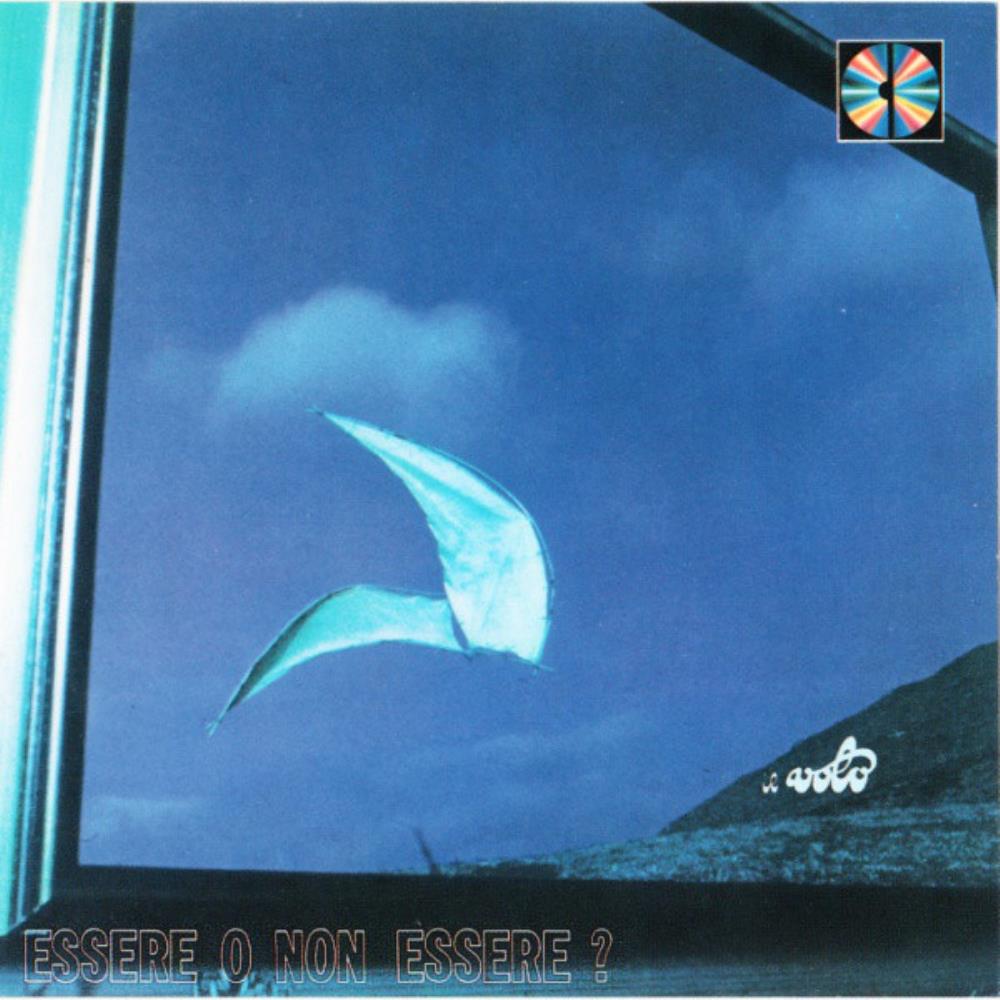
41. IL VOLO Essere O Non Essere ? (1975) (Jazz-Rock Fusion)
Line-up / Musicians:
- Alberto Radius / electric & acoustic guitars, electric sitar, vocals
- Mario Lavezzi / acoustic, 12-string & electric guitars, electric mandolin, vocals
- Vincenzo Tempera / piano, Fender Rhodes, clavinet
- Gabrile Lorenzi / organ, Moog synth
- Roberto Callero / bass
- Gianni Dall'Aglio / drums, vocals
1. "Gente In Amore" (5:03) opening with a fuzzy-synth-strings-supported squeaky synth melody, the band launches headlong at 0:58 into a cool Third or Fourth Wave Jazz-Rock Fusion motif for about 30 seconds before backing off into a country-folk-like multi-acoustic guitar motif within which the lead vocalist whisper-sings a wordless melody while being chased/pursued by an aggravating synth butterfly. 30 seconds later the synth-backed lead guitar takes us back into a more-rockin' version of the JRF motif. Clavinet and bass are really moving along with the electric guitar but then a percussion fest takes the song into a more clavinet-funk-Disco jam for the final motif to take us out. Interesting! It feels like two or three idea/motifs were hodge-podged together--just to see if what was possible--and then the band just said, "F*@# it! Let's just print it!" (8.875/10)
2. "Medio Oriente 249000 Tutto Compreso" (5:46) this one feels like they might even been parodying Banco Del Mutuo Soccorso while moving their talents into the much more lucrative realms of Smooth Jazz. But still: they are so talented! (8.875/10)
3. "Canto di lavoro" (2:28) sounds like a part of the previous song. Wordless vocalese sound accompanied by electrified sitar make this sound like some kind of psychedelic tribal drug trip though they could have been testing grounds for the vocalist to find melodies to work within the rich Smooth Jazz-Rock Fusion. My second favorite song on the album. (9/10)
4. "Essere" (4:02) sounds like a PFM song when the band was transition to pop music. Lots of clavinet up front and leading the way with nice synth enrichment in support. The vocal is nice in a PFM way. The clavinet work is wonderful. The rest of the music does little to bridge the gap between the two. Nice melodies expressed in the Moog/fuzzy electric guitar (synth) used in the lead position during the song's second half. Probably my other top three song. (8.875/10)
5. "Alcune Scene" (6:16) "distant" electric guitar whose heavy effects give it a sound like one of Jean-Luc Ponty's reverb-drenched electric violins. The Rhodes is also heavily reverbed and the synth strings throughout the background give it even more richness. The bass and drums are right up front and not as heavily treated as the rest of the band. Another song that feels like an exploratory étude--though this one is even less finished than the previous ones. Weird classical piano exposé in the final section--kind of like the synthetic stuff Kitaro and Tomita were doing--but then it moves back into a fast-paced Jazz-Rock Fusion jam--one that sounds like a high-speed train headed for the cliff where the tracks have not yet been finished. Thank god for the slow fadeout so we didn't have to observe the tragic crash! (8.75/10)
6. "Svegliandomi Con Te Alle 6 Del Mattino" (5:17) I'll give this one credit for creating a pretty cool atmosphere--something that a discerning ear might call early exploratory Smooth Jazz: pre-NOVA Vimana, pre-New Age, pre-Buddha Lounge. I actually really like it--and I even like the overly-effected guitar--though more for its solo than its sound. Very nice bluesy jazz Fender Rhodes play throughout but especially when it's Vincenzo's "Little Wing"-like solo time (in the third minute), when he plays off of a combination of melodies from Jimi Hendrix's "Little Wing" and eden ahbez' "Nature Boy" melodies. The section that follows Vincenzo's solo is one of the cooler, more-developed sections on the album--quite interesting proggy Jazz-Rock Fusion--which helps elevate this song to an even higher rating. Though it still feels kind of scattered and "unfinished," this song earns its way to being my favorite on the album. (9.25/10)
7. "Canti E Suoni" (4:23) another loose and "unfinished" feeling song with odd wordless-vocals serving as one of the weave's threads until 2:20 when the band launches into a cool cruising-speed motif that tries to leave the odd vocal behind (but fails. This dude is persistent!) In the fourth minute the music heads into the realm of Jimmy Webb beauty just as drummer Gianni Dall'Aglio switches to Disco. (8.875/10)
Total Time: 30:47
An album that seems to exhibit these talented musicians' lack of direction: the songs wander and often lack any structure or purpose (especially without vocals and lyrics). The music feels more like get-to-know-me jams, as if the band was fleshing out a lot of ideas, jamming through them, continuing to explore the breadth of sounds available from their equipment, but really not connecting enough on any songs (other than ") to polish and finish it. Did the band, in fact, tire of each other? Tire of the lack of purpose or inspiration and just publish the rather raw "demo"-like jams as a means to say, "done! Let's move on"? This was, after all, the "supergroup"'s last album together. Too bad because these musicians were so talented.
89.29 on the Fishscales = B/four stars; the fact that the album rates as highly as it does despite having a very dramatic "unfinished" quality to virtually all of its songs says something about the skill level and production quality of these guys.

42. LE ORME Collage (1971)
Though founded in Marghera (near Venizia) in 1966 by Aldo Tagliapietra and three friends, it wasn't until 1970 that Le Orme found its most stable and solid lineup--as a trio. After this album the band found such a large and avid fan base that they were able to leave the festival scene and tour as a venue-based group (which was rare at the time)--where they even had artists like Peter Hammill as warm-up bands.
Line-up / Musicians:
- Aldo Tagliapietra / vocals, bass, acoustic guitar
- Antonio Pagliuca / Hammond, electric piano, audio generator
- Michi Dei Rossi / drums, percussions
- Antonio Pagliuca / Hammond, electric piano, audio generator
- Michi Dei Rossi / drums, percussions
Side 1
1. "Collage" (4:42) such an iconic organ opening! Like Bach, Beethoven, or Keith Emerson announcing their entrance! The full band joins in to establish a cool motif that sounds half ELP and half The Soft Machine. Then, at 1:50 Antoinio Pagliuca switches over to a "harpsichord" for a bit of solo, which turns into a Baroque concierto supplanting the orchestra with rock bass and drums. Then we return to the organ-led ELP motif's with a couple key changes that are so Emersonian! "Horns" enter for the final minute to accent and enroyal the processional's closing. (9.75/10)
1. "Collage" (4:42) such an iconic organ opening! Like Bach, Beethoven, or Keith Emerson announcing their entrance! The full band joins in to establish a cool motif that sounds half ELP and half The Soft Machine. Then, at 1:50 Antoinio Pagliuca switches over to a "harpsichord" for a bit of solo, which turns into a Baroque concierto supplanting the orchestra with rock bass and drums. Then we return to the organ-led ELP motif's with a couple key changes that are so Emersonian! "Horns" enter for the final minute to accent and enroyal the processional's closing. (9.75/10)
2. "Era Inverno" (5:00) acoustic guitar, bass, and keyboards support Aldo Tagliapeitra's first vocal. His voice is slightly treated: kind of compressed. I don't know what he's singing about but I really like the anachronistic instrumental palette that is mixed with rock electric and jazzy drums as well as the melody lines. There's even an impressive little drum solo from Michi Dei Rossi at the end of the third minute that turns into a kid of support for an increasingly-animated and dynamic "quiet" organ solo from Antonio. A return to the main vocal motif for the final 40 seconds adds a little frivolous BEATLES-like bounce. (9.125/10)
3. "Cemento Armato" (8:08) "distant" "shout" vocals in an unusual high register from Aldo opens this before piano and bass join in. At 1:04 it all takes a sudden right turn as Michi pounds his drum into a swing pattern while Aldo's bass and Antonio's rollicking Hammond organ into a cool lead while Michi and Aldo continue upping their volumes and dynamics. This is jazz-rock! Too bad the drums and bass go a bit stagnant in the fourth minute but then things take a little turn in the fifth with organ quieting to the background while Aldo takes a little bass solo. In the second half of the fifth minute Aldo and Antonio start a dialogue: each repeating/echoing the melody riff of the other while Michi retains his rather boring hammering beneath. Around 5:35 then they switch again into a kind of cymbal-driven cruising motif with piano and Hammond and tambourine helping to thicken the momentum. Hammond begins to go off as the engineer slowly fades the song out. Great musicianship over a pretty good song. (13.375/15)
Side 2
4. "Sguardo Verso Il Cielo" (4:12) here the band step back into a little bit of blues-rock--a motif that feels kind of Led Zeppelin but more Cream or Blind Faith. Aldo sings over the rock mélange At 2:10 they switch gears, settling into a smooth driving ELP-like instrumental passage in which Antonio solos off of his own instrument, rendered into the right and left channels, alternating. In the fourth minute their is yet another motif switch as Aldo's rich 12-string guitar strumming becomes the foundation of the sound palette, but then they return to the Cream blues-rock motif so that the engineer can fade them out. Nice musicianship but a little addled in the mix of motifs. (8.875/10)
5. "Evasione Totale" (6:56) opening with electronic sounds from a synth/keyboard or sound board before gentle "background" organ chord play, hypnotic bass riff, and delicate cymbal and rim play from Michi lead into a prolonged motif that sounds as if we're waiting for the grand entrance of something/someone. Soon after the three-minute mark Aldo switches his bass line, Michi gets a little more creative with his cymbal play, and Antonio returns to some pretty creepy organ "noise" play and exploration--eventually , in the fifth minute, sounding like a cat delivering babies. The delivery seems complete when everything kind of rolls to a stop at 5:30, but then some bombastic organ chords seem to revive the band as Aldo and Michi return, playing a variation on the hypnotic riff from the second and third minutes. And then it's over! A song that feels very experimental--like a practice or étude, definitely not a complete song. (13.125/15)
6. "Immagini" (2:58) simple organ note play sets the melodic stage for Aldo to enter, singing in a heavily-treated vocal while Antonio adds some notes to his chords, other keyboard sounds to his support. It sounds as if it wants to break out--break loose--into something bigger and grander. But, it never does. (8.25/10)
7. "Morte Di Un Fiore" (3:00) opening with Aldo singing with his finger-picked guitar this one comes across as a radio-oriented pop song despite its slightly psychedelic sound palette. Antonio's organ and piano both join in before Aldo and Michi also join in with some distorted bass and rock drumming. It's like they're trying to be Lou Reed and/or The Beatles--especially as the full orchestra joins in for the outro in the final minute before it is faded out. Interesting! (8.875/10)
Total time: 37:56
An album that starts so strongly, slowly diminishing in quality and "finished" feeling, ends up disappointing due to having had to resort to experimental psychedelia and pop formats in order to fill/finish Side Two.
89.22 on the Fishscales = B/four stars; an collection of inconsistent and obviously experimental song choices from a trio of confident and adventurous musicians. Can't wait till they settle into their own skins: start creating more of their own sound and stylings.

43. LE ORME Uomo di Pezza (1972)
Their first album, Ad Glorium (1969), introduced the band with its progressive and psychedelic leanings. Their second, 1971's Collage, served notice of their progressive rock commitment while Uomo do Pezza affirmed their place in the pantheon of the nation's three or four top prog bands (with Premiata Forneria Marconi [PFM], Banco Del Mutuo Soccorso, and New Trolls).
- Aldo Tagliapietra / vocals, bass, electric & 12-strings acoustic guitars
- Antonio Pagliuca / organ, synthesizer, piano, electric clavichord, Mellotron, celesta
- Michi Dei Rossi / drums, bells, percussions
With:
- Gian Piero Reverberi / piano (1), producer
1. "Una dolcezza nuova" (5:28) introduces some of Uomo de pezza's distinctive sounds: organ, fuzzy bass, pastoral piano, and, of course, the beautiful voice and singing of guitarist/bass guitarist Aldo Tagliapietra. (9/10)
2. "Gioco di bimba" (2:54) introduces what becomes one of the other distinctive sounds of Uomo: the 12-string guitar. Joined by clavinet and synthesized flute, the song has a rather Donovan-mixed-with-Scarlatti feel to it. Cheery, 1960s sunshine. (4.333/5)
3. "La porta chuisa" (7:28) begins with a Camel-like sound with synth, drum and bass, before shifting into a more theatric sound with organ, followed by solo organ notes sneaking over the drummer's rim shots. Higher pitched vocal singing follows the organ until a heavy, "Tarkus"-like organ section appears and disappears, becoming the alternating partner for the soft, rim-shot-accompanied, high pitch singing sections. Enter some Nektar/Camel-esque riffs at 3:15, followed at 3:40 by the bass drum pounding out quarter notes till 5:10's silence. This pounding, quiet, pounding, quiet pattern continues alternating until a church organ fills the soundscape at the 6:15 mark, followed by piano at 6:45, ending with an ELP sound and pace. (13.5/15)
4. "Breve immagine" (2:42) sounds like a return to "Una dolcezza nuova" with the higher-pitched singing done over a church organ until 0:50 sounds a crescendo of mellotron, rhythm section, and synthesizer. The quiet, bucolic A section and King Crimson-like crescendoing B section alternate two more cycles. Beautiful song. (4.5/5)
5. "Figure di cartone" (3:48) begins with a very engaging "My Sweet Lord" kind of feel: strumming 12-string guitars, KC/"Lucky Man"-like drums, roving Prophet 5 synth, and a very catchy vocal melody. A long solo from a buzzing synthesizer sound. (9/10)
6. "Aspettando l'alba" (4:43) uses very pensive, ominous sound and chord choices (on harpsichord and synth), which then yield to guitar strums at the 0:50 mark. The defining Uomo song structure seems to be the alternating quiet and dynamic sections--used to great effect. Here the quiet sections are peppered with a variety of instruments: flute, keyboard synths, drum travels, echoing space sounds, and quiet guitar strums until at 3:20 there is a complete change to percussives with flute-like keyboard chorus to fade. (8.75/10)
7. "Alienazione" (4:43) this organ-rooted song is Le Orme's attempt at discord and complexity a la King Crimson. (The song actually has quite a similar feel to it is KC's "21st Century Schizoid Man," though I'm also reminded of The Doors and Traffic. Dark and ominous.) (8.75/10)
Total time: 31:56
(From my 6/17/10 review on PA:) As with all old prog "classics" that I am only now having the privilege of discovering, I've been taking my time to get to know Uomo di pezza. I can assure you, it has been truly a labour of love. This is a beautiful album with some wonderful songs, sounds, and melodies. Overall very high consistency and quality.
88.97 on the Fish scales = B/four stars; a high-quality near-masterpiece of progressive rock music. Le Orme exploring a lot of new sounds while relying on one basic structural pattern--to perfection--and having wonderful singer. I can't quite give it a five star rating--though I do think this is Le Orme's finest work. Still, an excellent addition to any prog-lover's music collection.

44. QUELLA VECCHIA LOCANDA Il tempo della Gioia (1974)
The second of two creative and sophisticated albums by this band from Rome, its reception was mixed as many did not like the lineup changes (especially the departure/absence of dynamic violin phenom, Donald Lax) but others saw the compositional growth, the improved sound engineering, and loved the less crazed, more melodic accessibility of this album over the self-titled debut.
- Claudio Filice / violin
- Giorgio Giorgi / vocals, flute, piccolo
- Massima Giorgi / bass, contrabass, vocals
- Massimo Roselli / vocals, keyboards
- Raimondo Cocco / vocals, guitar, trumpet (clarino)
- Patrick Fraina / drums, vocals
1. "Villa Doria Pamphili" (5:27) beautiful, symphonic, even cinematic music that begins being piano-based and dominated but then turns symphonic with strings. At 1:45 electric bass enters to accompany acoustic guitar for a lone male singer to enter and sing over. At 2:40, with the end of the singer's first verse comes a bombastic RENAISSANCE/Russian-like symphonic bridge and then return to simple acoustic foundation for the second verse. The bombastic Russian section repeats and is prolonged before decaying into a gorgeous solo piano piece for the final 45 seconds. (9.5/10)
2. "A Forma Di" (4:07) opens with quiet, pulsing strings with gentle, almost distant flutes, winds, upper octave piano, and harpsicord "dancing" around. Only very slowly does the background move forward and into full presence and full volume. Definitely conjures up a musical "view" of a religious ceremonial march of rural folk--like a processional of Russian peasant souls from Gogol's Dead Souls. (9.25/10)
3. "Il Tempo Della Gioia" (6:15) interesting music and song structure are betrayed by overall poor sound reproduction as well as flawed vocal and electric guitar performances and choices. (7.5/10)
4. "Un Giorno, un Amico" (9:39) wonderful acoustic intro of piano and violin. The breakout of full-band even goes well (again, the sound and stylings of the English band RENAISSANCE come strongly to mind), as the folk melodies and sounds are well-maintained. Over the course of the first half of the song, the music develops no further than a cabaret-like gypsy folk dance despite some find performances from the violin and piano, but then things shift under the leadership of clarinet. Everything slows down a notch and becomes more jazz lounge-y. Again, it is the emotional sense of melody expressed by the violinist that keeps me engaged--and deeply so. At the seven minute mark vocals join the fray for the first time, followed by an electric guitar solo--both of which fail to impress. Poor, flangy drum sound, too. (17/20)
5. "È Accaduto una Notte" (8:16) opens with choral voices singing wordlessly (like the opening and ending sections of PFM's "L'isola de niente") which also fade away leaving a very gentle, spacious pastoral section not unlike some sections of CELESTE's Principe di un giorno or even MAXOPHONE--both of which won't come out for over a year).
Musically, this is the most mature, interesting, and fully developed piece on the album. Still poor production of voice and electric instruments, but musically very perfect--brilliantly conceived. This is a piece I'd LOVE to hear re-recorded or performed live. (19/20)
Total time: 33:44
The musical constructs, compositional arrangements, and instrumental performances of this album are incredible--delicious. Where it falls short is in sound production and vocal performances. When the sounds are acoustic, the engineering team seems to do well; it's with the renderings of the electrical instruments that the music production falls short. Still, I am one of the faction who like this album better than the more bluesy, frenzied debut.
88.93 on the Fishscales = B+/4.5 stars; a near-masterpiece of progressive rock music and a wonderful listening experience for the more acoustic, symphonic approaches to rock music.

45. I, GIGANTI Terra in Bocca (Poesia di un delitto) (1971)
A Milan-based band that started off as a very successful Beat band in the 1960s reformed in 1971 to put together a Prog album before finally disbanding (to work on other projects/in other bands) in 1973. The theatric concept album is more of a rock opera.
Line-up / Musicians:
- Giacomo "Mino" Di Martino / guitar, vocals
- Francesco "Checco" Marsella / piano, organ, Mellotron, vocals
- Sergio Di Martino / bass, guitar, vocals
- Sergio Enrico Maria Papes / drums, Fx, vocals
With:
- Marcello Dellacasa (later to LATTE E MIELE) / guitar
- Gigi Rizzi / guitar
- Ares Tavolazzi (later to AREA) / guitar, bass
- Carmelo La Bionda / acoustic guitar (uncredited)
- Michelangelo La Bionda / acoustic guitar (uncredited)
- Vincenzo Tempera (later to IL VOLO) / organ, piano
- Ellade Bandini / drums
- Francesco "Checco" Marsella / piano, organ, Mellotron, vocals
- Sergio Di Martino / bass, guitar, vocals
- Sergio Enrico Maria Papes / drums, Fx, vocals
With:
- Marcello Dellacasa (later to LATTE E MIELE) / guitar
- Gigi Rizzi / guitar
- Ares Tavolazzi (later to AREA) / guitar, bass
- Carmelo La Bionda / acoustic guitar (uncredited)
- Michelangelo La Bionda / acoustic guitar (uncredited)
- Vincenzo Tempera (later to IL VOLO) / organ, piano
- Ellade Bandini / drums
1. Suite: "Terra in bocca" (14:05)
a. "Largo Iniziale" (3:28) plays out like an overture to a Broadway musical. The melodies are catchy and the musicianship is quite proficient and aligned. (9/10)
b. "Molto Largo" (2:13) kind of folk dancing guitar music with a strong vocal that sounds as if it comes from someone who has theatric/radio-friendly singing experience. The second part of the song turns back to piano base as deep male voice provides a narration-like reading. (4.375/5)
c. "Avanti" (3:42) more multi-motif theatric music with radio-voiced man talk/singing over/through it. (8.75/10)
b. "Molto Largo" (2:13) kind of folk dancing guitar music with a strong vocal that sounds as if it comes from someone who has theatric/radio-friendly singing experience. The second part of the song turns back to piano base as deep male voice provides a narration-like reading. (4.375/5)
c. "Avanti" (3:42) more multi-motif theatric music with radio-voiced man talk/singing over/through it. (8.75/10)
d. "Avanti Tutto / Brutto Momento / Plim Plim" (4:33) a very pleasant folky pop song. (8.875/10)
e. "Plim Plim Al Parossismo / Delicato Andante" (3:13) a more aggressive, electric rocker with blazing electric guitar, piano, bass, drums and organ (and no vocals for the first 100 seconds). The same singer from the previous song takes over but is now using a much more aggressive voice than the mellifluous "innocent" teeny-bopper-friendly voice of the previous song. (8.875/10)
f. "Rumori / Fine Incombente" (6:12)
e. "Plim Plim Al Parossismo / Delicato Andante" (3:13) a more aggressive, electric rocker with blazing electric guitar, piano, bass, drums and organ (and no vocals for the first 100 seconds). The same singer from the previous song takes over but is now using a much more aggressive voice than the mellifluous "innocent" teeny-bopper-friendly voice of the previous song. (8.875/10)
f. "Rumori / Fine Incombente" (6:12)
Part 2:
a. "Fine Lontana / Allegro Per Niente" (6:04) parts of this sounds like the proggy side of Billy Joel, part like Jose Feliciano doing The Jimi Hendrix Experience. Interesting. Again: solid musicianship throughout. (8.75/10)
b. "Tanto Va La Gatta Al Lardo-Su E Giu'" (7:44) a harder, heavier rocker that sounds like a cross between and Steppenwolf and The Moody Blues. (13.375/15)
c. "Larghissimo / Dentro Tutto" (4:14) a delicate, bucolic flute and bass-led opening is soon re-shaped by the impassioned raspy vocal performance and, then, some Mellotron-infused dramatic instrumental music. This leads to a patch that sounds as if it comes from church or Jesus Christ Superstar. The narrator voice returns in the middle while the organ, flute, and plaintive "Jesus" voice seems to negotiate a Gesthemene-like existential crisis. Then, suddenly we're in a Billy Joel piano passage--which is soon joined by Hammond organ and, later, Mellotron. Nice proggy instrumental passage. (9/10)
d. "Alba Di Note / Rimbalzello Triste" (1:27) psychedelia served up sans apologies. (4.375/5)
e. "Rimbalzello Compiacente / Ossessivo Ma Non Troppo / Fine" (3:25) a song that sounds just like the moral-delivering finale that it is probably meant to be. (8.875/10)
Total time 46:15
b. "Tanto Va La Gatta Al Lardo-Su E Giu'" (7:44) a harder, heavier rocker that sounds like a cross between and Steppenwolf and The Moody Blues. (13.375/15)
c. "Larghissimo / Dentro Tutto" (4:14) a delicate, bucolic flute and bass-led opening is soon re-shaped by the impassioned raspy vocal performance and, then, some Mellotron-infused dramatic instrumental music. This leads to a patch that sounds as if it comes from church or Jesus Christ Superstar. The narrator voice returns in the middle while the organ, flute, and plaintive "Jesus" voice seems to negotiate a Gesthemene-like existential crisis. Then, suddenly we're in a Billy Joel piano passage--which is soon joined by Hammond organ and, later, Mellotron. Nice proggy instrumental passage. (9/10)
d. "Alba Di Note / Rimbalzello Triste" (1:27) psychedelia served up sans apologies. (4.375/5)
e. "Rimbalzello Compiacente / Ossessivo Ma Non Troppo / Fine" (3:25) a song that sounds just like the moral-delivering finale that it is probably meant to be. (8.875/10)
Total time 46:15
This is probably the single most cabaret/Off-Broadway-sounding RPI album I've ever heard; the band clearly did not (yet) get what progressive rock was all about, errantly thinking it was more about the theatricity than the musicianship and complexity of the compositions. However, one cannot just plug a Mellotron into your coffee shop/cabaret songs and call it prog. Sorry. I do have to admit that missing out on the story and messages due to my inability to comprehend Italian (or to hear lyrics in general) must contribute considerably to my lack of engagement and enthusiasm for the project. Maybe if I saw this in a theater as a stage play it would have more impact (or if an English version existed).
Another issue I'm having with reviewing this album is that I have found three printed sources in which the "songs" on the album have been partitioned in vastly different ways:
YouTube has the songs timed out like this:
2. Avanti Tutto, Brutto momento, Plim plim (3:00)
3. Plim plim, Plim plim al parossismo, Delicato andante (5:28)
4. Rumori, Fine incombente (0:50)
5. Fine lontana, Allegro per niente (2:54)
6. Tanto va la gatta al lardo, Su e giu' (9:23)
7. Larghissimo, Dentro tutto (5:59)
8. Alba di note, Rimbalzello triste (1:29)
9. Rimbalzello compiacente, Ossessivo ma non troppo, Fine (3:26)
Discogs (from Rifi's 1971 vinyl edition):
Largo Iniziale-Molto Largo-Avanti 12:34
Avanti Tutto-Brutto Momento-Plim Plim 8:18
Plim Plim Al Parossismo-Delicato Andante 9:38
Rumori-Fine Incombente 1:00
Fine Incombente-Allegro Per Niente 4:16
Tanto Va La Gatta Al Lardo-Su E Giù 15:44
Larghissimo-Dentro Tutto 8:00
Alba Di Notte-Rimbalzello Triste 1:55
Rimbalzello Compiacente-Ossessivo, Ma Non Troppo-Fine 5:00
Discogs (from Rifi's 1971 vinyl edition):
Largo Iniziale-Molto Largo-Avanti 12:34
Avanti Tutto-Brutto Momento-Plim Plim 8:18
Plim Plim Al Parossismo-Delicato Andante 9:38
Rumori-Fine Incombente 1:00
Fine Incombente-Allegro Per Niente 4:16
Tanto Va La Gatta Al Lardo-Su E Giù 15:44
Larghissimo-Dentro Tutto 8:00
Alba Di Notte-Rimbalzello Triste 1:55
Rimbalzello Compiacente-Ossessivo, Ma Non Troppo-Fine 5:00
and, from the 1989 CD re-release:
Terra In Bocca (Poesia Di Un Delitto) (18:20)
1.1 Largo Iniziale
1.2 Molto Largo
1.3 Avanti
1.4 Avanti Tutto
1.5 Brutto Momento
1.6 Plim Plim
1.7 Plim Plim Al Parossismo
1.8 Delicato Andante
1.9 Rumori
1.10 Fine Incombente
Terra In Bocca (Poesia Di Un Delitto) (25:22)
2.1 Fine Lontana
2.2 Allegro Per Niente
2.3 Tanto Va La Gatta Al Lardo
2.4 Su E Giu
2.5 Larghissimo
2.6 Dentro Tutto
2.7 Alba Di Note
2.8 Rimbalzello Triste
2.9 Rimbalzello Compiacente
2.10 Ossessivo Ma Non Troppo
2.11 Fine
The music is obviously meant to be heard as a flow-through experience, like a rock opera or stage musical, as the 1989 and later editions make abundantly clear.
88.68 on the Fishscales = B/four stars; a solid rock opera by some experienced and mature musician/songwriters that suffers, unfortunately, from my lack of understanding the Italian language.

46. NEW TROLLS Concerto Grosso per i New Trolls (1971)
From Genova, the band had been around for a few years before this, their third album release hit the stores and airwaves in Italia--with great fanfare. Perhaps the first rock progressivo album to originate in Italia that achieved huge commercial success.
- Maurizio Salvi / piano, organ
- Vittorio De Scalzi / guitar, flute
- Nico Di Palo / guitar, lead vocals
- Gianni Belleno / drums, vocals
- Giorgio D'Adamo / bass, vocals
1. "Tempo: Allegro" (2:15) an awesome JETHRO TULL-sounding rock version of classical themes. (4.5/5)
2. "Tempo: Adagio" (4:50) What gorgeous singing voices Nico and his background singers are! No wonder they were so successful as generators of pop hits after their prog phase. It's too bad the orchestral arrangements are so syrupy (and strings-dominant) here. (8/10)
3. "Tempo: Cadenza - Andante Con Moto" (4:10) plays for the first minute and a half as for all intents and purposes, a violin solo. But then those syrupy strings get involved. Too bad. (Barely a rock song--were it not for the drumming.) Nice use of harpsichord and wordless and worded vocals over the strings and violin in the second half. Disappointing end with orchestral strings leading us out. (8.5/10)
4. "Tempo: Shadows" (5:30) a bluesy rock song in the PROCUL HAREM vein with a show of HENDRIX in the lead electric guitar department. The flute-led instrumental section in third and fourth minutes employs a very Hendrix-like guitar improvisational background (and, later, foreground)--and it works marvellously! Most excellent! it gets a little carried away with the guitar feedback solo in the fifth and sixth minutes, but it is ballsy! and well done. (9.5/10)
5. "Nella Sala Vuota, Improvvisazioni Dei New Trolls Registrate In Diretta" (20:32) opens as a bluesy Hammond solo for the first two minutes. As the full band join in, the breathy flute-led song begins to sound like the theme song from the original Mission: Impossible television series--as it might be played by The Netherlands' FOCUS around 1972. JETHRO TULL influences also come raging through in the second quarter of the song.
After the mid-song break, the music returns in what sounds like a RAY CHARLES instrumental. Nice Hammond work is followed by a loud and dated-sounding electric guitar solo which is then followed by a surprisingly impressive (and surprisingly long) drum solo by Gianni Belleno. (I love the fast panning effect used near its end!)
Gianni finally builds back the song base to allow the rest of the band to join in for the last 45 seconds.
The highs of the musician's skills on display here outweigh the distractions of poor sonic effects and engineering limitations of the day. (36/40)
Total time: 37:17
Side one contains a nice blend of classical instrumentation into a kind of blues-rock operetta JETHRO TULL-style. It is not as well recorded or refined as some other rock-classical blends however I have to laud it for it's daring in being one of the first fairly successful rock conversions of famous themes from classical music (Vivaldi)--and for the gutsy daring of the musicians involved.
One side note: As accent-less as Nico Di Palo's English is, I do find it strange that the band chose to sing the lyrics in English.
Despite its flaws sonically, and the disappointing cheesiness of the strings inputs, I really like the ballsy confidence shown by these players. Electric guitar, keyboards, bass, and drums are all solid in both their ability to contribute to the whole while all are equally able to show their confident chops in the solo department as well.
88.67 on the Fishscales = 4.5 stars; B+; a near-masterpiece of progressive rock music.

47. BANCO DEL MUTUO SOCCORSO Darwin! (1972)
The much-acclaimed and revered epitome of 1970s 'classic' RPI here finds criticism and disconnect.
- Francesco Di Giacomo / lead vocals
- Marcello Todaro / electric & acoustic guitars
- Vittorio Nocenzi / Hammond organ, Moog synthesizers, harpsichord, vocals
- Gianni Nocenzi / piano, E-flat clarinet
- Renato D'Angelo / bass, double bass
- Pier Luigi Calderoni / drums, timpani
1. "L'Evoluzione" (13:59) This song offers a perfect opportunity for me to express a few of my dislikes in Banco music. Banco songs can sometimes be too busy. Like the comment in Amadeus about Mozart using just too many notes, the average, untrained human brain can only take in so much. Then there are the tendencies that Banco uses to compose support music for individual soli that is too rigid and monotonous--that goes on for far longer than one would like to hear. And then there are the flaws in the mixes of the instruments. Still, there is the fact of the amazing complexity and sophistication that is always a part of Banco compositions. Admirable and laudable, but they do not always translate into enjoyable listening experiences. Sometimes there can be just . . . too much going on at once. And I am often found having trouble finding, much less attaching to, lead or woven melodies. Where are they? And I will finally admit that after all these listens to Banco materials: I am just not that big of a fan of Francesco Di Giacomo's voice. He may be the equivalent of the Peter Hammill of Italy--you either love him or you hate him. (Like with Hammill), I fall into this latter category. (Well, I don't really hate him. I don't always enjoy his voice or vocal performances.) (25.5/30)
2. "La Conquista Della Posizione Eretta" (8:42) until the final two minutes, this is an instrumental song of typical Banco complexity and breakneck speed but possessing some nice, interesting, engaging melodies on the top (mostly from the synthesizer). Still, this song feels a bit too much like a song that would run over the introductory or end credits of a 1970s spy film. One of the more tolerable, even enjoyable, Francesco Di Giacomo vocals. (19/20)
3. "Danza Dei Grandi Rettili" (3:42) opens with a kind of sophisticated coffee-house jazz feel. For 45 seconds. Then the full-house orchestral hall sound bursts forth. For a bit. Reverting back to café dynamics, the jazzy sound returns for some piano and jazz guitar interplay. The louder 'chorus' section returns with some cool organ and synth interplay before a bridge back to the original sound and theme occurs. Piano, jazz bass, brushed drums, and jazz lead guitar play out to the end--and, it is assumed, the sparse applause of the smokey café. (9/10)
4. "Cento Mani E Cento Occhi" (5:22) opens with a driving, dynamic burst of straightforward organ-based rock. Francesco's poorly recorded voice is oddly mixed. There then follows a kind of Keith Emerson section before the vocals return. In the second half of the song, a kind of all-male barrel-house vocal ensemble becomes the form of vocal delivery--in both the louder and even the softer sections. A well constructed and performed song that is somehow poorly recorded and troublesome to connect with. Better to sit back and enjoy as spectator. (8.5/10)
5. "750,000 Anni Fa ... L'Amore?" (5:38) opens as a gentle, contemplative piano-based song over which a very strong, passionate, almost operatic vocal is sung by Francesco Di Giacomo. The man can definitely sing! There's even a section where Francesco's voice alone exudes the force that an entire full rock band might try to display--just his voice! Perhaps he was a failed or frustrated opera singer.
The odd synth interlude in the middle is unfortunate. But, it is short-lived. We return to the piano and solo voce format where Francesco and Gianni Nocenzi perform their magic--until the rest of the rock band finally joins in for the final 35 seconds. (9/10)
6. "Miserere Alla Storia" (5:58) opens with a fade in of an already in full-form and fast-pace jazz-rock weave, but, then, just as it reaches front and center, it stops! Instead we are left with some spacious organ, bass, synthesizer play beneath a distant soloing clarinet. At two minute mark a very aggressive, demonic (non-Francesco) vocal sets up the onset of a new instrumental section of driving film soundtrack music. Piano soloing over staccato rhythm section ensues at the end of the fourth minute before returning first to the soundtrack "chase scene" theme and then to a pensive soft section for bass and fading clarinet to take us out. Odd song. (8.5/10)
7. "Ed Ora Io Domando Tempo Al Tempo Ed Egli Mi Risponde ... Non Ne Ho!" (3:29) opens with themes and sounds that could come from several ethnic musical traditions--and which sounds a lot like some of Woody Allen's clarinet-led Italian music as used in his films. The song is partly beautiful, partly grotesquely sad, partly funny--and definitely interesting. (9/10)
Total time: 46:50
88.50 on the Fishscales = 4.5 stars; B+; a near-masterpiece of Rock Progressivo Italiano. A clear example of how brilliant ideas in the hands of virtuoso artists do not always result in glowing masterpieces of artistic product.

48. MUSEO ROSENBACH Zarathustra (1973)
A band that was created in 1971 out of two previous bands from Sanremo (in the Italian Riviera, just next to the border with France) and offered a recording contract by the ancient and very influential Milan-based music label, Dischi Ricordi. Zarathustra was recorded in Milano late in 1972 at Ricordi Studies before being released in April of 1973 by BMG Records.
Line-up / Musicians:
- Stefano "Lupo" Galifi / vocals
- Enzo Merogno / guitar, vocals
- Pit Corradi / Mellotron, Hammond organ, vibraphone, Farfisa el. piano
- Alberto Moreno / bass, piano
- Giancarlo Golzi / drums, timpani, bells, vocals
- Enzo Merogno / guitar, vocals
- Pit Corradi / Mellotron, Hammond organ, vibraphone, Farfisa el. piano
- Alberto Moreno / bass, piano
- Giancarlo Golzi / drums, timpani, bells, vocals
1. "Zarathustra"
- a. "L'Ultimo Uomo" (3:57) okay organ and "strings"- based music that suffers during the down parts when Stefano Galifi's voice is being repeatedly stretched beyond its capacity. (8.6667/10)
- b. "Il Re Di Ieri" (3:12) a long instrumental passage with "strings" and piano with orchestra-like cymbal play and, later, Mellotron "flute" and organ fills the first two-plus minutes of this before a "far distant" voice makes its self barely known. At 3:30 the band bursts full-force into a hard-driving motif that is rich with dynamic layers until 4:20 when things quiet down (except for the swing drumming). (8.75/10)
- c. "Al Di La Del Bene E Del Male" (4:09) a motif that continues to display Pit Corradi's keyboard prowess as well as drummer Giancarlo Golzi's crisp, confident playing. Stefano's vocals are much more effective when he stays in the lower ranges but evenso he's not very good at timing his word/syllable annunciations with the music. There is a heaviness here that reminds me of bands like URIAH HEEP and DEEP PURPLE. (8.875/10)
- d. "Superuomo" (1:22) organs, gentle guitar play, heavy bass, and drums all help support (and propel) Lupo's vocal performance. (4.375/5)
- e. "Il Tempio Delle Clessidre" (8:02) guitar, bass, and organ play together over militaristic drumming. All musicianship is very impressive--as is the whole-band synchrony. The middle sections are very heavy , sophisticated, and well-constructed in a VAN DER GRAAF GENERATOR kind of way--and that final three minutes is pure King CRIMSON prog bliss. (13.5/15)
- c. "Al Di La Del Bene E Del Male" (4:09) a motif that continues to display Pit Corradi's keyboard prowess as well as drummer Giancarlo Golzi's crisp, confident playing. Stefano's vocals are much more effective when he stays in the lower ranges but evenso he's not very good at timing his word/syllable annunciations with the music. There is a heaviness here that reminds me of bands like URIAH HEEP and DEEP PURPLE. (8.875/10)
- d. "Superuomo" (1:22) organs, gentle guitar play, heavy bass, and drums all help support (and propel) Lupo's vocal performance. (4.375/5)
- e. "Il Tempio Delle Clessidre" (8:02) guitar, bass, and organ play together over militaristic drumming. All musicianship is very impressive--as is the whole-band synchrony. The middle sections are very heavy , sophisticated, and well-constructed in a VAN DER GRAAF GENERATOR kind of way--and that final three minutes is pure King CRIMSON prog bliss. (13.5/15)
2. "Degli Uomini" (4:01) an utterly forgettable tune. (8.667/10)
3. "Della Natura" (8:24) sounding like Rod Argent or a slightly more complex Uriah Heep straight out of the gate, a pause for Lupo's plaintive vocal to insert itself occurs at the 90-second mark with the band slowly rejoining and then launching into a ANDREW LLOYD WEBER final motif from Jesus Christ Superstar's "The Temple." At the 3:00 mark there is another switch, this time into a more modern motif before reverting back to a Lupo vocal section. Except for the final PROCOL HARUM-like motif, which covers the last two minutes of the song, so much of this is sounding like variations on ALW's Jesus Christ Superstar music. (17.75/20)
4. "Dell'Eterno Ritorno" (6:15) despite being far more dynamic of a rocker, this song has some very impressive full-band synchronized discipline going on (even the vocals). (9/10)
Total time: 39:22
sounds to me like a rehashed and extended version of GENESIS' "The Knife." To my mind and heart, there is simply not enough variety, diversity and virtuosity present here to exalt it among the pantheon of the Prog Olympians--and the poor recording and production definitely denies this album from any consideration of masterpiece status. The dynamics are too diverse and inconsistent, the recording too muddy, the sound attempting, IMO, to be too imitative of a combination of KC's "In the Court of the Crimson King," ELP (especially "Tarkus"), or JETHRO TULL ("Aqualung"). The drums sound too much like filler--and they and the bass stand out front too much, often taking one's attention from the whole. And what's with the engineer's hand on the master volume nob! It's like a NEKTAR, ZAPPA, or early SANTANA listening experience: one never knows when or where the song starts, stops or segues because the fade in and fade out can seem to come from out of nowhere! Plus, not unlike ELP, I'm not quite sure what MR are trying to accomplish with their music--the section changes are often so sudden and incongruous feeling. Curiously--and, again, unexpectedly--the album highlight for me is the little song from which we get a rather highly acclaimed album from Anno Domini 2010, Il tempio delle clessidre by a band calling itself the same, Il Tempio Delle Clessidre. "Dell'eterno ritorno" is also pretty decent but the album could've been better with better mixing, recording, engineering, and lead singer.
88.43 on the Fishscales = B/four stars; an excellent representative of peak-wave RPI but no where near a general masterpiece of progressive rock.
12/28/25: Gave this one another shot today: start to finish. While I found myself tolerating the sound quality and totality of scope better than before I could not convince myself to tolerate the bombastic/over the top drumming or horrible, pitchy voice of lead vocalist, Stefano "Lupo" Galifi--who sounds as if he's working so hard every time he tries to reach those higher notes. The mere thought of sanctioning the inclusion of this album into the gallery of "masterpieces" in Prog Valhalla--alongside the likes of In the Court of the Crimson King, Close to the Edge, or Dark Side of the Moon, Selling England by the Pound, Thick as a Brick, Pawn Hearts, Hot Rats, Crime of the Century, Kind of Blue, In a Glass House, Scheherazade and Other Stories, Si on avait besoin d'une cinquième saison, Mekanïk Destruktïw Kommandöh, or In the Land of Grey and Pink (much less Passio Secundum Mattheum, Ys, Per un amico, Darwin!, Ys, Arbiet Macht Frei, Tilt, and/or Alphataurus) makes me sick to my stomach! Even if I knew (or cared) what they were singing about it would not make a difference.

49. THE TRIP The Trip (1970)
Formed in Savona out of the ashes of an English band that came to Italy to try to improve their fortunes (Rick Malocchi & The Trips: a band that included guitarist Ritchie Blackmore), singer-guitarist Billy Gray and bassist-vocalist Arvid Andersen are the two holdouts, local organist Joe Vescovi and drummer Pino Sinnone were the members picked up once the other Brits left for home. So, can this be considered Rock Progressivo Italiano? Especially whne all lyrics are composed and sung in English?
- Billy Gray / guitar, vocals
- Joe Vescovi / organ, vocals, arrangements
- Arvid "Wegg" Andersen / bass, vocals
- Pino Sinnone / drums & percussion
1. "Prologo" (8:09) four minutes of keyboard (organ) and electric guitar effects and sound experimentations that sound like one of TANGERINE DREAM's first albums. In the fifth minute the musicians switch to straightforward sounds from organ (arpeggi), bass (deep thrums), heavy distorted guitar chords, and militaristic drumming which slowly, gradually, in the seventh minute, forms an anthemic motif that sounds not unlike Jeff Beck's "Beck's Bolero." The final minute then sees the band switch to something blues-based resembling more Deep Purple or Procol Harum. Definitely intersting and definitely a product that is perfectly representative of its time. (13.25/15)
2. "Incubi" (8:23) after the band's long and diverse introductory opening, they move into the forms most dear to their image and goals: full theatric blues-rock 'n' roll with singing (both solo lead and group choral) and multiple motifs. The second motif is quite organ-centric blues-rock of the Brian Auger or Stevie Winwood type. At 2:37 they stop and let some guitar arpeggios bridge to a new motif--one that starts out quite quiet, spacious, and delicate with lone organ notes followed by a whole-band section in which the guitar recapitulates the organ's melody riff. By the four-minute mark there is a transition into a brief punctuated vocal passage but then this disappears leaving Joe Vescovi to fool around for a bit a cappella with his organ. His experimentations are actually kind of cool! Around 5:30 there is a rejoinder of vocals, first one, then two, then the whole trio as "distant" organ, guitar, bass, and drums slowly join and carry the Argent-like passage forward. Cool! Another brief organ exposition bridges to a Led Zeppelin "Hearbreaker"-like five chord blues chord progression over which Billy Gray solos in his best Eric Clapton imitation. A complex sequence of chords are used to end the song, showing off some fine whole-band discipline and cohesion. Nice tune! Lots of cool ideas fairly well blended together (thanks to Joe's organ). (18/20)
3. "Visioni dell'aldilà" (8:50) tom-tom pattern making is joined by gong and slides up and down a single string of the bass guitars fretboard. The second minute sees a pause in which organ and crescendoing cymbal crashing are emphasized by loud bursts of whole-band harmony vocalizations of some insistent words/lyrics. The next section is led by a William Tell Overture-like organ exhibition while the rest of the band supports with their fast-paced rock rhythm play. Then, at 3:23 there is a stoppage that is gradually filled by upper-end organ trills and arpeggi while bass tries to contribute. What comes out of this is an organ arpeggio-based PROCOL HARUM-like group vocal over some plodding dirge-like music. In the sixth minute the lead melody maker for the processional becomes Billy's lead guitar. Then, at 5:45 the band switches gear beneath Billy's screaling guitar play, back into something two-chord-based that is more fast-paced and befitting Billy's aggressive play. Another organ-backed complete stop yields another round of anthemic whole-group harmony vocals before organ, bass, and lead guitar take over and try to complete the heart-felt meaning of the tune--until, that is, the organ, cymbals, and bass step in to really finish it off. Very interesting and, you can tell, more seriously-minded, classical music-inspired suite. I like it though not every motif or transition works as well together as they did on the previous song. (17.5/20)
4. "Riflessioni" (5:46) two alternating organ notes emerge before being joined by the Joe's second hand, the bass and drums and full-ensemble of singers . Around the two-minute mark the band slides into a really slowly-drawn out blues motif for Billy to do some slow blues-rock soloing. This then switches to piano based for abit before the vocal ensemble return to the same melody and approach that occupied their second minute. I hear a lot of inspiration of THREE DOG NIGHT in several of these motifs--even in the way the band partitions up their song into these blues-, blues-rock, and gospel-rock themes (as well as in some of their melodies). Not bad though their group choral lyrics singing doesn't quite work as well as the Aussie band that seems to inspire them. (8.75/10)
5. "Una Pietra Colorata" (2:26) heavy guitar, blues organ, and blues-rock bass and drum play open and propel this song forward so that Billy (I think) can sing in Italian! A solid blues-rock hit in the same vein as THE WHO or some of the other late-Sixties blues-based rock 'n' roll bands. Faded out at the end just as it seems to be transitioning into a more even-paced instrumental section. (4.333/5)
Total Time 33:34
88.333 on the Fishscales = B/four stars; an interesting proto-prog exposition of thoughtfully-prepared and emotionally-rendered psychedelic blues-rock.

50. THE TRIP Caronte (1971)
The Savona-based International group have had some months to hone their skills, (re-)define their vision, and produce their second prog-related, ELP-inspired psychedelic rock album.
Line-up / Musicians:
- William Gray / electric & acoustic guitars, vocals
- Joe Vescovi / Hammond organ, piano, church organ, Mellotron, arrangements, lead vocals
- Arvid "WEGG" Andersen / bass, lead vocals
- Pino Sinnone / percussion
1. "Caronte 1" (6:45) opening with a couple grimy-greasy organ chords before hypnotic bass riff, rapid-fire tom tom play, and distorted electric guitar chords and notes with crashing cymbal accents take over, establishing a bluesy dirty rock motif that could come from Blue Cheer or Spirit. By the fourth minute the sophisticated weave is sounding much more like Emerson, Lake & Palmer, but then things go back to guitar-led blues rock for a minute long vamp before 4:15 when some aggressive guitar chords suggest a bridge, extended, which goes into some mind-numbing Iron Butterfly and then ELP chord play. A slow organ arpeggi at 5:45 seems to signal the band's breakup and check out, leaving some bass guitar feedback to take us to the end fade. A pretty good instrumental with some fine musicianship if dated sound choices. (13.25/15)
2. "Two Brothers" (8:15) car driving, squealing, parking sounds, followed by hard-soled shoes running on concrete take up the first minute of this as if one of the brothers is late, rushing into the studio to pick up his instrument so that the band's practice jam session can begin. Wegg starts off playing a pensive bass riff that he then maintains while drums, organ, and guitar join and build around him. At the end of the third minute a bridge of guitar chords signals a shift: into a vocal motif that sounds like early Black Sabbath or Blue Öyster Cult. The guitar solo that starts around 4:45 is quite impressive. A brief organ solo follows before the band shifts back into the vocal motif for a bit before guitar-and-organ chord hits signal another bridge, this time into something more psychedelic hypno-trippy. Bass arpeggi, theatric percussion play and eerie ghost-like vocalese float around in the background while the organ and guitar produce sustained notes that the engineer pans around the sonicscape to match/weave within the percussion and vocalese. Cool end but I cannot for the life of me tell you what any of this has to do with the song's title. A lot like earlier Pink Floyd, I guess. (17.5/20)
3. "Little Janie" (4:00) a pop/radio-oriented song (sung in English, of course) in the category of some of the sardonic pop songs that came flooding out of psychedelic Britain during the last couple years of the 1960s. It's good--worthy of radio play and sales as a 45-rpm single--but nothing I need to hear again. (8.75/10)
4. "L'Ultima Ora e Ode a J. Hendrix" (10:18) pure psychedelic blues-rock, of the slower disposition, over which Joe sings in an upper register Ozzie-like treated voice. The music is rather mundane, steering the listener to listen more attentively to Joe's lyrics, I suppose. (It is a very solid vocal performance.) At 3:42 the band stutter-starts-and-stops through a brief instrumental motif to show some chops and group discipline--like a stand-and-stretch to get the blood flowing--but then by 4:46 they're moving back into the slow-crawl blues vocal motif. At 5:17 there is another bizarre, almost humorous military percussion bridge into a display of Bach organ arpeggi before electric guitar enters and takes over: leading the funereal processional through some really dark and emotional steps for over a minute as the organ crescendos and the drums and bass plod on. Obviously, the band, like everybody else, recognized the supreme tragedy of the death, loss, and remarkable contributions made by the one and only Jimi Hendrix. The somber seriousness of this display can only be taken as heart-felt, which is nice, but it is not that great of a song.(17.5/20)
5. "Caronte 2" (3:32) another song celebrating/expressing the band's conceptualization of Pluto's ferryman, Charon, who takes the dead over the River Styx into Hades. This one sounds less like ELP and/or Blue Cheer or Iron Butterfly more like Banco Del Mutuo Soccorso. (8.875/10)
Total Time 32:50
Total Time 32:50
I was kind of expecting, even hoping, for more from this band since their surprising debut of the previous year. They are very talented musicians, working very well together--and working well with the technologies available at the time--but their creative vision is still a bit limited--still feeling bound by the roads that others have paved for them.
87.833 on the Fishscales = C/three stars; a collection of less-than-exciting though polished heavy psychedelic blues rock.

51. AREA Caution Radiation Area (1974) (Jazz-Rock Fusion)
The band's sophomore album would prove a bit harsh and inaccessible to many fans of their amazing debut, Arbeit Macht Frei.
Line-up / Musicians:
- Demetrio Stratos / vocals, organ, harpsichord, steel drums, percussion
- Paolo Tofani / guitar, flute, EMS synthesizer
- Patrizio Fariselli / piano, electric piano, ARP synthesizer, bass clarinet
- Ares Tavolazzi / bass, double bass, trombone
- Giulio Capiozzo / drums, percussion
1. "Cometa Rossa" (4:00) employing some Arabian folk instruments and melodies, the song does a great job of setting up Demetrio's astounding a cappella vocal in the middle. (9/10)
2. "ZYG (Crescita zero)" (5:27) pure instrumental jazz tending toward the crazed world of avant garde. BUT the musicianship is incredible and performed so tightly. Astonishing! (10/10)
3. "Brujo" (8:02) an extended foray into unstructured musical chaos--like a long ELP, GENESIS or TODD RUNDGREN intro--the jazz musicianship of the song in the fourth and fifth minutes is quite CHICK COREA/RETURN TO FOREVER-like (though it also sounds like the crazed section of YES' "Gates of Delirium" between the 8:00 and 13:00 minute marks). The final two minutes of eerie synth-supported cave-like vocals does little to make the song more endearing. (12.5/15)
4. "Mirage" (10:27) opening with four minutes of free-form sound experimentation, the rhythm section finally kicks in with a hard-driving structure over (and beneath) which the synth and horn experimentations continue. At 5:45 everything cuts out and we're exposed to multiple tracks of Demtrio's whispering voices, gutteral word recitations, and haunted ghost screams. Breaking glass at 7:10 stops the vocal mayhem, unleashing, instead, a cacophony of instrumental mayhem. ("Ahem! A little humanity, please!") Droning synths, fast-running double bass, underscore the out-of-control guitar shredding before Fender Rhodes enters to bring in some calm and order--within which sax and Demetrio vocalese scat. Ends with some Tibetan-like monastic chants. Weird song that retains little significance this many years later. (17.5/20)
5. "Lobotomia" (4:23) an instrumental synth solo of electronically-distorted sound waves. Interesting but four and a half minutes of this? But, heck! Many other mainstream artists were doing it! (E.g. Todd Rundgren, Keith Emerson, Herbie Hancock, Chick Corea, Larry Fast, Jan Hammer, and George Duke). (8/10)
Total Time: 32:19
An album that upset and disturbed a lot of people who had been blown away by the band's debut the year before, Arbeit Macht Frei, Caution Radiation Area put on display too much edge, too many aggressive and experimental sounds and constructions--often fully going over to the realms of jazz-rock fusion and even avant garde music.
87.69 on the Fishscales = B/four stars; a wonderful example of the kind of experimentation going on within music and particularly progressive rock music in 1973-4.

A Naples-based band that produced some of RPI's highest, most-beloved achievements. Even their stage act--with costumes and facial costume makeup--were innovative. (As a warmup to some of English band Genesis' early Italian concerts, Osanna may very well have had quite an influence on its soon-to-be theatric front man, Peter Gabriel.)
- Lino Vairetti / vocals, 12-string guitar, harmonica, Hammond organ, synthesizer
- Danilo Rustici / lead & 12-string guitars, pipe organ, audio oscillator
- Elio D'anna / flute, piccolo, tenor & baritone saxophones
- Lello Brandi / bass
- Massimo Guarino / drums & percussion
With:
- Toto Calabrese / Fx
1. "Introduzione" (3:26) experimentation with synths and fx leads to psychedelia. Didn't everybody already know this in 1971? The raunchy-guitar-led blues-rock motif that the song transitions to in the second half has some great performances from individuals, like flute player Elio D'Anna, bass player Lello Brandi, and harmonicia player Lino Vairetti, but they could loose that guitar sound and be much better off. (8.75/10)
2. "L'uomo" (3:34) another blues-based tune, this one following the descending LED ZEPPELIN chord progression of the acoustic guitarist(s), this one has some pleasant vocals, and awesome barrage of multiple tracks of saxophones. Rated up for some of those highlighted individual performances, down for the four-chord blues-rock chord progression that carries through, without break, from start to end of the fourth minute. The finish is interesting for its completely different instrumental palette and flute. (8.875/10)
3. "Mirror Train" (4:56) another simple hard rock guitar foundation propels and sustains the forward motion of this tune (with the support of simple bass and drums) while vocal(s), lead guitar, and flute provide all of the entertainment value up top/out front. The switch to Beat-Era bluesy rock in third minute is interesting--bringing the band further into the arena of LED ZEPPELIN-type rock bands of the time. (8.75/10)
4. "Non sei vissuto mai" (6:00) another song built over a very simple blues rock riff/motif--sounding far more like CREAM or BLIND FAITH--even setting up a very Eric Clapton "White Room"-like guitar performance. But then, at 1:40 the aggressive blues-rock stops--rather abruptly--where it is slowly replaced by a very spacious motif of delicate instrumental play within which Elio's flute and Danilo's treated psychedelic guitar sounds slowly fill and then gradually build back into a heavier blues-rock motif over which Lino sings with a powerful raspy voice. I can't decide if this is more JETHRO TULL or JESUS CHRIST SUPERSTAR. The song finishes with about 45-seconds of multiple fast-moving, fast-picking acoustic guitars until fade out. Definitely the most interesting song on the album (so far). (8.875/10)
5. "Vado verso una meta" (3:15) More heavy rock in the JETHRO TULL and American Southern Rock style--a three chord blues progression delivered in a HENDRIX-like fashion over which Lino jumps in with his raspy voice to give a Jack Bruce/Bobby Tench-like performance (this time sung in Italian). (8.75/10)
6. "In un vecchio cieco" (3:31) the most Italian-sounding song yet issued for this album--replete with really nice multi-voice choral vocals in the first minute or two--shifts into DOORS-like hard-rock psychedelic mayhem at the 2:20 mark and then ends with qialing saxophone as if that's enough to tie up all the loose ends and lack of ideas. Too bad! That was a really nice start! (8.75/10)
7. "L'amore vincerà di nuovo" (6:13) another more pleasing opening 90 seconds with some really nice vocal weaves and YOUNGBLOODS-like instrumental support. The flute is so Jon Anderson like! I really like Lino's voice when he's not trying to belt out those heavy rock vocals. The music turns heavy with Danilo's raunchy three-chord blues rock guitar and bluesy lead trying to take over in the second half of the third minute. At 3:40 the band pushes a "reset" button at which time they move back to the opening motif with all of its spaciousness, beautiful flute flights and delicate lead vocals. Danilo's distorted hard rock chords move in and out of the soundscape as the song/band can't decide whether to go heavy or not. Elio's a cappella flute soloing triggers a laughing session at the end of the song--which is interesting for the fact of its being included in the final publication of the music. (8.875/10)
8. "Everybody's Gonna See You Die" (3:04) another blues-rock-based song that sounds like a combination of The Kink's "Girl, You Really Got Me" and other heavier 1960s rock bands like The Holding Company, and The Guess Who. A very interesting and almost proggy song. (8.875/10)
9. "Lady Power" (3:56) pure heavy rock of the kind becoming popular at the time but not very tightly performed. (Actually quite sloppy and unsynchronized.) (8.333/10)
Total Time 37:55
Total Time 37:55
I was very surprised to hear this band singing in English. I'm also surprised to hear so much acclaim for this album. The musicians may have potential but they have a very raw sound, very simple compositional skills, and definitely feel years (or albums) away from proficiency and light years away from tapping into the essence of that which we all call and know as "progressive rock." Danilo Rustici may have had talent but he had, in my opinion, horrible choices of sounds selected for his guitar--and an attachment to very rudimentary chord structures--all coming from the blues rock bands of the time (like Hendrix, Cream, and Jethro Tull), which had, in my opinion, little to do with the sounds and structures that we associate with peak era progressive rock.
87.59 on the Fishscales = C-/3.5 stars; a fine display of a young band's attempts to match the sounds and energy of some of the Anglo-American blues rockers who had been amping up the volumes, dirty distortion effects, and aggression in their music in the later 1960s.

53. CHERRY FIVE Cherry Five (1975)
The story of frustration and parallel timetables that resulted in the making of this album by the band that formerly called themselves Oliver, sold their soul to English music-makers before skulking back to Italia with their tails between their legs, and who would become the great band Goblin, is legendary.
- Claudio Simonetti / keyboards
- Massimo Morante / guitars
- Fabio Pignatelli / bass
- Tony Tartarini / lead voice
- Carlo Bordini / drums, percussion
1. "Country Grave-Yard" (8:21) excellent musicianship abounds here but the blues-jazzy jam here is rather standard and lacking of melodies--especially in the rather weak vocal sections. The instrumental jam in the middle almost makes up for those weak sections. (17/20)
2. "The Picture of Dorian Gray" (8:00) another amazingly busy, intricately constructed song that could only be performed with virtuoso musicians--as these gentlemen no doubt were. It's just too bad that the vocalist isn't more exceptional (and that the lyrical melodies aren't up to the high standards of the instrumental structures playing beneath). (12.75/15)
3. "The Swan Is a Murderer (Part 1) (3:54) (8.5/10)
4. "The Swan Is a Murderer (Part 2)" (5:21) sounds like a YES-wannabe tune as performed by a band that Eddie Offield dissed (which he did). (9/10)
5. "Oliver" (9:33) a truly challenging and well-constructed, if fairly predictable, composition. These guys were certainly ambitious! Again, the YES-influences are fairly out in the open. The slow section that begins with the gong-crash at the 3:50 mark is pretty but kind of meandering and listless. The final uptempo section is the tightest yet (though still Yes-like). Still, this song would stand up well on a modern day WOBBLER album. (18/20)
6. "Little Cloud Land" (7:46) is a solid, melody-driven rocker with Chris Squire-like bass, Uriah Heep-like voice and organ and an awesome buildup and climax. Probably the best song on the album. (13.5/15)
Total time: 42:55
I liked this album upon first listen but now see that it is more, in fact, of a practice/rehearsal/growing experience for its members. The musicianship is so polished, but the performances are like the jamming that a band of newbies makes to get to know each other, to explore themes, weaves, and compositional options. Nothing here is extraordinarily new or innovative; the YES-influences are worn fairly on their sleeves. Even the choice to sing in English is curious for a band from Italy which (finally, ultimately) recorded the album in Italia.
87.5 on the Fishscales = 4.5 stars; B+; a near-masterpiece of well-performed, well-recorded progressive rock music.

54. BIGLIETTO PER L'INFERNO Biglietto per l'Inferno (1974)
From the city of Lecco, on the Eastern Banks of the south-eastern arm of Lake Como, this much-revered band only produced this one, single album, and then broke up after their record company thwarted the release of their second, follow-up album (which was never officially released). Other than Guiseppe "Baffo" Banfi and drummer Mauro Gnecchi, the musicians involved never really pursue careers in music. (Flutist Claudio Canali actually chose a career as a church friar.) The album is considered one of the classics of the 1970s RPI scene--a "masterpiece"--by many.
Line-up / Musicians:
- Fausto Branchini / bass
- Mauro Gnecchi / drums
- Giuseppe Banfi / keyboards
- Marco Mainetti / guitars
- Claudio Canali / vocal, flute
- Giuseppe Cossa / keyboards
1. "Ansia" (4:16) a kind of standard, nothing special rock'n'roll song. Even the melodies here are nothing memorable. (7.5/10)
2. "Confessione" (6:32) opens like a DOORS song but then in the second section becomes more like a hard rockin' ZZ TOP "La Grange." The vocal section in the second and third minutes is kind of URIAH HEEP and THE BEATLES. The fifth minute with its flutes and electric guitar lead bring the song into the heavy side of JETHRO TULL. Great effects used on the guitar in the final two minutes. Awesome! (9/10)
3. "Una strana regina" (6:12) opens with an unusual sound: slow, distant low end organ chords--over which is added a speedier mid-range arpeggiated chord progression and distant drums and electric bass. The vocal that enters in the second minute sounds a lot like the voice and stylings of Uriah Heep's David Byron. At the three minute mark the song suddenly jumps into fast-pace J TULL territory. For 35 seconds! Then, just as suddenly, it reverts back into ultra soft and plaintive URIAH HEEP territory before lifting itself up into a nice moderate pace for a brief stretch before bang! another shocking shift--into a kind of FELA/Afro-pop guitar solo leading to . . . the next song! (8.5/10)
4. "Il nevare" (4:37) bleeds over from the previous song as the band continues its string of totally unexpected and unpredictable dynamic shifts: moderate to loud and fast to soft and delicate and back and forth within seconds of one another, over and over. How odd! A little disconcerting upon the first few listens but once used to it, one can appreciate the nice sounds and performance challenges pulled off here. (8.5/10)
5. "L'amico suicida" (13:20) opens with another bluesy, PROCUL HARUM-like chord and sound progression, performed slowly with great dramatic effect--especially coming from the keyboards and drums. Nice first two minutes. Then a frenetic and confusing section begins around 2:05 but then is just as suddenly cut off as we move into a vocal section supported by funereal piano chords and sustained squeals from a synthesizer. Definitely conveying sadness, anger, overwhelm, frustration in this powerfully emotional rendering. Quite a mature and devastatingly powerful composition in the expression of this topic. Even the oddly pretty Latin-infused acoustic guitar strummed section that begins at 6:31 seems fitting. Easily the best song on the album--worthy of hundreds of listens as there are so many sections and nuances to take in. Kudos to these musicians for the amazing performances realized here. (27/30)
Total time: 34:57
Some of the best song and melody developments I've heard in Italian prog--and containing a rare thing in Italian music: space! room between the notes.
86.43 on the Fishscales = B/four stars; an excellent addition of classic progressive rock music.

55. QUELLA VECCHIA LOCANDA Quella Vecchia Locanda (1972)
Hailing from Rome, this band formed in 1970 as a quintet. After a successful year as a cover band and some nice acclaim for their own material being worked out in their live performances, the band membership stabilized enough to go into the studios of RCA subsidiary, Help, to record their first album, released in early 1972.
- Massimo Roselli / piano, organ, Mellotron, Moog, electric sitar, cembalo, vocals
- Giorgio Giorgi / lead vocals, flute, piccolo
- Patrik Traina / drums
- Romualdo Coletta / bass, frequency generator
- Raimondo Maria Cocco / electric & acoustic & 12 string guitars, vocals
- Donald Lax / electric & acoustic violin
1. "Prologo" (5:01) plays like a prog epic with its many, many small themes, sections, twists and turns, classical and rock. Fine musicianship and vocals, but just a little too busy and nonsensical to me. (9/10)
2. "Un villagio, un'illusione" (3:53) after the radical twisting and turning of the opening song, the fairly straightforward and steady arrangement of this one is a bit of a surprise. (7.5/10)
3. "Realtà" (4:14) has very delicate, nylon-string guitar opening with matching vocal, before a heavier LED ZEPPELIN-like blues rock chord progression takes us into a chorus. Repeat one more time and then the song shifts into a still gentle, almost folk-classical instrumental section. Return to A-B format for the final minute or so. Beautiful song. (9.5/10)
4. "Immagini sfuocate" (2:57) opens with demonic sounding organ play, moving into a sustained crescendo within which flutes, electric bass, violin, and guitar add their spice. When we finally come out of the worm hole, we find ourselves in classic blues rock in the vein of SPIRIT or RARE EARTH. (8.5/10)
5. "Il cieco" (4:12) opens with a dated rock sound feel but then moves into a softer, flute-dominated section in the second minute. Piano and percussion bring us out into a kind of JETHRO TULL "Locomotive Breath" sound and style. The final 30 seconds are spent in more plaintive classical mode. (8/10)
6. "Dialogo" (3:43) another classically-infused blues rock tune that breaks for an interesting final minute of vocal 'dialogue'. (8.5/10)
7. "Sogno, risveglia e" (5:16) Easily the best song on the album, for its classical themes at the beginning--played on piano and strings--which then set up the entire beautiful song. Solo violin and flute take over the largo melody play in the third minute before the violin tracks fire it up a bit. At 3:30 vocalist sings over his piano, alternating with strings' input. The song returns to the gorgeous spacious piano theme for the final 45 seconds. (9.5/10)
Total time: 29:16
This is a nice blues rock album with a lot of input from classically trained musicians and composers. The presence of flutes, violins, and clarinet make it a little more interesting. The drums and bass play make it sound rather dated.
An album that does a fairly competent job of melding classical music instruments and compositional styles and themes with rock instruments and formats. It would have been better if the rock compositionship was a little beyond fairly simple, straightforward blues rock formats.
86.43 on the Fishscales = 4.5 stars; B; a near-masterpiece of classically-infused blues ("progressive") rock.

56. PREMIATA FORNERIA MARCONI Storia di un minuto (1971)
Formed in Milan in 1970, this is the band's first album release. It is considered, with Banco Del Mutuo Soccorso's debut, to be one of the essential genre-defining albums.
After winning the top award at the inaugural staging of a prestigious music festival ("Festival d’Avanguardia e Nuove Tendenze" in Viareggio) in the summer of 1971, the band went into studio to record two of its hits--La carrozza di Hans and Impressioni di settembre--both of which appear on this album, which was then released in early 1972.
Line-up / Musicians:
- Franco Mussida / electric, acoustic & 12-string guitars, mandocello, lead vocals
- Flavio Premoli / organ, pianos (piano a puntine?), Mellotron, harpsichord, MiniMoog, lead vocals
- Mauro Pagani / flute, piccolo, violin, vocals
- Giorgio Piazza / bass, vocals
- Franz Di Cioccio / drums, percussion, Moog, vocals
- Flavio Premoli / organ, pianos (piano a puntine?), Mellotron, harpsichord, MiniMoog, lead vocals
- Mauro Pagani / flute, piccolo, violin, vocals
- Giorgio Piazza / bass, vocals
- Franz Di Cioccio / drums, percussion, Moog, vocals
1. "Introduzione (1:10) an interesting, bucolic entry into the world of PFM: wordless vocalese, flutes, Mellotron, and, finally, full rock band. A little too 60s hippy-ish. (4.333/5)
2. "Impressioni di Settembre" (5:44) back and forth, back and forth the song swings from the soft, spacious vocal section to the louder KING CRIMSON imitation part. The soft "C" part in the fifth minute sounds as if vocalist and instrumentalists (except for drummer, Michael Giles) are stuck in a time loop. (8.5/10)
3. "E' Festa" (4:52) a piano from an old West saloon and an ancient electric guitar from the early 60s open this frolicking song before turning into a BEATLES/ELP collage. This song might be great in a live concert experience but what a waste of vinyl! The composition is quite rudimentary, the performances pretty proficient, the recording fairly good, but this is not, in my opinion, anywhere near the caliber of quality and skill that the band will express through their next albums: they're still so immature with both their compositions, transitions, and sound choices and renderings. (8.5/10)
4. "Dove... Quando... (Parte I)" (4:08) This is obviously a song that was rejected from one of Sergio Leone's Spaghetti Westerns. Too bad: This band shows promise (but they still have so far to go)! I do like the classical leanings of this one. (8.6667/10)
5. "Dove... Quando... (Parte II)" (6:00) opens with the engineer unable to decide what volume levels he wishes to use for the pipe organ, finally settling on the loudest--which causes some overload hiss in the audio playback. Oh, well. We can drown it out with piano, bass and drums, right? At 2:15 things slow down and shift into lullaby time--piano(s) and cello (or is that double bass and cello?) with Mellotron and tympani added in for good measure so that a portamento synth can be panned across the soundscape. For some mysterious reason, the studio recorder decides to turn on the monitors in Studio B where a jazz combo is playing. Now this is some nice sound engineering! Oops! I spoke too soon. The electronic synthesizer keyboards throw up on the scene as the musicians from Studio A are staging a battle for supremacy. Who will win this war? As the song VERY suddenly ends, we'll never get to know. (A very good decision, if you ask me.) Some fine musicianship still searching for the right fits and placements (and engineering). I also like the jazzy VAN MORRISON/DAVE BRUBECK-like final motif. (8.6667/10)
6. "La Carrozza di Hans" (6:46) opens out of the ashes of the previous debacle and takes a minute (that's right, a full minute) to re-establish order. The ASSOCIATION-like choral vocal which ensues is strangely disrupted by all kinds of weird instrumental noises and then just disappears all together as we are diverted by a solo concert from some coffee shop guitarist. It's pretty. Luckily I've got my Black and Tan, a nice bowl of hot stew, and my best friends to sit and chat with; the music can occupy the background. But wait! He's trying some tricky classical stuff! Oh, (4:43) no! I was mistaken. It's just The Them doing one of their Irish reels. That is a pretty decent violin player, though. Mellotron!?? Where'd that come from? (And WHY?!!) It's just a bit too messy. (12.75/15)
7. "Grazie Davvero" (5:52) this one predates PINK FLOYD's "Brain Damage" by a year or more! How'd they do that? That's brilliant! And then some Jacques Brel! I am loving this (if confused: It's like I'm sitting watching an old-fashioned television while someone else controls the channel changing.) Then comes part three--or is it a variation of part 2? At least the sound engineering and mix is better.
Then loud dynamics with a kind of Jesus Christ Superstar /"Awaken - Gentle - Mass - Touch" riff arrives and then just as quickly disappears in lieu of . . . Pink Floyd! (Please excuse my time-touched perspective: after forty years of immersion, DSotM and GftO are part of my DNA, but this is . . . not.) The parts are all cool, well done, it's just quite a mystery as to how and why they all got spliced together as they did! (8.75/10)
Total time: 34:32
No matter how many times I listen to this album, no matter how many different sound delivery mechanisms I experiment with, I always, always come away with the strong sense that this is a vastly overrated album in which the "new" sounds, riffs, and even themes coming out of the prog bands from the British Isles are merely being absorbed and then regurgitated.
Maybe it was all a dream!? Or part of some kind of a musical review?! If I had known that that was what I was in for, I might have felt better prepared--and more receptive. (But why, then, after this, my nth listen to this highly acclaimed, praised album, am I as dumbfounded and mystified as ever?!?!?)
72.86 on the Fishscales = 3.5 stars; C-; a good to fair presentation of . . . spliced together excellent sections of many, many songs, some original, some borrowed or stolen.
12/28/25 update: my numerical standards have changed since I first heard and rated the music of this album so, in an effort toward fairness I've decided to re-listen and re-assess my ratings. New rating score: 85.95.

57. LE ORME Felona e Sorona (1973)
The follow up to the band's chart-topping Uomo di pezza would prove to be their much-lauded masterpiece.
Line-up / Musicians:
1. "Sospesi Nell'Incredibile" (8:43) The opening number makes me feel as if I'm at cheesy county fair--though it does have a wonderful final two minutes. (17.25/20)
2. "Felona" (1:58) The second number is best for its recorder at the end. (3.75/5)
3. "La Solitudine Di Chi Protegge Il Mondo" (1:57) The third song is best in its sparseness--the piano accompanying Aldo, the simple synth solo at the end. (4/5)
4. "L'Equilbrio" (3:47) The upbeat fourth song is most remarkable for its keyboard beginning--which is similar to, and predates, The Lamb Lies Down on Broadway by a year or more. Good vocal from Aldo and excellent piano/Arp solos in the middle. (8.75/10)
5. "Sorona" (2:28) The fifth song is sparse with guitar supplanting keyboards but really goes nowhere. Aldo's vocal is heartfelt. Perhaps if I knew Italian.... Too bad about the poor sound of the wobbly bass. (8.75/10)
6. "Attesa Inerte" (3:25) after a nice beginning, this song is scarred (to my ears) by the odd sliding bass riff repeating itself over the disco drumming that takes over and remains from 1:15 on. Annoying. (7.5/10)
7. "Ritratto Di Un Mattino" (3:29) Simple and anthemic, this song has the album's best drumming and best overall mix (until the L channel electric guitar starts to get louder). (8.75/10)
8. "All'infuori Del Tempo" (4:08) This is the one of the most experimental songs on the album despite its simple 12-string guitar foundation: there is a subtle, unusual drum opening, quick organ flourishes, multiple guitar strumming tracks, pleasant vocal and cool mediæval sounding synth flourishes thrown in between Aldo's vocals. Simplicity and procession seem to reign here. (8.5/10)
9. "Ritorno Al Nulla" (3:34) The album's best song is the finale (from which, understandably, La Maschera de Cera found their inspiration to create their 2013 Felona e Sorona 'continuation,' La Porte del Domani), this is an instrumental which finally uses all of its band members' sounds in interesting and innovative fashion. (9/10)
Total Time: 33:39
(from my 6/13/2014 review on PA:) I loved LE ORME's Uomo di pezza upon first listen and continue to do so to this day. But, try as I might, the magic that so many prog lovers feel for Felona e Sorona has completely eluded me. The recording of the electronic keyboards is unusually bad--almost painful to my ears. I have listened to this album for almost six years. I even went so far as to buy it about a year ago--in hopes that the physical presence might help win me over. But it just doesn't work. The drums and bass are so elementary. The vocals don't have any of the melodic hooks that I fell for in Uomo di pizza. Sure, there are awesome, memorable moments or passages, but overall, in my opinion, it does not maintain the highs of a prog classic.
Line-up / Musicians:
- Aldo Tagliapietra / vocals, bass, guitar
- Antonio Pagliuca / keyboards
- Michi Dei Rossi / drums, percussion
- Antonio Pagliuca / keyboards
- Michi Dei Rossi / drums, percussion
1. "Sospesi Nell'Incredibile" (8:43) The opening number makes me feel as if I'm at cheesy county fair--though it does have a wonderful final two minutes. (17.25/20)
2. "Felona" (1:58) The second number is best for its recorder at the end. (3.75/5)
3. "La Solitudine Di Chi Protegge Il Mondo" (1:57) The third song is best in its sparseness--the piano accompanying Aldo, the simple synth solo at the end. (4/5)
4. "L'Equilbrio" (3:47) The upbeat fourth song is most remarkable for its keyboard beginning--which is similar to, and predates, The Lamb Lies Down on Broadway by a year or more. Good vocal from Aldo and excellent piano/Arp solos in the middle. (8.75/10)
5. "Sorona" (2:28) The fifth song is sparse with guitar supplanting keyboards but really goes nowhere. Aldo's vocal is heartfelt. Perhaps if I knew Italian.... Too bad about the poor sound of the wobbly bass. (8.75/10)
6. "Attesa Inerte" (3:25) after a nice beginning, this song is scarred (to my ears) by the odd sliding bass riff repeating itself over the disco drumming that takes over and remains from 1:15 on. Annoying. (7.5/10)
7. "Ritratto Di Un Mattino" (3:29) Simple and anthemic, this song has the album's best drumming and best overall mix (until the L channel electric guitar starts to get louder). (8.75/10)
8. "All'infuori Del Tempo" (4:08) This is the one of the most experimental songs on the album despite its simple 12-string guitar foundation: there is a subtle, unusual drum opening, quick organ flourishes, multiple guitar strumming tracks, pleasant vocal and cool mediæval sounding synth flourishes thrown in between Aldo's vocals. Simplicity and procession seem to reign here. (8.5/10)
9. "Ritorno Al Nulla" (3:34) The album's best song is the finale (from which, understandably, La Maschera de Cera found their inspiration to create their 2013 Felona e Sorona 'continuation,' La Porte del Domani), this is an instrumental which finally uses all of its band members' sounds in interesting and innovative fashion. (9/10)
(from my 6/13/2014 review on PA:) I loved LE ORME's Uomo di pezza upon first listen and continue to do so to this day. But, try as I might, the magic that so many prog lovers feel for Felona e Sorona has completely eluded me. The recording of the electronic keyboards is unusually bad--almost painful to my ears. I have listened to this album for almost six years. I even went so far as to buy it about a year ago--in hopes that the physical presence might help win me over. But it just doesn't work. The drums and bass are so elementary. The vocals don't have any of the melodic hooks that I fell for in Uomo di pizza. Sure, there are awesome, memorable moments or passages, but overall, in my opinion, it does not maintain the highs of a prog classic.
Anyway, perhaps if I knew Italian the impact of the lyrics would boost this one for me. Otherwise, this is but a three and a half star production for me: better than good but not an album that I'm going to rave about on a "highly recommended" list.
84.72 on the Fishscales = B/four stars; a much revered exposition of Rock Progressivo Italiano that I find quite simple and lacking instrumental complexity, emotional punch, as well as any ability to engage and enthrall me.

58. STEFANO TESTA Una Balena Bianca e altre cose (1977) (Prog Folk)
84.72 on the Fishscales = B/four stars; a much revered exposition of Rock Progressivo Italiano that I find quite simple and lacking instrumental complexity, emotional punch, as well as any ability to engage and enthrall me.

58. STEFANO TESTA Una Balena Bianca e altre cose (1977) (Prog Folk)
Moving from the Italian Beat scene into acoustic pop before hearing the likes of , Stefano and Portici were given a record contract from the small new record label, Disco Più (then based out of the Adriatic coastal city of Rimini). The result was this acoustically-founded masterpiece--another late-comer to the prog scene that was surprisingly well-received due to its folk sound and few radio friendly songs.
Line-up / Musicians:
2. "Risveglio" (3:35) piano and choir opening before silence and solo pensive flute open this before piano and voice enter just after the one minute mark. A serious ballad with a very pleasant vocal delivery and simple piano-based accompaniment. (9/10)
3. "La ballata di Achab (Moby Dick)" (5:22) piano and accordion open this one before brisk Jacques Brel-like vocal delivery begins. The chorus is just as grandiose and melodramatic as one of M. Brel's. This would probably be better if I understood Italian but it just sounds like theatric cabaret to me. (7.5/10)
4. "Notturno" (4:00) acoustic guitars with some flute while Stefano sings a very pretty song. Again, I wish I understood Italian. More similarities to Jacques Brel. (9/10)
5. "Difficile chiamarti amore" (2:50) sounds like "Bojangles" or a Jim Croce song. (8/10)
6. "Il Dio sulla ferrovia" (5:04) a nice combination of acoustic and electric instruments woven together to make this one. It's pretty. Stefano definitely has a pleasing voice for telling stories. (8.75/10)
7. "Ninna nanna" (2:41) like a little bed-time dittie for a child or elderly grandparent. (8.5/10)
Total Time: 39:44

59. REALE ACCADEMIA DI MUSICA Reale Accademia di Musica (1972) (Prog Folk)
- Stefano Testa / piano, rhythm guitar, vocals, composer
With:
- Portici / acoustic guitars trio
- Marco Coppi / flute
- Alberto Monpellio / Moog synthesizer
- Cosimo Fabiano / bass
- Ottavio Corbellini / drums
With:
- Portici / acoustic guitars trio
- Marco Coppi / flute
- Alberto Monpellio / Moog synthesizer
- Cosimo Fabiano / bass
- Ottavio Corbellini / drums
1. "Una vita" (16:09) a decent epic--complete with compelling story and music to match-reminds me of a HARRY CHAPIN-style song. Very interesting use of Moog and flute and final five minutes.(25.5/30)
2. "Risveglio" (3:35) piano and choir opening before silence and solo pensive flute open this before piano and voice enter just after the one minute mark. A serious ballad with a very pleasant vocal delivery and simple piano-based accompaniment. (9/10)
3. "La ballata di Achab (Moby Dick)" (5:22) piano and accordion open this one before brisk Jacques Brel-like vocal delivery begins. The chorus is just as grandiose and melodramatic as one of M. Brel's. This would probably be better if I understood Italian but it just sounds like theatric cabaret to me. (7.5/10)
4. "Notturno" (4:00) acoustic guitars with some flute while Stefano sings a very pretty song. Again, I wish I understood Italian. More similarities to Jacques Brel. (9/10)
5. "Difficile chiamarti amore" (2:50) sounds like "Bojangles" or a Jim Croce song. (8/10)
6. "Il Dio sulla ferrovia" (5:04) a nice combination of acoustic and electric instruments woven together to make this one. It's pretty. Stefano definitely has a pleasing voice for telling stories. (8.75/10)
7. "Ninna nanna" (2:41) like a little bed-time dittie for a child or elderly grandparent. (8.5/10)
Total Time: 39:44
I'm guessing that its the presence of the Portici acoustic guitar, flute, Moog, and rock combo that make this a proggy record, though it's mostly balladeering man-with-acoustic guitar to me. Or it's the presence of a 16-minute "epic." Probably the latter. As I listen to this I'm reminded of both Belgian Jacques Brel and Québecois Serge Fiori.
84.72 on the Fishscales = B/four star album; a nice entry as a folk balladeer experimenting with some of the stylistic and sonic offerings of the progressive rock movement.
84.72 on the Fishscales = B/four star album; a nice entry as a folk balladeer experimenting with some of the stylistic and sonic offerings of the progressive rock movement.
59. REALE ACCADEMIA DI MUSICA Reale Accademia di Musica (1972) (Prog Folk)
A more folk-oriented progressive rock endeavor from these artists from Rome. Great first effort.
Line-up / Musicians:
- Henryk Topel Cabanes / lead vocals
- Nicola Agrimi / acoustic & electric guitars
- Pericle Sponzilli / electric guitar
- Federico Troiani / acoustic & electric piano, organ, Mellotron, vocals
- Pierfranco Pavone / bass
- Roberto Senzasono / drums, percussion
With:
- Maurizio Vandelli / acoustic guitar (2), Mellotron (5), producer
- Natale Massara / orchestra conductor (1,2)
- Nicola Agrimi / acoustic & electric guitars
- Pericle Sponzilli / electric guitar
- Federico Troiani / acoustic & electric piano, organ, Mellotron, vocals
- Pierfranco Pavone / bass
- Roberto Senzasono / drums, percussion
With:
- Maurizio Vandelli / acoustic guitar (2), Mellotron (5), producer
- Natale Massara / orchestra conductor (1,2)
1. "Favola" (3:46) pretty folk-instrument song with a lazy, lead vocal from Spaniard Henryk Topel Cabanes. (8.25/10)
2. "Mattino" (9:19) cleverly effected piano is the dominant instrument of the first four minutes of this one. There is singing over the gentle opening minute or two before piano takes over, then there is heavier, more in-your-face rock section starting in the fifth minute. Very nice driving piano chord play in the sixth minute within which electric guitar, piano and organ share the solo duties. At 7:15 things shut down for a new, more delicate section (sans drums and bass) with acoustic guitars, piano and voice dominating. (17/20)
3. "Ognuno Sa" (5:19) opens sounding like a BEATLES or GEORGE HARRISON song despite (or because of?) the treated vocal. Very much a straightforward slow rock song that could have come off of any Clapton, Harrison, or Harry Nilsson album. (7.5/10)
4. "Padre" (8:41) opens with cool organ arpeggio which is soon joined by bass and guitar introducing themselves and the well-spaced syncopated chord progression that is going to follow. After two minutes we have the song's foundation well established and engaging our brain just as the band starts to introduce and support solos--first a nice rock electric guitar solo--but then everything quiets down save for a constant organ in the background over which Henryk sings. Two tracks of bluesy electric guitar interject emphasis points occasionally within the vocal section. The singing is adequate, suitably emotional, but never super-convincing. As a matter of fact, I find myself underwhelmed by Henryk's work throughout the course of this album. Toward the end of the seventh minute the music kind swells and a very nice doubled-up electric guitar solo ensues. The final minute returns to the slow bluesy spacious format for the singer to finish his story. (17/20)
5. "Lavoro In Citta'" (5:56) has a very different feel and sound from the other songs--especially in the singing department. Still piano-based, this bluesy song is founded on the traditional bass-drums- and piano combo (the guitars are quite quiet). Very nice, engaging chord sequence in the middle half of the song with a nice multi-voiced chorus and professional caliber guitar solo. The final section sees another blues-based up-tempo section which plays out in an instrumental jam. (8.75/10)
6. "Vertigine" (7:11) sounds and feels as if ELP and BLUE OYSTER CULT had a baby. Nice musicianship and passion. (13.5/15)
Total Time: 40:12
84.71 on the Fishscales = B/four stars; an excellent blues-based representative of the early 1970s Rock Progressive Italiano phenom.
2. "Mattino" (9:19) cleverly effected piano is the dominant instrument of the first four minutes of this one. There is singing over the gentle opening minute or two before piano takes over, then there is heavier, more in-your-face rock section starting in the fifth minute. Very nice driving piano chord play in the sixth minute within which electric guitar, piano and organ share the solo duties. At 7:15 things shut down for a new, more delicate section (sans drums and bass) with acoustic guitars, piano and voice dominating. (17/20)
3. "Ognuno Sa" (5:19) opens sounding like a BEATLES or GEORGE HARRISON song despite (or because of?) the treated vocal. Very much a straightforward slow rock song that could have come off of any Clapton, Harrison, or Harry Nilsson album. (7.5/10)
4. "Padre" (8:41) opens with cool organ arpeggio which is soon joined by bass and guitar introducing themselves and the well-spaced syncopated chord progression that is going to follow. After two minutes we have the song's foundation well established and engaging our brain just as the band starts to introduce and support solos--first a nice rock electric guitar solo--but then everything quiets down save for a constant organ in the background over which Henryk sings. Two tracks of bluesy electric guitar interject emphasis points occasionally within the vocal section. The singing is adequate, suitably emotional, but never super-convincing. As a matter of fact, I find myself underwhelmed by Henryk's work throughout the course of this album. Toward the end of the seventh minute the music kind swells and a very nice doubled-up electric guitar solo ensues. The final minute returns to the slow bluesy spacious format for the singer to finish his story. (17/20)
5. "Lavoro In Citta'" (5:56) has a very different feel and sound from the other songs--especially in the singing department. Still piano-based, this bluesy song is founded on the traditional bass-drums- and piano combo (the guitars are quite quiet). Very nice, engaging chord sequence in the middle half of the song with a nice multi-voiced chorus and professional caliber guitar solo. The final section sees another blues-based up-tempo section which plays out in an instrumental jam. (8.75/10)
6. "Vertigine" (7:11) sounds and feels as if ELP and BLUE OYSTER CULT had a baby. Nice musicianship and passion. (13.5/15)
Total Time: 40:12
84.71 on the Fishscales = B/four stars; an excellent blues-based representative of the early 1970s Rock Progressive Italiano phenom.

60. LE ORME Contrappunti (1974)
The band's follow-up the 1973's Italian- and English-language releases of Felona e Sorona.
Line-up / Musicians:
Line-up / Musicians:
- Aldo Tagliapietra / vocals, bass, guitar
- Antonio Pagliuca / keyboards
- Gian Piero Reverberi / piano, producer
- Antonio Pagliuca / keyboards
- Gian Piero Reverberi / piano, producer
- Michi Dei Rossi / drums, percussion
1. "Contrappunti" (5:56) a great intro to the album illustrating the band's commitment to serious symphonic music and really good sound reproduction. At times this instrumental feels almost like a classical song in disguise--especially in the fourth and fifth minutes--then it goes classical jazz. (9.25/10)
2. "Frutto Acerbo" (3:35) syrupy pop song sung primarily over guitar and bass. Man! does Aldo Tagliapietra have a memorable voice! This song might be more impactful if I A) understood Italian and B) heard lyrics. (7.75/10)
3. "Aliante" (3:20) funky drums and clavinet/synth with bass playing along in the odd-tempoed syncopation. Other synths enter with the second minute to present a trite yet catchy melody. Is this really more of an extended étude? There is an almost BUGGLES-like feel to the layers and dénouement of the final minute. (8.75/10)
4. "India" (3:13) Aldo solo voce for the first 25 seconds before spacey synth note and then bass join in fro the second verse. Rest of the band join in after the second verse to take over with another bizarre carnivalesque étude-like song to fill the middle two minutes. Aldo finishes the final minute with bass and synth. Odd but interesting. (8.25/10)
5. "La Fabbricante D'Angeli" (4:47) a proggy jazzier song for which I am so very thankful for the band's improvements in sound recording: there is clarity and definition throughout, despite some full layering. The bass and flute-like synths are a bit cheezy and incongruous despite Aldo's higher pitched singing voice and the light, bouncy nature of the song and singing. The drums and bass are a bit annoying. Wonder what an Antonio Pagliucca solo album would sound like... (7.75/10)
6. "Notturno" (3:51) This! this is what an Antonio Pagliucca solo album would sound like. A synth-exploring version of Erik Satie! (8.5/10)
7. "Maggio" (8:51) a real prog epic--one done very well, very thoroughly with a lot of detail, complexity, and great time and melody shifts. One of Le Orme's shining prog moments. (17.5/20)
Total Time: 33:35
Finely crafted and well-produced symphonic music from these nation-leading prog "veterans" with a more serious, ambitious feeling to it. It is so nice to finally hear Le Orme without the frustrating distraction of poor sound engineering.
84.69 on the Fishscales = B/four stars; a nice example of symphonic jazz oriented RPI.
2. "Frutto Acerbo" (3:35) syrupy pop song sung primarily over guitar and bass. Man! does Aldo Tagliapietra have a memorable voice! This song might be more impactful if I A) understood Italian and B) heard lyrics. (7.75/10)
3. "Aliante" (3:20) funky drums and clavinet/synth with bass playing along in the odd-tempoed syncopation. Other synths enter with the second minute to present a trite yet catchy melody. Is this really more of an extended étude? There is an almost BUGGLES-like feel to the layers and dénouement of the final minute. (8.75/10)
4. "India" (3:13) Aldo solo voce for the first 25 seconds before spacey synth note and then bass join in fro the second verse. Rest of the band join in after the second verse to take over with another bizarre carnivalesque étude-like song to fill the middle two minutes. Aldo finishes the final minute with bass and synth. Odd but interesting. (8.25/10)
5. "La Fabbricante D'Angeli" (4:47) a proggy jazzier song for which I am so very thankful for the band's improvements in sound recording: there is clarity and definition throughout, despite some full layering. The bass and flute-like synths are a bit cheezy and incongruous despite Aldo's higher pitched singing voice and the light, bouncy nature of the song and singing. The drums and bass are a bit annoying. Wonder what an Antonio Pagliucca solo album would sound like... (7.75/10)
6. "Notturno" (3:51) This! this is what an Antonio Pagliucca solo album would sound like. A synth-exploring version of Erik Satie! (8.5/10)
7. "Maggio" (8:51) a real prog epic--one done very well, very thoroughly with a lot of detail, complexity, and great time and melody shifts. One of Le Orme's shining prog moments. (17.5/20)
Total Time: 33:35
Finely crafted and well-produced symphonic music from these nation-leading prog "veterans" with a more serious, ambitious feeling to it. It is so nice to finally hear Le Orme without the frustrating distraction of poor sound engineering.
84.69 on the Fishscales = B/four stars; a nice example of symphonic jazz oriented RPI.

61. JUMBO Vietato ai minori di 18 anni (1973)
The band's second album after their 1972 self-titled debut and end-of-year release, DNA.
- Alvaro Fella / vocals, acoustic guitar, electric piano, organ, sax
- Sergio Conte / keyboards
- Dario Guidotti / acoustic and electric guitar, flutes, harmonica, sistrum, vocals
- Aldo Gargano / Mellotron, bells, sistrum
- Daniele "Pupo" Bianchini / acoustic guitar, bass
- Tullio Granatello / drums, tympani
Guest musicians:
- Franco Battiato / VCS3 synthesizer (5)
- Lino "Capra" Vaccina / tabla (5), percussion (5)
- Angelo Vaggi / Minimoog synthesizer (5)
- Fats Gallo / slide guitar (5)
1. "Specchio" (7:23) (13.5/15)
2. "Come Vorrei Essere Uguale A Te" (5:43) CS&N! Beautiful Stephen Stills lead guitar work and accompanying acoustic guitars. And somehow the vocals are mixed within the music this time! At 3:17 the song bursts forth into a kind of LIGHTHOUSE "One Fine Day" frenzy with horns. Great drum, keys, and bass play with dramatic horn effects. Ahead of its time! Easily my favorite song on the album and one of the best classic RPI songs ever. (10/10)
3. "Il Ritorno Del Signor K" (2:03) nice keyboard and tuned percussion peice with uncharacteristic gentle, subdued singing from Alvaro Fella. (5/5)
4. "Via Larga" (6:59) opens like a tongue-in-cheek spy movie soundtrack song, hot on the trail of the murder mystery. Traditional folk instruments, melody lines, and even beats, rhythms, and voices flit in and out over the first two minutes, sometimes dominating, sometimes spicing things up, but then at 2:00 everything fades away and we are left with what feels and sounds like the start of an entirely new song: soft pastoral guitars and flutes and, later, violin. At the 3:00 mark only gently picked acoustic guitar and little violin flourishes are left to accompany Alvaro's rough, scratchy voice. At 3:48 the foundation switches to a little more classically-oriented folk guitar with mandolin, over which Alvaro sings with a much gentler, Dylan-esque voice. Then at 4:45 we break into a kind of PFM or MAXOPHONE section of electronics over which a little bass, guitar and drum passage floats in and as mysteriously pans across and fades away. Then, at 5:55 the band bursts into a dynamic rock passage for a few seconds with Alvaro screaming his vocals, but then, just as suddenly, it all fades away and we are left with a gentle acoustic guitar and flute outro. Odd, theatric and quick-changing song. Very interesting! (13/15)
5. "Gil" (7:12) appears to have been caught live--like a studio jam--as voices of people in the studio are heard before, beneath, and throughout the jam. The strumming acoustic guitar seems to be the only thread holding the group in line over the course of the first minutes as all kinds of percussion instruments and synthesizers are adding their two cents at seeming random intervals and flourishes. Even after the 2:30 mark when Alvaro enters singing we get the feeling that most of the room's occupants are free to unleash their contributions at random and without cause or restraint.
At 5:20 there is a fadeout and then an entirely different (part of the) jam is spliced in to fill the final 90 seconds of the song. Tablas and other hand percussion instruments (talking drum, etc.), synths, droning single chords from electric guitar. The song may represent and carry the story of the album's concept forward, but I'm not sure how. (11/15)
6. "Vangelo?" (5:41) opens quite sedately, with winds, percussives, and another gentle vocal performance from Alvaro. At 1:57 the full band breaks into a breakneck speed jazzified gallop while flute flies in the lead and piano carries the foundation. Another slowdown with slow chunky bass notes, organ pedals, iron bells, and swirling organ ensues starting at 2:32. The song is, unfortunately, a little too all-over-the-place--especially for a five-and-a-half-minute song--to warrant any mercy or tolerance. (7.5/10)
7. "40 Gradi" (6:41) sounding a bit like an ELP acoustic guitar-based song, Alvaro attempts another delicate, restrained vocal--at least until 1:40 when the song bursts forth in full force rock and roll. Bouncing back and forth from delicate acoustic to all-out rock for a minute, the song goes from a soft acoustic section to a psychedelic organ and effected guitar with scratchy-voiced vocal at 3:20, settling into a very satisfying CS&N groove for a relatively long instrumental section. Gorgeous! Mellotron, spacey electric guitar squeaks and squeals, gentle acoustic guitar harmonics and strums, saxes, hypnotic bass play and brushed drums make for a beautiful outro. (9.5/10)
8. "No!" (2:21) acoustic guitar, distant organ and mutliple breathy flute tracks open this before bass and Alvaro break into a kind of campy lounge song. Crazed vocals are matched by the band's march-down-the-street-and-off-the page/movie fadeout end. (4.5/5)
Total time: 44:03
Where Vietato ai minori di 18 anni falls short is in the sound engineering/production department: the instruments are often rendered as if scoped down--as if the band were recorded in a concrete tunnel with a single microphone posted 30 feet away. Weird! And then when the vocalist is present everything else is oddly and disturbingly relegated to the background. Still, this is a eminently satisfying (if inconsistent) musical excursion with entirely impressive compositions and powerful, intricately orchestrated instrumental performances. They were just mis-recorded!
Very interesting and diverse song offerings with remarkable compositional skill--and great guitar soli. And broaching sensitive, even controversial topics! A BIG step up from their previous albums.
84.29 on the Fishscales = B/four stars; an inconsistent but at-time brilliant concept album that I happen to really love. Worth a listen if only for the two masterpieces, "Come Vorrei Essere Uguale A Te" and "40 Gradi."

62. AREA Maledetti (1976) (Jazz-Rock Fusion)
The fourth studio album release from this Milan-based band, coming right on the heels of the release of their highly-controversial live album, Are(A)zone, thus, this is the band's fifth album release.
Maledetti finds the band still firing on all cylinders--though they are getting a little cocky with some of their more avant garde constructs.
Line-up / Musicians:
- Demetrio Stratos / vocals, voice filter (4), Hammond organ (2-4,6), piano (6), bells
- Giampaolo Tofani / electric guitar, (Serge) Tcherepnin synth (3,4,7)
- Patrizio Fariselli / piano (4,6), electric piano (3,4,6), prepared piano (7), ARP Odyssey synth (3,4,6)
- Ares Tavolazzi / electric (3,4) & acoustic (2,3) basses
- Giulio Capiozzo / drums (3,4)
With:
- Eugenio Colombo / kazumba ? (1)
- Steve Lacy / soprano sax (2,3,7)
- Paolo Salvi / cello (5)
- Giorgio Garulli / contrabass (5)
- Umberto Benedetti Michelangeli / violin (5)
- Armando Burattin / viola (5)
- Hugh Bullen / bass (2,6)
- Walter Calloni / drums (2,6)
- Anton Arze /txalaparta (3)
- Jose Arze / txalaparta (3)
- Paul Lytton / percussion (6,7)
- Giampaolo Tofani / electric guitar, (Serge) Tcherepnin synth (3,4,7)
- Patrizio Fariselli / piano (4,6), electric piano (3,4,6), prepared piano (7), ARP Odyssey synth (3,4,6)
- Ares Tavolazzi / electric (3,4) & acoustic (2,3) basses
- Giulio Capiozzo / drums (3,4)
With:
- Eugenio Colombo / kazumba ? (1)
- Steve Lacy / soprano sax (2,3,7)
- Paolo Salvi / cello (5)
- Giorgio Garulli / contrabass (5)
- Umberto Benedetti Michelangeli / violin (5)
- Armando Burattin / viola (5)
- Hugh Bullen / bass (2,6)
- Walter Calloni / drums (2,6)
- Anton Arze /txalaparta (3)
- Jose Arze / txalaparta (3)
- Paul Lytton / percussion (6,7)
1. "Evaporazione" (1:45) a wonderful and powerful introduction to the crazed and unique mind and world of Demetrio Stratos. (4.5/5)
2. "Diforisma Urbano" (6:18) slightly discofied jazz-rock fusion of the funky kind being churned out in the second half of the 1970s by such bands as JAN AKKERMAN, SBB, STOMU YAMASH'TA's GO, JAN HAMMER, GEORGE DUKE, LENNY WHITE, and JEFF BECK. Excellent for that fare. (8.75/10)
3. "Gerontocrazia" (7:30) Demetrio, soprano sax, and an African marimba open this one with a very African folk feel until cello takes over at 2:40 as sole companion of Demetrio's singing. At 3:36 the full electrified contingent joins in though carrying a North African melody as its standard. Then at 4:20 we get another drastic shift into a more JAN HAMMER/MAHAVISHNU-like passage in which jazz-rock drums support multi-instrumental presentation of high-speed melody-noodling. A minute later the whole-group presentation breaks down to allow for singular soloists to present their interpretations. At 6:25 the passage ends and we are bridged back to the North African melody section for the song's finish. Interesting! (13.5/15))
4. "Scum" (6:30) piano-based WEATHER REPORT, JOE SAMPLE or even DONALD FAGEN-like jazz fusion with fretless bass in the initial lead and synths and electronic keys adding their voices after a minute. Nice, virtuosic DON PULLEN-like piano solo in the third minute continuing on until the ELP/YES-like 4:23 mark. Experimental synth noises take over, setting the stage for a Demetrio Stratos political vocal recitation (oddly, electronically treated). (9/10)
5. "Il Massacro Di Brandeburgo Numero Tre In Sol Maggiore" (2:20) a BACH string quartet with a little organ support from Demetrio. (4.5/5)
6. "Giro, Giro, Tondo" (5:55) Single note synth drops support a multi-track, multi-voice Demetrio onslaught before drums and keys smash their way into the song at the one minute mark. By 1:45 there is a full-band jazz-rock tapestry playing out over which Demetrio sings a fairly straightforward (for him) impassioned vocal. Oddly poor sound reproduction. (8.75/10)
7. "Caos (Parte Seconda)" (9:00) a sonic free-for-all in which every band member is set loose in the studio with the intention, it would seem, to pluck and strike, clink and clank, wah and wang, fizzle and fazzle, strafe and staccato anything and everything they can A) come in contact with or B) imagine and invent. Methinks Demetrio, saxophonist Steve Lacy, and all percussionists had the most fun during this one. I'm guessing that only the most patient, most curious, or else detached and unexpectant listeners will find enjoyment in this one. (14/20)
Total Time: 39:18
Too bad about that weird animalistic final epic, otherwise this might rate up there with Area's other masterpieces.
84.0 on the Fishscales = B/four stars; another wonderful, well-produced display of the kind of politically-charged experimental music being done within the progressive rock movement in the mid-1970s.

63. PANNA FREDDA Uno (1971) (Proto Prog)
Angelo Giardinelli, one member of a 1960-s Beat band that had a solid club presence with a lineup that included a full horn section, had a vision for a new sound based upon his exposure to the music of bands like Vanilla Fudge, Jimi Hendrix and The Band of Gypsies, The Moody Blues, and Pink Floyd. He had to convince the core lineup to go behind the backs of the rest of the band (mostly the horn section) in order to realize his vision. In live performances, the rock lineup's new music was received to great enthusiasm but the resulting album, recorded in 1970, was met with cold feet among their record company (who were used to hit-machine singles producers) and refused to release the album until public outcry and pressure forced their hand, but they did nothing to promote/back the album's release despite public and critical acclaim. Also, the delayed release forced the band to disband early (though pressure from family's--new marriages and national military service requirements also had a hand). Even a second incarnation--after the album's release in 1971--with a new lineup, couldn't revive the band's prospects and proceeded to fold at the end of 1971. Thus, this wonderful album, which would have been concurrent with the first wave of prog releases with Le Orme's Collage, The Trip's The Trip, and Osanna's L'Uomo, has remained in relative obscurity.
Line-up / Musicians:
- Angelo Giardinelli / guitar, vocals
- Giorgio Brandi / keyboards, guitar
- Filippo Carnevale / guitar, drums
- Carlo Bruno / bass
- Giorgio Brandi / keyboards, guitar
- Filippo Carnevale / guitar, drums
- Carlo Bruno / bass
1. "La Paura" (6:02) a kind of cool, melodic, though simple blues rock song in the DOORS or DEEP PURPLE vein. I guess it's the panned "wind" synth and organ play that make this one proggy. The weave of multiple soloists in the final two minutes, too. (9/10)
2. "Un Re Senza Reame" (5:06) such clear engineering is a delight to hear--even with the lead vocals. I don' t know why it's so difficult to record and mix choral or background vocals, though. Melodic and in your face, this one could prove memorable. (8.5/10)
3. "Un Uomo" (4:56) opens with some aggressive, fairly fast whole-band chord play before dropping back into a very simple foundation for the vocals to begin. The alternating quiet vocal-heavy instrumental sections used here seems fairly common in Italian prog. At 2:16 a sole bass bridges to a new kind of jazzy jam section. Bass and organ seem both on the verge of soloing though it is really the drummer who is doing the interesting stuff. Then we get a lead guitarist to step forward in a kind of GRAND FUNK RAILROAD solo section. The spirit of URIAH HEEP seems also strongly present. (8.5/10)
4. "Scacco Al Re Lot" (4:32) opens with some quick-to-engage melodic hooks from guitar and organ. It is interesting how essential to each melody structure the bass play is. It is highly unusual to hear such prominence given to the bass throughout an album as it is here.
The vocal section in the second half of the second minute is quite nice. This is then followed by a bridge into a "mediæval" section with guitar and harpsichord providing old background to the emotional vocal. Again, URIAH HEEP comes strongly to mind here.
The final minute shifts back into heavier rock mode before playing an electrical variation on the classical theme using in the mediæval section. (9/10)
5. "Il Vento, La Luna E Pulcini Blu" (9:58) opens with a kind of rock-founded ancient theme (as in the previous song) with spinet and acoustic guitar. These remain to accompany the vocal section but is then followed by an instrumental section in which some experimenting with bass and electric guitar sounds in the third minute is accompanied by spinet arppegi and cymbal play from the drums. This section then repeats three times as it is alternated with variations on the theme from the opening.
The plaintive vocal only recurs twice in the entire song for perhaps a total of one minute's time, making this virtually and instrumental composition.
An entertaining and nice sounding song--though it could have been developed with more variation and an additional theme or two in the ten-minute mix. (15/20)
6. "Waiting" (3:08) opens with recorded noise either from a factory or a train station which is then joined and commuted into distorted portamento space sounds before being replaced by fast-paced blues rock music of two main alternating themes, the first ejaculatory and bridge-like, the second more organ-based blues cruising. The alternating occurs four cycles before ending in a kind of crescendo of cacophonous sound coming from all of the instruments at one time. Interesting but... (7.5/10)
2. "Un Re Senza Reame" (5:06) such clear engineering is a delight to hear--even with the lead vocals. I don' t know why it's so difficult to record and mix choral or background vocals, though. Melodic and in your face, this one could prove memorable. (8.5/10)
3. "Un Uomo" (4:56) opens with some aggressive, fairly fast whole-band chord play before dropping back into a very simple foundation for the vocals to begin. The alternating quiet vocal-heavy instrumental sections used here seems fairly common in Italian prog. At 2:16 a sole bass bridges to a new kind of jazzy jam section. Bass and organ seem both on the verge of soloing though it is really the drummer who is doing the interesting stuff. Then we get a lead guitarist to step forward in a kind of GRAND FUNK RAILROAD solo section. The spirit of URIAH HEEP seems also strongly present. (8.5/10)
4. "Scacco Al Re Lot" (4:32) opens with some quick-to-engage melodic hooks from guitar and organ. It is interesting how essential to each melody structure the bass play is. It is highly unusual to hear such prominence given to the bass throughout an album as it is here.
The vocal section in the second half of the second minute is quite nice. This is then followed by a bridge into a "mediæval" section with guitar and harpsichord providing old background to the emotional vocal. Again, URIAH HEEP comes strongly to mind here.
The final minute shifts back into heavier rock mode before playing an electrical variation on the classical theme using in the mediæval section. (9/10)
5. "Il Vento, La Luna E Pulcini Blu" (9:58) opens with a kind of rock-founded ancient theme (as in the previous song) with spinet and acoustic guitar. These remain to accompany the vocal section but is then followed by an instrumental section in which some experimenting with bass and electric guitar sounds in the third minute is accompanied by spinet arppegi and cymbal play from the drums. This section then repeats three times as it is alternated with variations on the theme from the opening.
The plaintive vocal only recurs twice in the entire song for perhaps a total of one minute's time, making this virtually and instrumental composition.
An entertaining and nice sounding song--though it could have been developed with more variation and an additional theme or two in the ten-minute mix. (15/20)
6. "Waiting" (3:08) opens with recorded noise either from a factory or a train station which is then joined and commuted into distorted portamento space sounds before being replaced by fast-paced blues rock music of two main alternating themes, the first ejaculatory and bridge-like, the second more organ-based blues cruising. The alternating occurs four cycles before ending in a kind of crescendo of cacophonous sound coming from all of the instruments at one time. Interesting but... (7.5/10)
Total time: 33:42
This is an album of good rock music but nothing very special or too innovative here--and I even find myself wondering if it is even prog--though it is bombastic and pretentious. But, then, so were The Doors. I do wonder, however, what might have happened had the band members stuck together and done some more albums together, though.
The production engineering are surprisingly clear and the mixing done very well.
83.33 on the Fishscales = a solid four star album; B; a nice addition to any prog lover's music collection and especially recommended for RPI fans.

64. LUCIANO BASSO Voci (1976)
An album in which Venezia-born keyboard artist Luciano Basso tries to shoulder his way to front of the crowd of prog keyboardists. He fails rather miserably.
Line-up / Musicians:
- Luciano Basso / acoustic & electric pianos, organ, Mellotron, harpsichord, composer & arranger
With:
- Michele Zorzi / guitar
- Luigi Campalani / violin
- Massimo Palma / cello
- Mauro Periotto / acoustic & electric basses
- Riccardo Da Par / drums
With:
- Michele Zorzi / guitar
- Luigi Campalani / violin
- Massimo Palma / cello
- Mauro Periotto / acoustic & electric basses
- Riccardo Da Par / drums
1. "Preludio" (7:35) firm piano opening joined by violin and, later, Mellotron. At 2:10 the tempo slows and cello and bass join in. Not the most memorable melody nor very complex music. At the end of the fourth minute electric guitar joins the weave before drums enter and solidify the rock nature of this music at 4:25. Bombast that is over-the-top and, at the same time, not very impressive. As a matter of fact, no instrumentalist really wows or even impresses. The weave itself is even fairly mundane until the six minute mark when the bass and drums switch into an odd tempo (off and on). Nothing very special here. (10.5/15)
2. "Promenade I" (4:45) opens with a ELP sound, feel and tempo, add the violin and you have something a little different. In the first part of the second minute everything shifts to a little solo harpsichord section--over two minutes of this! Supreme cheese. At 3:21 the keyboardist switches to organ and the rest of the band joins in. Violin and electric guitar get a little foreplay before organ tries a Keith Emerson solo from beneath the full-band weave. And then it just stops. A tough song to rate. (7.75.10)
3. "Promenade II" (6:19) the Keith Emerson imitation is so blatant that it's almost sad. Luciano does a pretty good job here as a KE imitator but brings nothing new, innovative, or even very impressive to the table. (8/10)
4. "Voci" (10:52) what amounts to a rock-band embellished KEITH JARRETT- or GEORGE WINSTON-like solo piano piece (pretty!) turns awesome at 5:12 when electric guitars (2) and drums join in. Wow! was that unexpected, powerful, and beautiful! But then they kind of wear it out. Finally at 6:20 the full band kicks in, almost leaving the piano in its own room. It feels like the first time the band was allowed to be themselves. And it's so short-lived as its broken down into more of a string quartet support for this syrupy demonstration of classical piano skills. At 9:10 the band gets another chance to join in, but this time it falls flat--the piano is too insistent, to domineering to let anything else have its own voice. The music switches at 10:20 for 30 seconds of rock finale. Another song that is very difficult to rate as a whole because of some outstanding parts and some real flops. (17/20)
5. "Echo" (9:17) opens with organ and choir, sounding like a modern day New Age church service (e.g. The Polyphonic Spree). Piano and strings and Mellotron strings take over in the second minute. 'tron and lap slide electric guitar in the third minute are joined by drums, "ah" choir vocalise, and organ. At 3:47 the song shifts gears into a faster tempo simplistic jazz-rock piece. There is something rather refreshing (or Mike Oldfield-like) in the mixing of church organ, slide guitar, and choral voices with the rock backbeat. If only the song structure and solos weren't so simplistic, scripted, and reserved. (18/20)
Total Time: 38:08
Nice recording of what amounts to nothing more than a tribute to Keith Emerson--a fair, solid exposition but nothing special or innovative. This imitation of KE is fairly rudimentary and as if following a by-the-numbers script.
3. "Promenade II" (6:19) the Keith Emerson imitation is so blatant that it's almost sad. Luciano does a pretty good job here as a KE imitator but brings nothing new, innovative, or even very impressive to the table. (8/10)
4. "Voci" (10:52) what amounts to a rock-band embellished KEITH JARRETT- or GEORGE WINSTON-like solo piano piece (pretty!) turns awesome at 5:12 when electric guitars (2) and drums join in. Wow! was that unexpected, powerful, and beautiful! But then they kind of wear it out. Finally at 6:20 the full band kicks in, almost leaving the piano in its own room. It feels like the first time the band was allowed to be themselves. And it's so short-lived as its broken down into more of a string quartet support for this syrupy demonstration of classical piano skills. At 9:10 the band gets another chance to join in, but this time it falls flat--the piano is too insistent, to domineering to let anything else have its own voice. The music switches at 10:20 for 30 seconds of rock finale. Another song that is very difficult to rate as a whole because of some outstanding parts and some real flops. (17/20)
5. "Echo" (9:17) opens with organ and choir, sounding like a modern day New Age church service (e.g. The Polyphonic Spree). Piano and strings and Mellotron strings take over in the second minute. 'tron and lap slide electric guitar in the third minute are joined by drums, "ah" choir vocalise, and organ. At 3:47 the song shifts gears into a faster tempo simplistic jazz-rock piece. There is something rather refreshing (or Mike Oldfield-like) in the mixing of church organ, slide guitar, and choral voices with the rock backbeat. If only the song structure and solos weren't so simplistic, scripted, and reserved. (18/20)
Total Time: 38:08
Nice recording of what amounts to nothing more than a tribute to Keith Emerson--a fair, solid exposition but nothing special or innovative. This imitation of KE is fairly rudimentary and as if following a by-the-numbers script.
81.67 on the Fishscales = B-/3.5 stars; a great representative of the lure that progressive rock had for Italian musicians of every ilk.

65. PROCESSION Frontiera (1972) (Proto Prog)
The debut album from this band that originated in Turino. It's a full-on rock album more in the vein of Classic Rock bands LED ZEPPELIN, CREAM, and THIN LIZZY; I hear very little progressive rock music here.
Line-up / Musicians:
- Gianfranco Gaza / lead vocals, harmonica
- Roby Munciguerra / electric & acoustic 12-string guitars
- Marcello Capra / electric & acoustic 6-string guitars
- Angelo Girardi / bass, electric mandolin
- Roby Munciguerra / electric & acoustic 12-string guitars
- Marcello Capra / electric & acoustic 6-string guitars
- Angelo Girardi / bass, electric mandolin
- Giancarlo Capello / drums, percussion
1. "Ancora Una Notte" (5:24) blues rock of the CREAM kind with a powerful singer. Unfortunately, the guitar play and riffs and the vocal melody line get old real fast and never really develop or shift. (7.5/10)
2. "Uomini E Illusioni" (2:42) a full-on rock anthem in the YARDBIRDS, DEREK AND THE DOMINOES, and THIN LIZZY tradition. The highly touted drummer is not as impressive to me as the twin guitars are. Nor is the powerful but almost monochromatic voice of Gianfranco Gaza. (8.5/10)
3. "Citta Grande" (5:15) gently played acoustic guitar over which Gianfranco sings--this time with some nice emotional nuance (reminding me a bit of JAQUES BREL). The song bursts into a "la-la'la" sing along with some more dynamic full-band instrumentation (though the acoustic guitars continue) but then settles back down for Gianfranco's second verse. The drummer's fills to transition are rather sloppy and over-filled. The first good song though it still has a fairly straightforward blues rock chord structure (very much like CREAM's "White Room" or ZEPPELIN's "Rambler" or even THE EAGLES' "Hotel California"). The twin electric guitar passages again remind me of Thin Lizzy--though these guys precede TL by a couple of years. The song's final two minutes are purely a classical guitar solo. Odd. (9/10)
4. "Incontro" (2:43) mandolin and acoustic guitars with Gianfranco singing. Kind of nice Woodstock music. Electric guitar and flute in the final jam section. Love the acoustic instruments strumming together throughout the final jam! (8.5/10)
5. "Anche Io Sono Un Uomo" (3:59) thick chunky bass and two guitars being picked in the side channels are sung over by Gianfranco. Man this guy's voice is monotonous! Drums kick in at 1:30 with Mellotron and single electric guitar and gently picked steel string guitar in opposite ears. Gentle two-guitar motif returns for Gianfranco's next verse. Robert Plant-like vocal section is then paired up with Zepp-like bass, drums, and lead guitar to the fin. (8/10)
6. "Un Mondo Di Liberta" (8:41) slightly complex rhythm section supporting the screaming guitar shredding of a single electric guitar over the first two and a half minutes. Things shift into a little "Frankenstein"-like passage at the end of the third minute--which is interesting--before falling back into the misleading melodic chorus-pedaled electric guitar picking of the opening seconds. Then, poof! we're in an entirely different song! I don't know how people are expected to tolerate this--there isn't even any connection or bleeding from one section to the next; totally different, isolated songs spliced together for whatever reason. And then there are the "la-la-las" for the chorus/bridge into next full-band section. I'm sorry, this just doesn't work for me. (15/20)
7. "Solo 1" (3:29) raw and raunchy electric rhythm guitar starts things off before straight-time rock rhythm section and blistering Robert Plant-like lead guitar starts ripping it up. Even Gianfranco's vocal sounds like something straight out of one of LED ZEPPELIN's first two albums. Then there is a "la-la-la" vocal section to fade followed by a second song: acoustic guitars in the CSN&Y vein with a volume pedal experimented lead electric soloing in the middle. I like this stuff but it's kind of like pushing the record button while the band members aren't looking--catching them jamming mindlessly in the studio. Not fair. (7/10)
8. "Un'Ombra Che Vaga" (5:09) yet another song with more than one entirely separate song within the song. A heavy guitar-centered intro followed by an acoustic supported vocal section (with yet more "la-la-las"!). Sounds very mainstream poppy. Just a weird splicing. Can't imagine this being played live. (7/10)
9. "Solo 2" (2:10) more blues rock as if straight off of an early LED ZEPPELIN album. Good by highly unoriginal. (3.5/5)
Total time 39:32
2. "Uomini E Illusioni" (2:42) a full-on rock anthem in the YARDBIRDS, DEREK AND THE DOMINOES, and THIN LIZZY tradition. The highly touted drummer is not as impressive to me as the twin guitars are. Nor is the powerful but almost monochromatic voice of Gianfranco Gaza. (8.5/10)
3. "Citta Grande" (5:15) gently played acoustic guitar over which Gianfranco sings--this time with some nice emotional nuance (reminding me a bit of JAQUES BREL). The song bursts into a "la-la'la" sing along with some more dynamic full-band instrumentation (though the acoustic guitars continue) but then settles back down for Gianfranco's second verse. The drummer's fills to transition are rather sloppy and over-filled. The first good song though it still has a fairly straightforward blues rock chord structure (very much like CREAM's "White Room" or ZEPPELIN's "Rambler" or even THE EAGLES' "Hotel California"). The twin electric guitar passages again remind me of Thin Lizzy--though these guys precede TL by a couple of years. The song's final two minutes are purely a classical guitar solo. Odd. (9/10)
4. "Incontro" (2:43) mandolin and acoustic guitars with Gianfranco singing. Kind of nice Woodstock music. Electric guitar and flute in the final jam section. Love the acoustic instruments strumming together throughout the final jam! (8.5/10)
5. "Anche Io Sono Un Uomo" (3:59) thick chunky bass and two guitars being picked in the side channels are sung over by Gianfranco. Man this guy's voice is monotonous! Drums kick in at 1:30 with Mellotron and single electric guitar and gently picked steel string guitar in opposite ears. Gentle two-guitar motif returns for Gianfranco's next verse. Robert Plant-like vocal section is then paired up with Zepp-like bass, drums, and lead guitar to the fin. (8/10)
6. "Un Mondo Di Liberta" (8:41) slightly complex rhythm section supporting the screaming guitar shredding of a single electric guitar over the first two and a half minutes. Things shift into a little "Frankenstein"-like passage at the end of the third minute--which is interesting--before falling back into the misleading melodic chorus-pedaled electric guitar picking of the opening seconds. Then, poof! we're in an entirely different song! I don't know how people are expected to tolerate this--there isn't even any connection or bleeding from one section to the next; totally different, isolated songs spliced together for whatever reason. And then there are the "la-la-las" for the chorus/bridge into next full-band section. I'm sorry, this just doesn't work for me. (15/20)
7. "Solo 1" (3:29) raw and raunchy electric rhythm guitar starts things off before straight-time rock rhythm section and blistering Robert Plant-like lead guitar starts ripping it up. Even Gianfranco's vocal sounds like something straight out of one of LED ZEPPELIN's first two albums. Then there is a "la-la-la" vocal section to fade followed by a second song: acoustic guitars in the CSN&Y vein with a volume pedal experimented lead electric soloing in the middle. I like this stuff but it's kind of like pushing the record button while the band members aren't looking--catching them jamming mindlessly in the studio. Not fair. (7/10)
8. "Un'Ombra Che Vaga" (5:09) yet another song with more than one entirely separate song within the song. A heavy guitar-centered intro followed by an acoustic supported vocal section (with yet more "la-la-las"!). Sounds very mainstream poppy. Just a weird splicing. Can't imagine this being played live. (7/10)
9. "Solo 2" (2:10) more blues rock as if straight off of an early LED ZEPPELIN album. Good by highly unoriginal. (3.5/5)
Total time 39:32
77.89 on the Fishscales = C+/three stars; a fair but dismissive representative of Rock Progressivo Italiano; better suited as a classic rock / blues-rock album.
A / Five Star Masterpieces (100 to 92.50):
1. LATTE E MIELE Passio Secundum Mattheum (1972) - 96.62
2. IL BALLETTO DI BRONZO Ys (1972) - 96.25
3. PICCHIO DAL POZZO Picchio dal pozzo (1976) - 94.70
4. PREMIATA FORNERIA MARCONI Per un amico (1972) - 94.61
5. PREMIATA FORNERIA MARCONI (PFM) Chocolate Kings (1975) - 94.333
6. AREA Crac! (1975) - 94.0
7. ROCKY's FILJ Storie di uomini e non (1973) - 93.67
8. CERVELLO Melos (1973) - 93.57
8. CERVELLO Melos (1973) - 93.57
9. MURPLE Ion Sono Murple (1974) - 93.46
10. AREA Arbeit macht frei (1973) - 93.08
11. ARTI E MESTIERI Tilt - Immagini per un orecchio (1974) - 92.81
12. (tie) MAXOPHONE Maxophone (1975) - 92.50
12. (tie) MAXOPHONE Maxophone (1975) - 92.50
(tie) IL ROVESCIO DELLA MEDAGLIA Contaminazione (1973) - 92.50
(tie) PERIGEO Abbiamo Tutti un Blues da Piangere (1973) - 92.50
(tie) FRANCO BATTIATO Sulle corde di Aries (1973) - 92.50
A- / Five Star Minor Masterpieces (92.49 to 90.00):
16. IL PAESE DEI BALOCCHI Il Paese dei Balocchi (1972) - 92.37
17. ETNA Etna (1975) - 92.03
18. IL VOLO Il Volo (1974) - 91.82
19. JACULA Tardo Pede in Magiam Versus (1972) - 91.61
20. (tie) BANCO DEL MUTUO SOCCORSO Io sono nato libero (1973) - 91.42
(tie) PREMIATA FORNERIA MARCONI L'isola di niente (1974) - 91.42
(tie) PREMIATA FORNERIA MARCONI L'isola di niente (1974) - 91.42
22. GOBLIN Profundo Rossi OST (1974) - 91.389
23. ARTI E MESTIERI Giro di Valzer Per Domani (1975) - 91.27
24. ALPHATAURUS Alphataurus (1973) - 91.18
25. ALUSA FALLUX Intorno alla mia cattiva educazione (1974) - 90.76
26. (tie) CELESTE Principe di un giorno (1976) - 90.71
(tie) GOBLIN Roller (1976) - 90.71
28. CAMPO DI MARTE Campo di Marte (1973) - 90.69
29. L'UVO DI COLOMBO L'Uovo di Colombo (1973) - 90.65
30. BANCO DEL MUTUO SOCCORSO Banco del mutuo soccorso (1972) - 90.56
31. NAPOLI CENTRALE Napoli Centrale (1975) - 90.39
32. PERIGEO Azimut (1972) - 90.36
33. J.E.T. Fede, speranza, carità (1972) - 90.1667
34. DIARIO VIAGGIO DELLA FESTA MOBILE Festa Mobile (1973) - 90.06
35. (tie) DE DE LIND Io non so da dove vengo e non so dove mai andrò, uomo è il nome che mi han dato (1973) - 90.0
(tie) DEDALUS Dedalus (1973) - 90.0
B+ / 4.5 Star Near-Masterpieces (89.99 to 89.50):
37. METAMORFOSI Inferno (1973) - 89.91667
38. LOCANDA DELLE FATE Forse le lucciole non si amano più (1977) - 89.76
B / Four Star Albums of Excellence (89.49 to 88.00):
39. SEMIRAMIS Dedicato a Frazz (1973) - 89.46
40. OSANNA Palepoli (1973) - 89.41
41. IL VOLO Essere O Non Essere ? (1975) - 89.29
42. LE ORME Collage (1971) - 89.22
43. LE ORME Uomo di Pezza (1972) - 88.97
44. QUELLA VECCHIA LOCANDA Il tempo della Gioia (1974) - 88.93
45. I, GIGANTI Terra in Bocca (Poesia di un delitto) (1971) - 88.68
46. NEW TROLLS Concerto Grosso per i New Trolls (1971) - 88.67
47. BANCO DEL MUTUO SOCCORSO Darwin! (1972) - 88.50
48. MUSEO ROSENBACH Zarathustra (1973) - 88.43
49. THE TRIP The Trip (1970) - 88.333
B- / 3.5 Star Albums of Virtue (87.99 to 87.00):
50. THE TRIP Caronte (1971) - 87.8333
51. AREA Caution Radiation Area (1974) - 87.69
52. OSANNA L'Uomo (1971) - 87.59
53. CHERRY FIVE Cherry Five (1975) - 87.50
C+ / 3.5 Star Albums of Note (86.99 to 85.00):
54. (tie) BIGLIETTO PER L'INFERNO Biglietto per l'Inferno (1974) - 86.43
(tie) QUELLA VECCHIA LOCANDA Quella Vecchia Locanda (1972) - 86.43
56. PREMIATA FORNERIA MARCONI Storia di un minuto (1971) - 85.95
C / Three Star Albums of Promise (84.99 to 80.00):
57. (tie) LE ORME Felona e Sorona (1973) - 84.72
(tie) STEFANO TESTA Una Balena Bianca e altre cose (1977) - 84.72
59. REALE ACCADEMIA DI MUSICA Reale Accademia di Musica (1972) - 84.71
60. LE ORME Contrappunti (1974) - 84.69
61. JUMBO Vietato ai minori di 18 anni (1973) - 84.29
60. LE ORME Contrappunti (1974) - 84.69
61. JUMBO Vietato ai minori di 18 anni (1973) - 84.29
62. AREA Maledetti (1976) - 84.0
63. PANNA FREDDA Uno (1971) - 83.33
64. LUCIANO BASSO Voci (1976) - 81.67
64. LUCIANO BASSO Voci (1976) - 81.67
C- / 2.5 Star Albums of Merit (79.99 to 75.00):
65. PROCESSION Frontiera (1972) - 77.89
Special Mention Albums:

JACULA In cauda semper stat venenum (1969/2001)
Line-up / Musicians:
- Antonio Bartoccetti / guitars, bass, vocals, producer
- Charles Tiring / church organ
- Doris Norton / effects
1. "Ajtus (Ritus)" (4:06) an eerie, foreboding Baroque church organ solo opens this before guitar and effects start getting added to the mix. Bass, piano, drums start to make their way into the weave around 2:00 but then at 2:16 electric guitar power chords (one call them "heavy metal" chords) enter and dominate for a few seconds before everything cuts out save for the unusual synthetic "wind" sounds that have been present from the start, and then the pipe organ returns to continue playing its funereal dirge till it is slowly faded out. Great cinematic music! Really sets a morose mood! (8.875/10)
2. "Magister Dixit" (10:30) introduced by the title words spoken in a low, conspiratorial voice before Charles' church organ enters to play a somber, mood-preparing dirge. Occasional artificial wind noises and spoken words are interjected into the flow as if the hapless wanderer is venturing out into a bad storm against all exhortations. After the second conspiratorial recitation at the end of the sixth minute the organ starts back up, a little fuller and more insistent, now assisted and punctuated by the somewhat syncopated beats of a bass drum. At 7:34 the drum stops and a searing electric guitar begins to solo, sounding like an demon who is angry at having been awakened. Bass pedals have now become a more important element to the organ's play. Guitar stops, organ layers and builds, bass drum beats return, all for the finale of the final minute. (16.875/20)
3. "Triumphatus Sad" (3:35) opening with ominous, aggressive electric guitar sounding like an Eddie Van Halen song opening ten years hence. Conspiratorial vocals and upper register piano arpeggi seem to re-direct the guitar a little: causing forward motion--which is then joined/augmented by some flashy Hammond organ play as bass drum accents some of the key punctuation points. Staticky-synth and fuller timpanic play help finish the song with a crescendo. (8.75/10)
4. "Veneficium" (2:21) multi-level organ play, more synthetic wind noise, and active piano play start this one out before heavy metal guitar power chords and drum and cymbal hits chime together to empahsize the zombie processional. (4.5/5)
5. "Initiatjo" (6:49) piano and timpani with eerie and airy wordless vocalese weave together in a confusingly ambiguous pattern for 90-seconds before a harpsichord seems to join the weave: four chords arpeggiated upward and then around to start over again, over and over in a circular cycle. At the end of the third minute the vocals cut out and the piano and drums become a bit more active and dynamic. Around the four minute mark the angelic wordless vocalese returns, now reaching a little higher with its innocent melodies, before being joined by some thin organ (not pipe but maybe not Hammond). To my ears this has a very enchanting French ambiguity to it. My favorite song on the album. (9.125/10)
6. "In Cauda Semper Stat Venenum" (10:05) more conspiratorial narrative voicings opens this one, protracted over one of the longest passages of the album. Wind sounds and church pipe organ join in, this time sounding like a very pleasant and welcoming, sustaining energy--until the next batch of spoken words at 2:30 disturbs the cradle-like feeling of comfort. The organ picks back up with a new urgency and assertiveness--one that is a little unsettling--as if the message is one of intimidation or coercion. Another spoken passage at 4:42 accompanies the guitar power chords-with-bass drum marching beat and piano and trilling organ punctuation. The whole thing feels like the soundtrack to some kind of occult ritual ceremony. Another long passage of spoken words fills the eighth and ninth minutes, as if directing the acolyte through the final steps and stages of the ritual: probably either a marriage with a demon or a disembodied soul. Effectively creepy and unnatural. Reminds me less of music than the documentation of a ceremony. (17.25/20)
Total Time: 37:26
Total Time: 37:26
Largely a cinematic organ concert (or else a soundtrack to an interesting weekend in a castle somewhere in fog-bound Transylvania), there are sounds in this music that indicate Doris Norton's creative proclivity and attraction for experimental sound exploration. There are also some sounds and instances that just feel too advanced for 1969. (Since no copies have been reported to have survived from the supposed 1969 pressings [two of 100 each that may or may not have been lost or distributed by Charles Tiring or other mythological characters from their odd stories], we have nothing to compare these 2001 re-issues from Black Widow to.) Also, I couldn't help but notice the absence of accreditation for several of the instruments that appear on this (version of this) album: notably, drums/timpani, flute, female vocalese, Hammond (as opposed to church/pipe) organ, piano, and cymbals. Does this mean the original tapes and music may have been added to--embellished, augmented, overdubbed in the years since its first recording? We may never know if no original of this "1969" album ever surfaces for us to compare it to. This is another reason I feel reluctant to include this in the list of "Classic Era" releases because it may never have been seen or heard by a consumer public much less critics. (In fact: Do any critical reviews of this album exist from 1960 or 1970?)
87.1667 on the Fishscales = C+/3.5 stars; an intriguing but almost amateurish vehicle of privately-meaningful expression for a small group of cultish artists.
ALBUMS FOR WHICH I HAVE NOT YET COMPLETED THEIR REVIEWS:

* JUMBO DNA (1972) not developed, mature, or polished enough.
Milan-based band's second of three albums made in the space of two years (1972-73), they continued to perform live, mostly at festivals (despite their songs from Vietato ai minori di 18 anni? being banned from the radio for their content of homosexuality) until 1977.
Line-up / Musicians:
- Alvaro "Jumbo" Fella / vocals, acoustic guitar
- Daniele "Pupo" Bianchini / acoustic & electric guitars
- Sergio "Samuel" Conte / organ, piano, electric piano
- Dario Guidotti / flute, mouth harp, acoustic guitar
- Aldo Gargano / bass
- Vito "Juarak" Balzano / drums
- Daniele "Pupo" Bianchini / acoustic & electric guitars
- Sergio "Samuel" Conte / organ, piano, electric piano
- Dario Guidotti / flute, mouth harp, acoustic guitar
- Aldo Gargano / bass
- Vito "Juarak" Balzano / drums
1. "Suite Per Il Sig. K" (20:46) (/40)
i. "Sta Accadendo Qualcosa Dentro Me" - oddly-processed/effected solo piano opens this for the first minute. Then flute and electric bass and strummed acoustic guitar (12-string) join in, with the flute slowly taking the lead, eventually getting a little dynamic before stepping out for the piano to welcome in some organ and heavily-distorted electric guitar chord play before the rest of the band solidifies a Blood, Sweat & Tears-like motif, but this ends quickly, morphing into something heavier blues-rock before stopping at the three-minute mark to reset and restart into the heavy motif with vocalist Alvaro Fella singing up top with his gravelly voice. Mouth harp and Texas two-step drum pacing takes us through an extended electric guitar wah-pedal solo in the fourth minute which is then followed by a dirty organ bit which turns into a heavily-distorted guitar and organ piece before transitioning back to a slower, more spacious version of the vocal-with-mouth harp Wild West motif. I have to say that Jumbo is quite the actor as his vocal is so theatric. (/
ii. "Ed Ora Corri" - (/20)
iii. "Dio E'"
2. "Miss Rand" (5:05) blues rock guitar and drumming with organ for 35 seconds before everybody cuts out for a mouth harp solo. At 1:15 Alvaro joins with his Tom Waits-like gravelly voice with New Orleans sounding musical support with guitar, piano, bass, and flute and all playing a two-step. flute and bass lead a bridge into a new section (/10)
3. "E' Brutto Sentirsi Vecchi" (6:34) (/10)
4. "Hai Visto..." (7:20) (/15)
Total Time: 39:45
i. "Sta Accadendo Qualcosa Dentro Me" - oddly-processed/effected solo piano opens this for the first minute. Then flute and electric bass and strummed acoustic guitar (12-string) join in, with the flute slowly taking the lead, eventually getting a little dynamic before stepping out for the piano to welcome in some organ and heavily-distorted electric guitar chord play before the rest of the band solidifies a Blood, Sweat & Tears-like motif, but this ends quickly, morphing into something heavier blues-rock before stopping at the three-minute mark to reset and restart into the heavy motif with vocalist Alvaro Fella singing up top with his gravelly voice. Mouth harp and Texas two-step drum pacing takes us through an extended electric guitar wah-pedal solo in the fourth minute which is then followed by a dirty organ bit which turns into a heavily-distorted guitar and organ piece before transitioning back to a slower, more spacious version of the vocal-with-mouth harp Wild West motif. I have to say that Jumbo is quite the actor as his vocal is so theatric. (/
ii. "Ed Ora Corri" - (/20)
iii. "Dio E'"
2. "Miss Rand" (5:05) blues rock guitar and drumming with organ for 35 seconds before everybody cuts out for a mouth harp solo. At 1:15 Alvaro joins with his Tom Waits-like gravelly voice with New Orleans sounding musical support with guitar, piano, bass, and flute and all playing a two-step. flute and bass lead a bridge into a new section (/10)
3. "E' Brutto Sentirsi Vecchi" (6:34) (/10)
4. "Hai Visto..." (7:20) (/15)
Total Time: 39:45
Overall, the music is ambitious, theatric, and definitely carefully, thoughtfully-conceived and more like the early blues-rock proto-prog music of JETHRO TULL than true progressive rock. I like and appreciate their serious commitment to both their music, musicianship, and concept.
on the Fishscales = / stars;

FRANCO BATTIATO Pollution (1973)
Sicilian-born artist Francesco Battiato had set up camp in the musically-rich and diverse city of Milano. After the release of an initial proggy album of simplistic soundscapes based on the VCS3, "Franco" pulled together a band to create this more rock-oriented music. The album was well-received, as were their concert performances, with it even reaching the Italian Top 10 in album sales.
- Francesco Battiato / lead vocals, VCS3 synth
With:
- Mario Ellepi / acoustic & electric guitars, vocals
- Ruby Cacciapaglia / piano, VCS3 synth
- Gianni Mocchetti / bass, vocals
- Gianfranco D'Adda / drums, timpani, Fx
1. "Il Silenzio Del Rumore" (2:48)
2. "31 Dicembre 1999 - Ore 9" (0:20)
3. "Areknames" (5:07)
4. "Beta" (7:25)
5. "Plancton" (5:03)
6. "Pollution" (8:49)
7. "Ti Sei Mai Chiesto Quale Funzione Hai?" (3:35)
Total Time 33:09
on the Fishscales = / stars;

PERIGEO Genealogia (1974)
Line-up / Musicians:
- Bruno Biriaco / drums, percussion
- Franco D'Andrea / acoustic & electric pianos
- Claudio Fasoli / Alto & Soprano saxes, percussion (7)
- Tony Sidney / acoustic & electric guitars, bongos (9)
- Giovanni Tommaso / vocals, bass, double bass, Moog (1-4-8), percussion (2)
+ Mandrake / percussion (2), congas (4)
1. "Genealogia" (8:25)
2. "Polaris" (5:00)
3. "Torre del lago" (3:06)
4. "Via beato angelico" (4:55)
5. "(In) vino veritas" (6:45) Tony trying to be Mahavishnu John McLaughlin.
6. "Monti pallidi" (3:31)
7. "Grandi spazi" (3:36)
8. "Old Vienna" (3:22)
9. "Sidney's call" (4:55)
Total Time: 43:35
2. "Polaris" (5:00)
3. "Torre del lago" (3:06)
4. "Via beato angelico" (4:55)
5. "(In) vino veritas" (6:45) Tony trying to be Mahavishnu John McLaughlin.
6. "Monti pallidi" (3:31)
7. "Grandi spazi" (3:36)
8. "Old Vienna" (3:22)
9. "Sidney's call" (4:55)
Total Time: 43:35
an album of far more space that the band's previous albums--often using a diverse array of new proggy synthesizer sounds to texturize the space as well as to bed the other instruments at play.
on the Fishscales = / stars;

PROCESSION Fiaba (1974)
The band's second album; they've undergone an almost complete lineup change (only two of the original band members are present here).
- Gianfranco Gaza / vocals
- Roby Munciguerra / guitars
- Maurizio Gianotti / tenor & alto saxophones, flute
- Paolo D'Angelo / bass
With:
- Francesco "Froggio" Francica / drums, percussion
- Franco Fernandez / keyboards (2,6)
- Ettore Vigo / keyboards (3)
- Silvana Aliotta / vocals (3)
1. "Uomini Di Vento" (3:49) (/10)
2. "Un Mondo Sprecato" (4:34) (/10)
3. "C'era Una Volta" (8:03) (/15)
4. "Notturno" (8:01) (/15)
5. "Il Volo Della Paura" (4:47) (/10)
6. "Fiaba" (5:25) (/10)
Total time 34:39
on the Fishscales = / stars;

PERIGEO La Valle dei Templi (1975)
Line-up / Musicians:
- Bruno Biriaco / drums, percussion, acoustic piano (2)
- Franco D'Andrea / acoustic & electric pianos, synthesizers
- Claudio Fasoli / alto, soprano & tenor saxophones
- Tony Sidney / acoustic & electric guitars
- Giovanni Tommaso / vocals, bass, double bass, synthesizers
+ Toni Esposito / percussion
1. "Tamale" (4:32)
2. "The valley of the temples" (6:15)
3. "Looping" (3:06)
4. "The firefly mystery" (6:00)
5. "Thoughts" (2:15)
6. "Periplus" (5:05)
7. "Eucalyptus / Dawn of a world" (3:53)
8. "Sing-song" (3:57)
9. "2000 and two nights" (5:36)
10. "A yellow circle" (4:31)
Total Time: 45:10
2. "The valley of the temples" (6:15)
3. "Looping" (3:06)
4. "The firefly mystery" (6:00)
5. "Thoughts" (2:15)
6. "Periplus" (5:05)
7. "Eucalyptus / Dawn of a world" (3:53)
8. "Sing-song" (3:57)
9. "2000 and two nights" (5:36)
10. "A yellow circle" (4:31)
Total Time: 45:10
on the Fishscales = / stars;

APOTEOSI Apoteosi (1975)
from Palmi, Calabria.
- Silvana Idà / vocals
- Franco Vinci / acoustic & electric guitars, vocals
- Massimo Idà / grand piano, Hammond B3, Eminent organ, ARP Pro Soloist synthesizer
- Federico Idà / bass, flute
- Marcello Surace / drums
With:
- Coro Alessandroni / chorus vocals (in Oratorio)
1. "Embrion" (2:35) (/5)
2. "Prima Realta / Frammentaria Rivolta" (14:40) (/30)
3. "Il Grande Disumano / Oratorio (Chorale) / Attesa " (8:36) (/20)
4. "Dimensione Da Sogno" (3:48) (/10)
5. "Apoteosi" (5:50) (/10)
Total Time 35:29
on the Fishscales = / stars;

CITTÀ FRONTALE El Tor (1975)
- Enzo Avitabile / flute, sax, vocals
- Massimo Guarino / percussion, vocals
- Gianni Guarracino / guitars, Moog, vocals
- Paolo Raffone / keyboards
- Lino Viaretti / keyboards, lead vocals
- Rino Zurzulo / bass
1. "Alba Di una Citta'" (instrumental) (3:03) (/10)
2. "Solo Uniti" (4:57) (/10)
3. "El Tor" (6:31) (/10)
4. "Duro Lavoro" (6:24) (/10)
5. "Mutatione" (6:51) (/15)
6. "La Casa del Mercante "Sun"" (4:06) (/10)
7. "Milioni di Persone" (3:39) (/10)
8. "Equilibrio Divino?" (6:37) (/10)
Total Time: 44:08
on the Fishscales = / stars;

STORMY SIX Un Biglietto del Tram (1975)
Stormy Six started as a left-leaning folk band in 1965, composing protest songs with a gradually-psychedelic approach. With this album the band's attraction to experimentalism and complexity, even avant garde expressions, eventually morphing into that which would be called the Rock-In-Opposition movement (the band participated in the famous March 12, 1978 concert in London).
Line-up / Musicians:
- Franco Fabbri / guitar, mandolin, bass, recorder, vocals
- Umberto Fiori / guitar, harmonica, vocals
- Carlo De Martini / violin, mandolin, vocals
- Tommaso Leddi / violin, mandolin, balalaika, guitar, flute, vocals
- Luca Piscicelli / bass, mandola, vocals
- Antonio Zanuso / drums
Line-up / Musicians:
- Franco Fabbri / guitar, mandolin, bass, recorder, vocals
- Umberto Fiori / guitar, harmonica, vocals
- Carlo De Martini / violin, mandolin, vocals
- Tommaso Leddi / violin, mandolin, balalaika, guitar, flute, vocals
- Luca Piscicelli / bass, mandola, vocals
- Antonio Zanuso / drums
1. "Stalingrado" (5:25)
2. "La Fabbrica" (3:36)
3. "Arrivano Gli Americani" (5:50)
4. "8 Settembre" (4:49)
5. "Nuvole A Vinca" (4:18)
6. "Dante Di Nanni" (4:12)
7. "Gianfranco Mattei" (4:17)
8. "La Sepoltura Dei Morti" (3:47)
9. "Un Biglietto Del Tram" (5:40)
Total time 41:54
2. "La Fabbrica" (3:36)
3. "Arrivano Gli Americani" (5:50)
4. "8 Settembre" (4:49)
5. "Nuvole A Vinca" (4:18)
6. "Dante Di Nanni" (4:12)
7. "Gianfranco Mattei" (4:17)
8. "La Sepoltura Dei Morti" (3:47)
9. "Un Biglietto Del Tram" (5:40)
Total time 41:54
Acoustic-based folk jazz (with electric bass and miced drums) that reminds me of the music of Django Rhinehardt and, later, artists like Les Negresses Vertes, Farmers Market, and Humble Grumble.
on the Fishscales = / stars;

NAPOLI CENTRALE Mattanza (1976)
Line-up / Musicians:
- Kelvin Bullen / bass
- Franco Del Prete / percussion, lyrics
- James Senese / saxophone, vocals
- Giuseppe Guarnera / keyboards, Fender piano
- Agostino Marangolo / drums
1. "Simme iute e simme venute" (7:48)
2. "Sotto a' suttana" (9:08)
3. "Sotto e 'n coppa" (8:08)
4. "'O nonno mio" (1:50)
5. "Sangue misto" (13:30)
6. "Forse sto capenno" (4:44)
7. "Chi fa l'arte e chi s'accatta" (4:36)
Total Time 49:44
on the Fishscales = / stars;

Hailing from Savona (Liguria, on the Italian Riviera), the band formed in 1973, disbanded in 1976.
Line-up / Musicians:
- Graziano Zippo / vocals
- Alessio Feltri / keyboards
- Riccardo Zegna / keyboards
- Gabliele Siri / bass
- Flavio Scogna / drums, percussions
With:
- Vittorio De Scalzi / guitar (1), mixing
1. "...E Verrà L'Uomo" (7:00) (/15)
2. "Verso Il sole" (6:34) (/10)
3. "Una Storia Fiabesca" (6:52) (/15)
4. "Il Rituale Notturno" (7:12) (/15)
5. "I Due Amanti" (13:40) (/30)
Total Time: 41:18
on the Fishscales = / stars;

STORMY SIX L'apprendista (1977)
A Rock-In-Opposition (RIO) band that formed as a leftist folk band in Milan in 1965, disbanded in 1983.
Line-up / Musicians:
- Franco Fabbri / vocals, acoustic & electric guitars, vibraphone, xylophone
- Umberto Fiori / vocals, acoustic guitar
- Carlo de Martini / violin, viola, mandolin, acoustic guitar, vocals
- Tommaso Leddi / mandolin, violin, acoustic & electric guitars, piano
- Luca Piscicelli / bass, vocals
- Salvatore Garau / drums
With:
- Gianfranco Gagliardi / keyboards
- Renato Rivolta / saxophone
- Leo Dosso / bassoon
- Pino Martini / bass (3,4)
- Bruno Fraimini / percussion (5)
- Cristina Pederiva / viola (7)
- Umberto Fiori / vocals, acoustic guitar
- Carlo de Martini / violin, viola, mandolin, acoustic guitar, vocals
- Tommaso Leddi / mandolin, violin, acoustic & electric guitars, piano
- Luca Piscicelli / bass, vocals
- Salvatore Garau / drums
With:
- Gianfranco Gagliardi / keyboards
- Renato Rivolta / saxophone
- Leo Dosso / bassoon
- Pino Martini / bass (3,4)
- Bruno Fraimini / percussion (5)
- Cristina Pederiva / viola (7)
- Andrea Vicario / cello
1. "Buon Lavoro!" (5:12) (/10)
2. "L'Apprendista" (5:39) (/10)
3. "Carmine" (5:53) (/10)
4. "Il Barbiere" (7:39) (/15)
5. "Cuore" (5:51) (/10)
6. "Il Labirinto" (8:25) (/20)
7. "Rosso" (3:02) (/10)
8. "L'Orchestra dei Fischietti" (6:29) (/10)
Total Time: 48:10
2. "L'Apprendista" (5:39) (/10)
3. "Carmine" (5:53) (/10)
4. "Il Barbiere" (7:39) (/15)
5. "Cuore" (5:51) (/10)
6. "Il Labirinto" (8:25) (/20)
7. "Rosso" (3:02) (/10)
8. "L'Orchestra dei Fischietti" (6:29) (/10)
Total Time: 48:10
on the Fishscales = / stars;

Line-up / Musicians:
- James Senese / saxophone, vocals, bass
- Franco Del Prete / drums
- Giuseppe Guarnera / keyboards
1. "O Nemico Mio" (8:42)
2. "O Specchio Addo' Me Guardo" (8:30)
3. "Qualcosa Ca Nu'Mmore" (4:34)
4. "A Musica Mia Che R'E'" (5:58)
5. "A Musica Si Tu" (6:06)
6. "Nun Song Na Vacca" (4:17)
Total Time 38:07
2. "O Specchio Addo' Me Guardo" (8:30)
3. "Qualcosa Ca Nu'Mmore" (4:34)
4. "A Musica Mia Che R'E'" (5:58)
5. "A Musica Si Tu" (6:06)
6. "Nun Song Na Vacca" (4:17)
Total Time 38:07
on the Fishscales = / stars;
